



Edinburgh Floor Clock
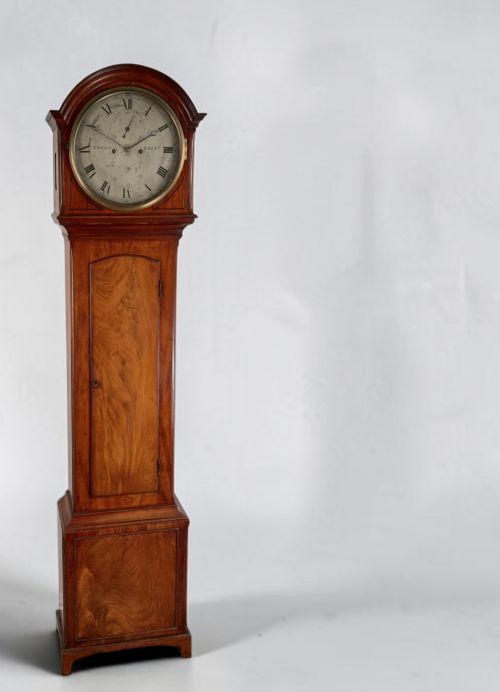
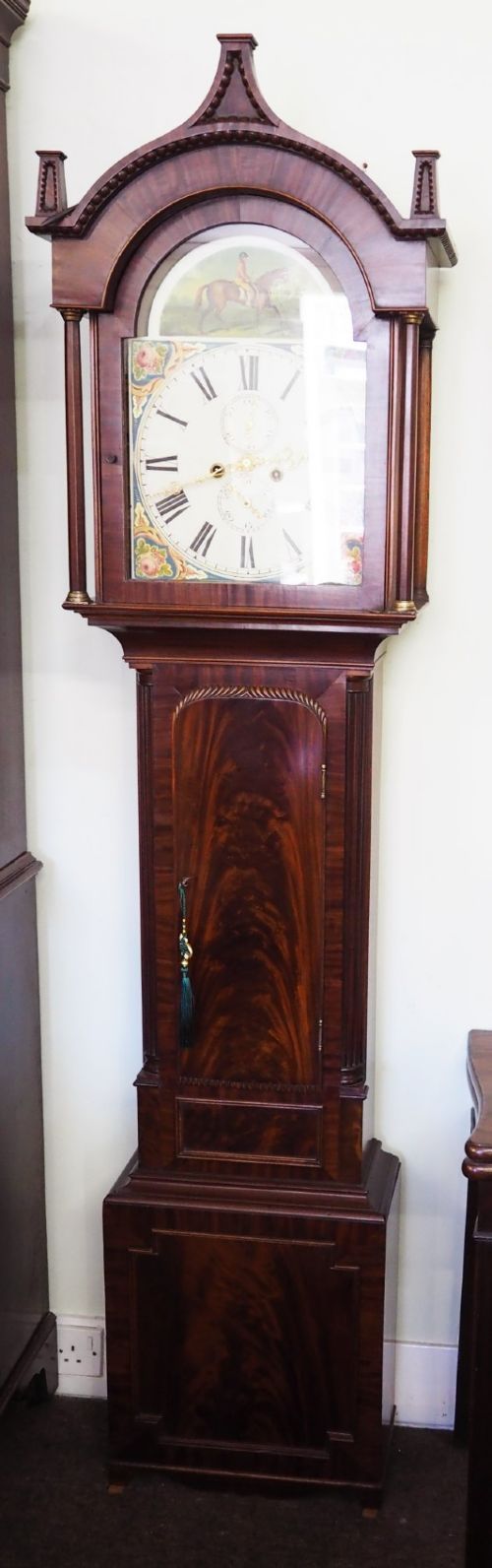
These edinburgh floor clock pieces are tall floor-standing timepieces that bring substantial Scottish craftsmanship into a room.
Edinburgh Floor Clock
An edinburgh floor clock is a tall timekeeper housed in a wooden case, commonly known as a longcase or grandfather clock. The pieces recorded here span the Georgian and nineteenth century periods, including Scottish Georgian and Scottish Regency examples.
Most items you meet on this page are floor-standing clocks originating from makers working in Edinburgh. Forms include longcase clocks, grandfathers, and regulators.
Makers such as Green, Whitelaw, John Breakenrig, G Brown, and J Melrose are associated with these tall wooden cases. The styles range from plain mahogany to lacquered wood and inlaid flame mahogany.
How they were made
Makers utilised timber such as mahogany, flame mahogany, and lacquered wood to construct the tall cases. Woodworking techniques involved precise joinery and sometimes intricate inlay work.
Faces and dials incorporate painted iron and glass to protect the moving parts. Brass components form the internal movements and dial fittings.
Edinburgh Floor Clock Retail Price Guide 2026
Typical asking prices for edinburgh floor clock among the pieces listed under this phrase on Sellingantiques today, from the lower quarter to the upper quarter. They describe what is for sale here now, not the wider market.
One mahogany longcase clock on this page is specifically associated with a horse in its listing title.
What varies in quality
The choice of timber creates a distinct tier in quality, where plain mahogany differs from figured flame mahogany or decorative lacquered surfaces. Finer pieces demonstrate superior cabinetmaking through balanced proportions and careful wood selection.
The presence of a named maker on the dial, such as John Breakenrig or Whitelaw, elevates an example above anonymous workshop output. The complexity of the case style, from simple Georgian lines to inlaid George III designs, marks the grade of the piece.
Green of Edinburgh·Whitelaw of Edinburgh·John Breakenrig·G Brown Edinburgh·J Melrose Edinburgh
The Edinburgh Floor Clock Glossary
- Longcase clock
- A tall, floor-standing pendulum clock enclosed in a wooden case. This is the formal term for what is commonly called a grandfather clock.
- Regulator
- A precision pendulum clock designed to keep exceptionally accurate time. These often served as reference clocks in workshops or large houses.
- Flame mahogany
- Mahogany veneer cut from the branch junction of the tree, producing a distinctive flame-like pattern. Cabinetmakers used this figure on prominent surfaces.
- Lacquered wood
- Wood treated with multiple layers of resin-based finish, often decorated in the Chinoiserie taste. This surface treatment was popular during the Georgian period.
- Painted iron
- A dial material consisting of an iron sheet coated with a painted finish for numerals and maker signatures. This replaced brass dials as the dominant technique.
Edinburgh Floor Clock: Frequently Asked Questions
What is an edinburgh floor clock?
An edinburgh floor clock is a tall mechanical timekeeper housed in a wooden case, designed to stand directly on the floor. These pieces are often referred to as longcase or grandfather clocks.
The examples recorded here originate from Scottish makers working during the Georgian and nineteenth century periods.
Which woods were used for the cases?
Cabinetmakers utilised mahogany, flame mahogany, and lacquered wood to build the tall wooden housings. These materials reflect the prevailing styles of Scottish Georgian and Regency furniture.
Some pieces feature inlaid decoration to highlight the grain and colour of the timber.
How do I identify the period?
Periods are identified through the overall style of the case, the materials utilised, and the design of the dial. Georgian pieces display classical proportions, while nineteenth century examples show Regency characteristics.
Named makers recorded on the dials provide further chronological markers.
Who made these clocks?
Makers such as Green, Whitelaw, John Breakenrig, G Brown, and J Melrose produced these tall timepieces in Edinburgh. Their signatures appear on the painted iron dials.
These craftsmen worked within the Georgian and nineteenth century traditions of Scottish clockmaking.