
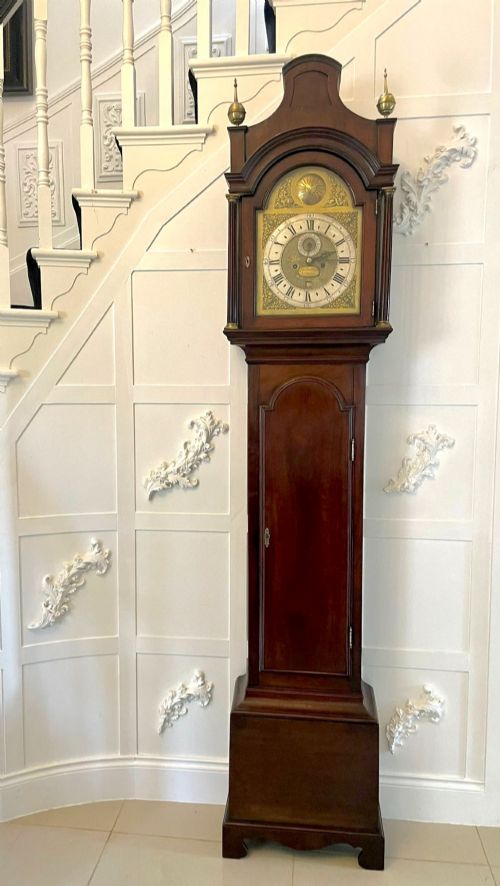
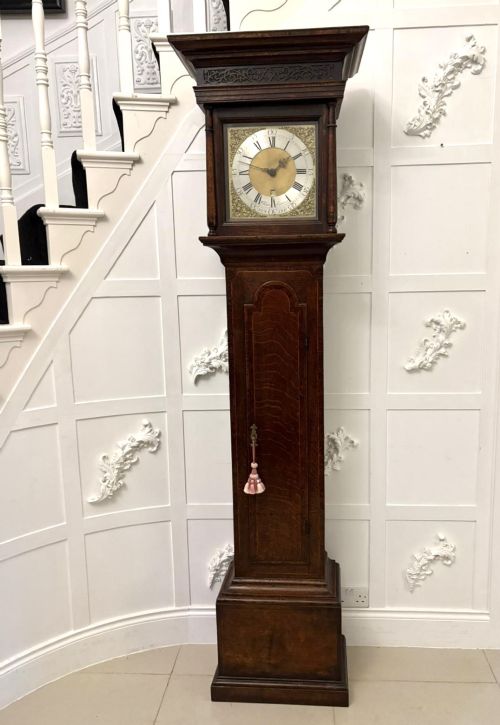
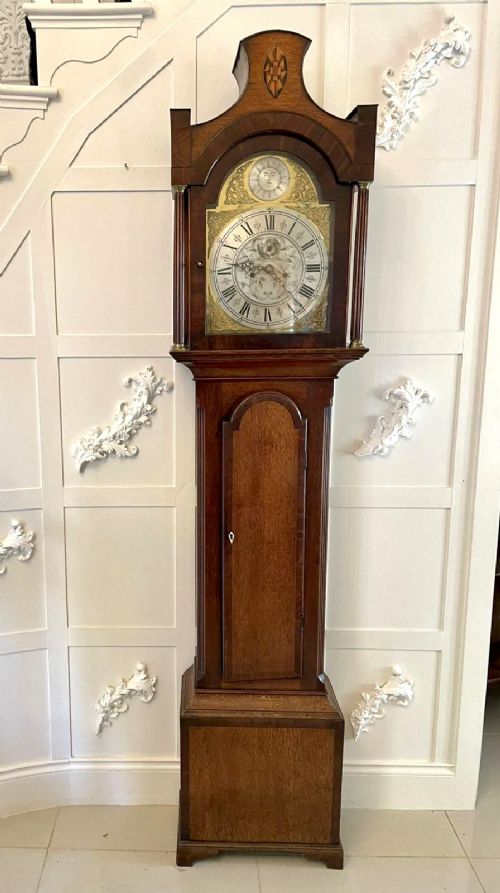
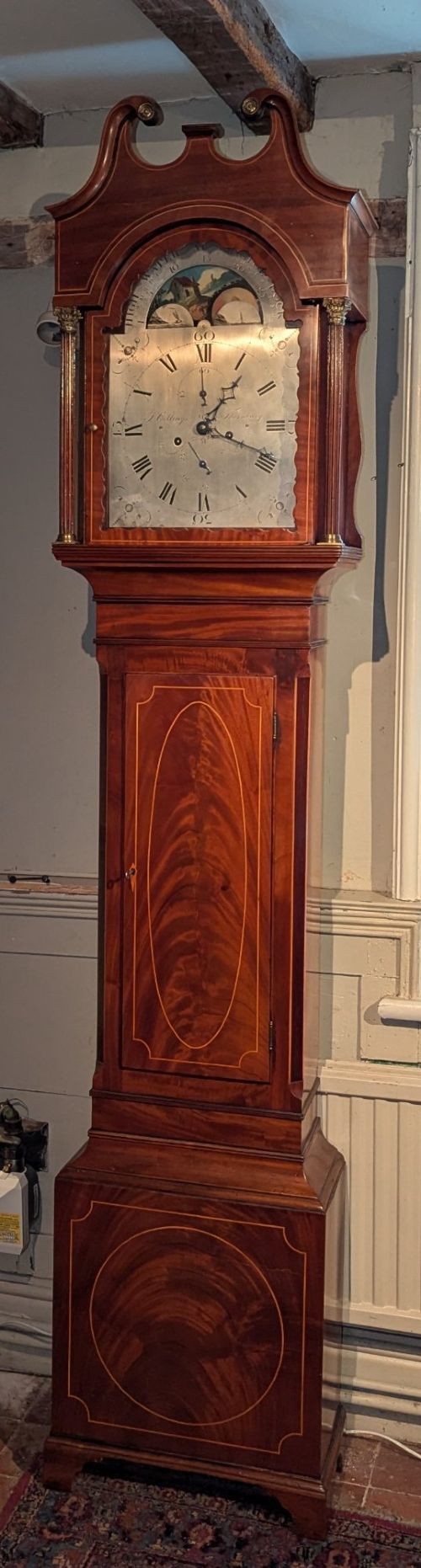
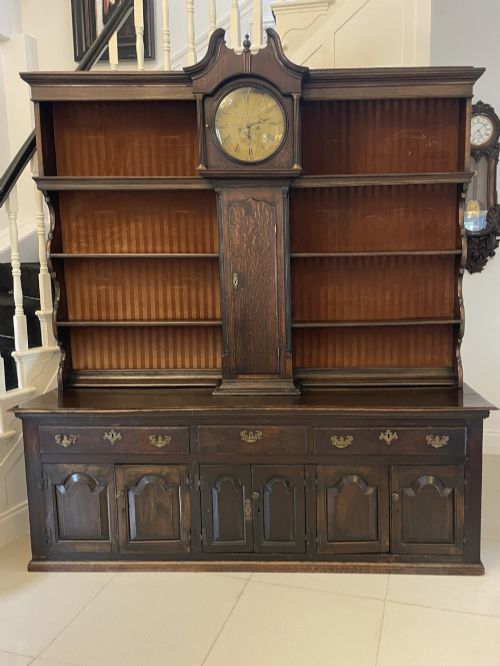
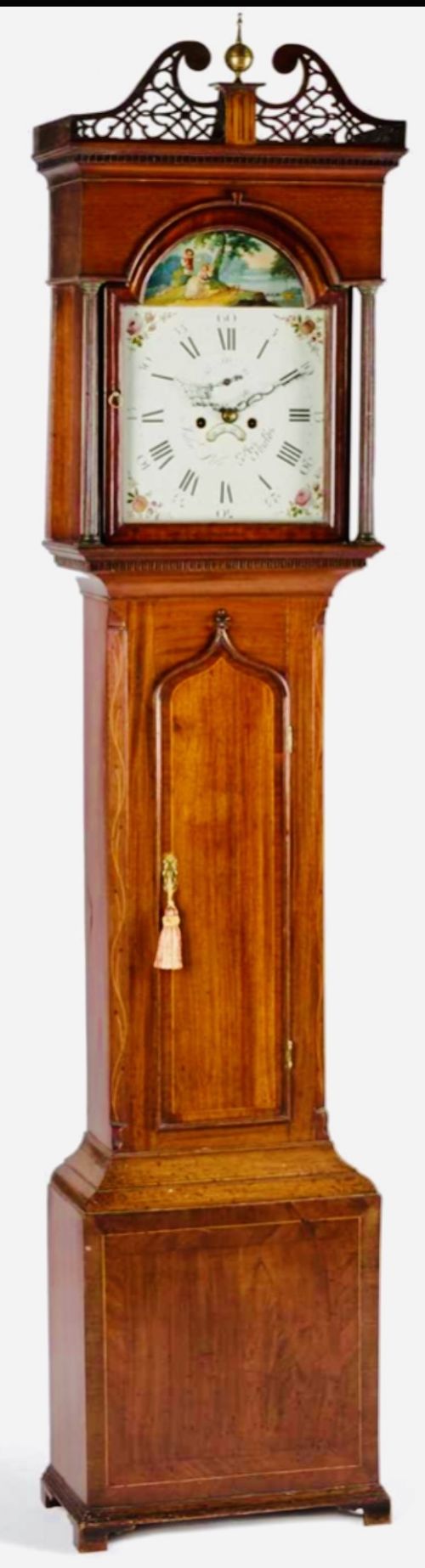
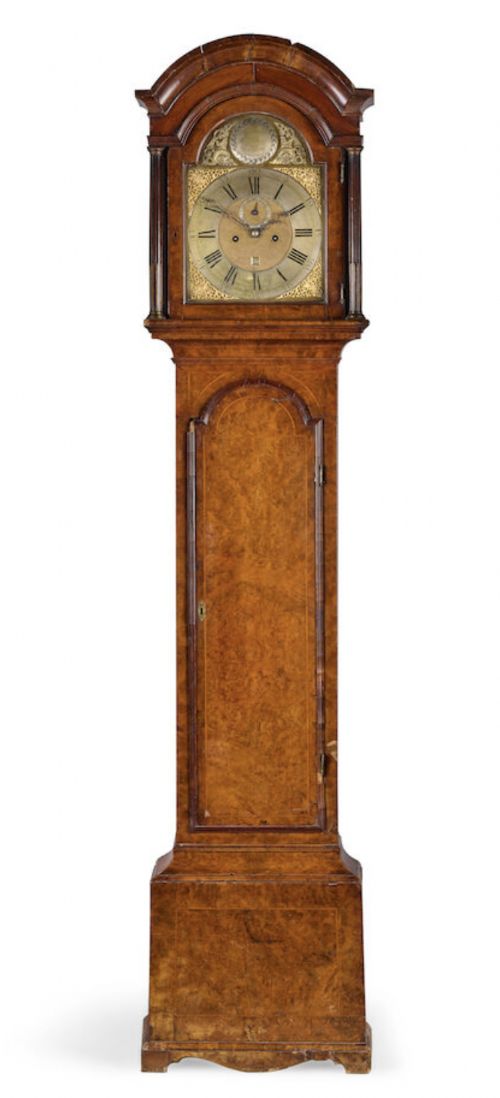
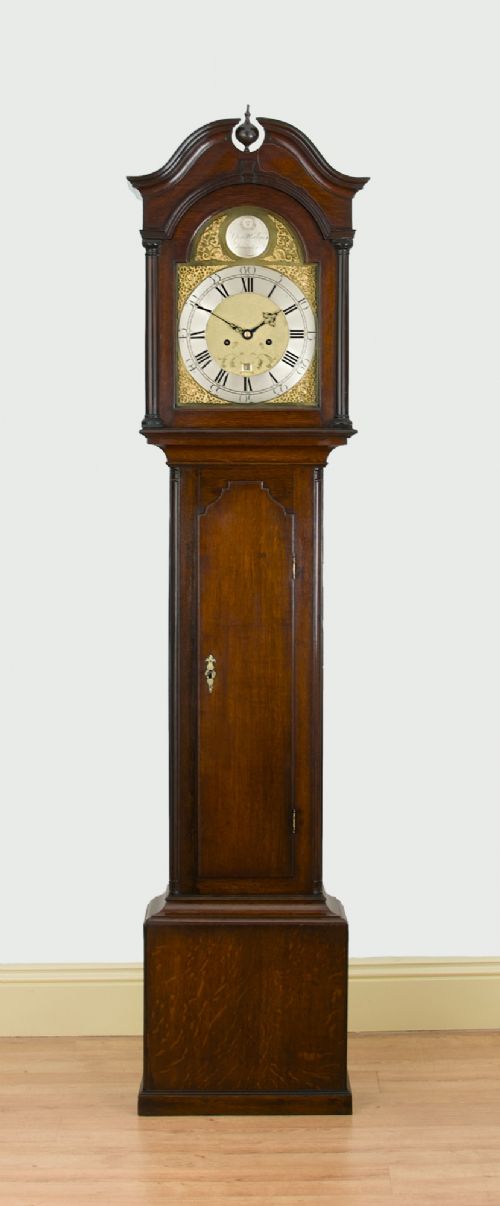



George I Grandfather Clock
A George I grandfather clock brings floor-standing architectural presence and precision eight-day timekeeping into a room.
George I Grandfather Clock
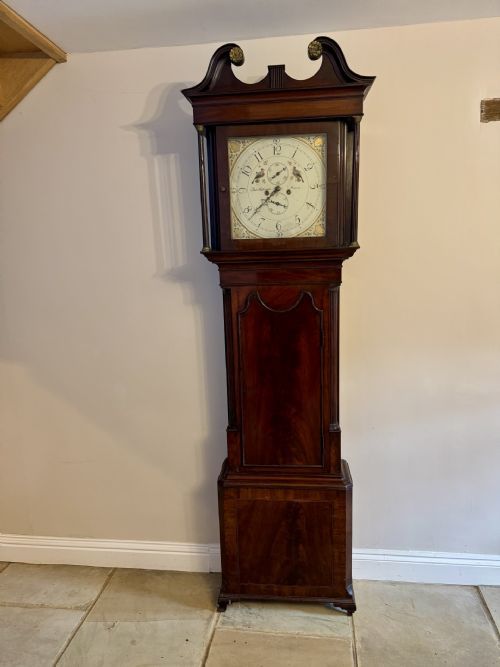
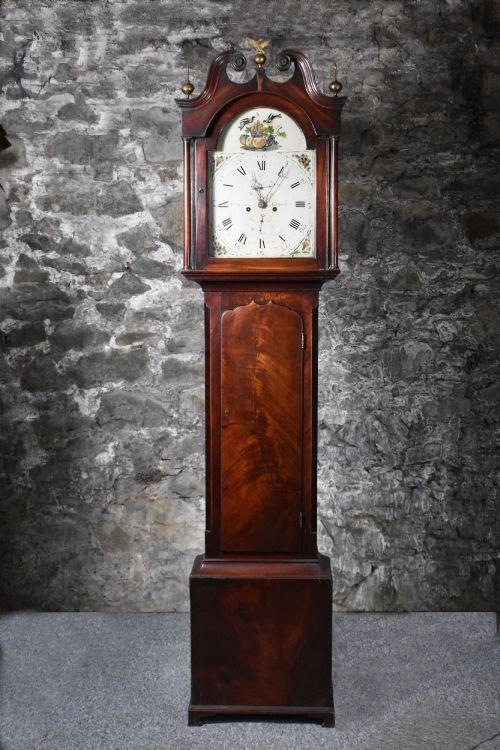
A george i grandfather clock is a tall floor-standing timekeeper enclosed in a protective wooden trunk with a hinged door. These pieces measure time through swinging pendulums and falling weights suspended inside the main body. Surviving examples reflect the cabinet-making and horological standards of the early eighteenth century and the subsequent Georgian eras.
Most pieces encountered in this category date from the broader Georgian period, spanning oak and mahogany longcase clocks with brass or painted dials. Makers worked in provincial towns as well as metropolitan centres like London, producing eight-day and thirty-hour movements. Buyers encounter freestanding tall clocks featuring architectural hoods, arched brass faces, and occasional moon-phase displays.
What Varies in Quality
Quality depends on the proportion and architectural integrity of the wooden case, particularly the crispness of carved details, the choice of figured veneers, and the preservation of original hood columns. Finer examples retain their matching trunk doors, sound base plinths, and untouched patination on the primary wood.
Movement execution defines the upper tier of timepieces, visible in the depth of engraving on the brass dial, the signature of the maker, and the complexity of the train. Retaining the original weight-driven movement and pendulum without extensive replacement components distinguishes superior survivors.
Listings feature oak, mahogany, walnut, and brass materials across 18th century and Georgian periods.
Charles Shuckburgh·Windmills and Wightman·George Hallifax·Henry Weedon·William McEwan·William Kipling·Charles Dowsett·John Denbigh·Thomas Vernon·Edward White·James Tregent·John Pollard·Walker of Nantwich·Dwerrihouse & Carter·James Bullock·Benjamin Barlow·Jackson of Frodsham·Tremlett·Richard Honeybone·John Cook·George Payne·Thomas Dicker·Peter Bower·John Birtles·John Reynolds
The George I Grandfather Clock Glossary
- Longcase clock
- A tall freestanding pendulum clock enclosed in a wooden case, commonly known as a grandfather clock. These instruments range from simple oak cottage models to elaborate London examples.
- Arch dial
- A clock face featuring a rounded upper section above the main circular chapter ring. This curved space often houses a subsidiary calendar, maker signature, or moon-phase mechanism.
- Spandrel
- An ornamental metal corner piece mounted on the dial surrounding the chapter ring. Early versions were cast in brass and chased by hand.
- Chapter ring
- The circular metal band attached to the dial that displays the hour and minute numerals. These rings are typically silvered and engraved.
- Moon phase
- A mechanical display located within the dial arch that tracks the lunar cycle. It uses a rotating painted disc to show the phases of the moon.
George I Grandfather Clock: Frequently Asked Questions
How do I wind an eight day grandfather clock?
Winding requires inserting the crank key into the winding holes on the dial face and turning it clockwise until the weight rises near the top.
Care must be taken not to overwind the movement, stopping as soon as resistance indicates the weight has reached its upper limit.
What is the difference between oak and mahogany longcases?
Oak cases typically reflect provincial cabinet making from the earlier eighteenth century, displaying dense grain and pegged joints.
Mahogany examples often date from later in the Georgian period, showcasing rich reddish brown tones and smooth polished surfaces.
Where should I place a longcase clock in my home?
These clocks require a stable, dry interior wall away from direct sunlight, central heating vents, and exterior doors.
Securing the trunk to the wall using the internal bracket prevents accidental tipping and ensures the pendulum swings evenly.
Why does the clock need to stand level?
Level placement ensures the pendulum swings with equal duration to the left and right, maintaining consistent timekeeping.
Adjusting the feet or placing shims beneath the base corrects uneven floors so the escapement ticks in a steady, even beat.