





Chinoiserie Style Coffee Table
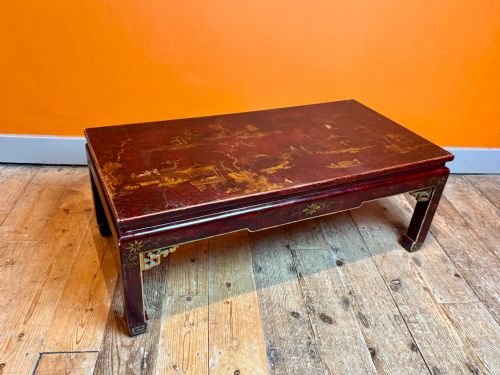
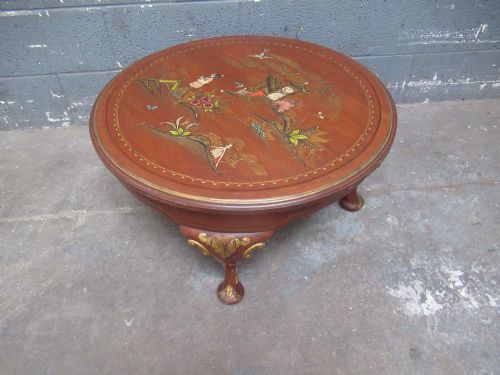
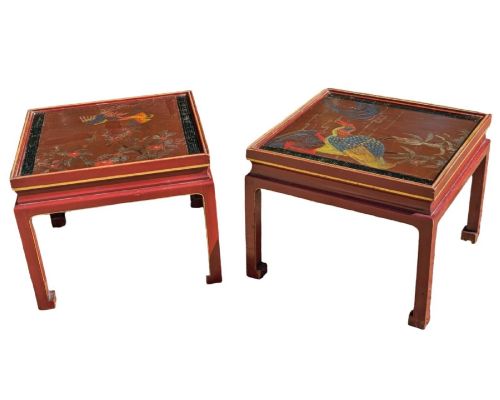
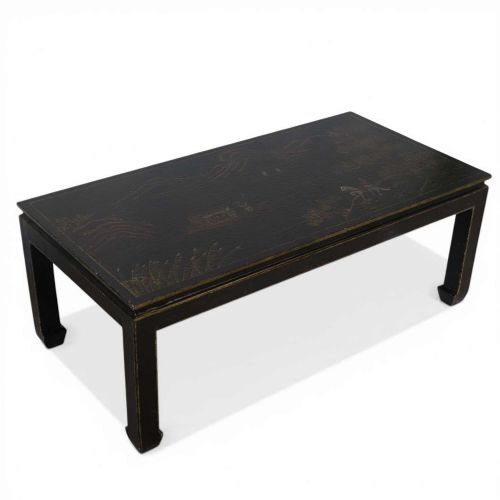
These chinoiserie style coffee tables bring lacquered surfaces, painted scenes, and low forms together to anchor a room.
Chinoiserie Style Coffee Table
When you search for a chinoiserie style coffee table, you enter a field of low occasional surfaces, nest of tables, and converted trays that draw on eighteenth-century European interpretations of East Asian design. These pieces adapt traditional motifs into low furniture suited to modern seating arrangements.
The versions most commonly met on this page date from the Edwardian period and the early decades of the twentieth century, alongside nineteenth-century examples and nineteenth-century tray forms. You will find circular coffee tables, rectangular occasional pieces, and nested sets designed to tuck away when not in use.
Makers and workshops across England and France produced these designs, utilising styles that range from Queen Anne and Regency to mid-century French interpretations. The resulting objects combine practical low surfaces with decorative schemes of figures, landscapes, and floral motifs.
Materials and construction
Wood provides the core structure, with hardwoods and ebonised timber serving as foundations for decorative surfaces. Joinery follows traditional cabinet-making methods appropriate to each period, supporting the weight of daily use.
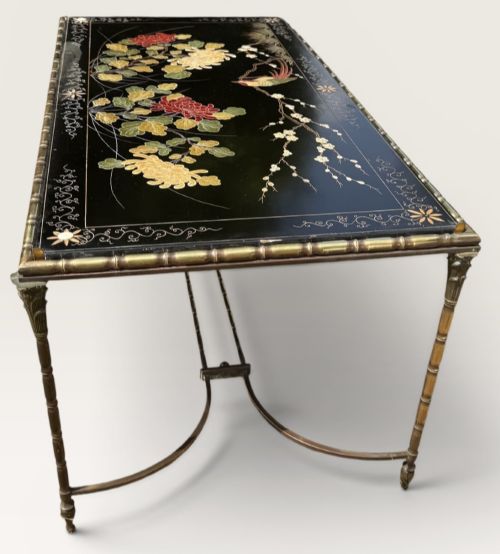
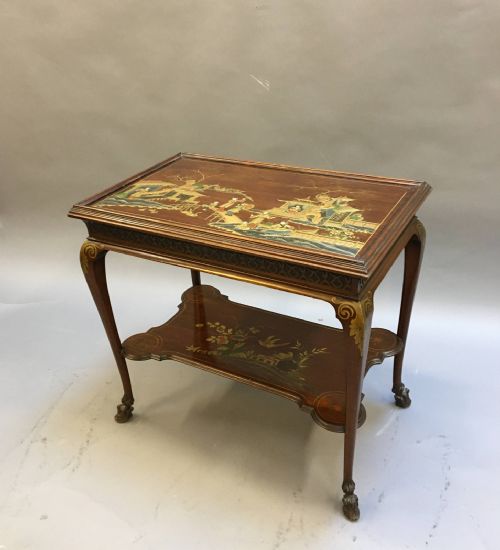
Lacquer and paint form the primary decorative skin, applied in layers to create smooth or textured finishes. Artisans built up the surfaces using paint, gold leaf, and gilt paint to render detailed scenes and border patterns.
Chinoiserie Style Coffee Table Retail Price Guide 2026
Typical asking prices for chinoiserie style coffee table among the pieces listed under this phrase on Sellingantiques today, from the lower quarter to the upper quarter. They describe what is for sale here now, not the wider market.
Assessing quality
The depth and execution of the painted and lacquered surface determine much of the distinction between pieces. Superior examples display finely rendered figures, landscapes, and gold leaf work that retain their crispness across the whole top.
The integrity of the underlying woodwork and the stability of the frame dictate durability. Pieces constructed from solid hardwoods with precise joinery hold their form better over decades of use than lighter assemblies.
The harmony between the decorative scheme and the form of the table itself marks out the more successful designs. Where the lacquer work, colour palette, and carved details integrate fully with the period style, the piece succeeds as a unified work.
Maison Bagues
The Chinoiserie Style Coffee Table Glossary
- Chinoiserie
- European decorative style reflecting Chinese artistic influences, popular in furniture and interior design. It uses motifs such as pagodas, figures, and landscapes rendered in paint and lacquer.
- Japanned
- European work imitating Japanese and Chinese lacquering techniques, typically using dark grounds with raised gilt decoration. This finish appears frequently on early twentieth-century tables.
- Tray table
- A table featuring a removable or fixed tray top, often with raised edges. Many examples adapt deep serving trays onto low wooden stands.
- Nest of tables
- A set of graduated tables designed to fit neatly beneath one another. They offer flexible surface space in compact rooms.
- Ebonised
- Wood finished to resemble ebony through staining or painting. This dark surface creates a strong contrast with gold leaf and coloured lacquer.
Chinoiserie Style Coffee Table: Frequently Asked Questions
How do I date a chinoiserie coffee table?
Dating relies on examining the construction methods, timber types, and the style of the painted decoration. Edwardian and early twentieth-century pieces often show specific framing techniques that differ from nineteenth-century work.
Changes in lacquer formulation and pigment use across different decades also help narrow down the period of manufacture.
Were these always coffee tables?
Many tables on this page began life as occasional tables, nest sets, or serving trays before being adapted for use as coffee tables. Tray tables often sat on folding or fixed stands at a height suited to serving rather than low seating.
Over time, lower proportions became desirable, leading to the conversion of various low chests, trunks, and occasional furniture into coffee tables.
How do I care for a lacquered surface?
Liquids and heat can damage delicate lacquer and painted finishes, so coasters and placemats are essential for daily protection. Dusting should be done gently with a dry, soft cloth without chemical cleaning products.
Keeping these tables away from direct sunlight and dramatic humidity changes prevents the lacquer from crazing or cracking over time.
What is the difference between japanned and lacquered?
Japanning is a European technique developed to imitate Asian lacquer, using layers of varnish heated and hardened in a kiln. True Asian lacquer relies on the sap of the toxicodendron vernicifluum tree applied in numerous thin coats.
In marketplace terms, both finish types describe dark surfaces adorned with metallic paint or leaf scenes.