


Chinoiserie Display Stand
A chinoiserie display stand brings Eastern-inspired lacquer and intricate motifs into a room, offering an elegant surface for cherished porcelain and figures.
Chinoiserie Display Stand
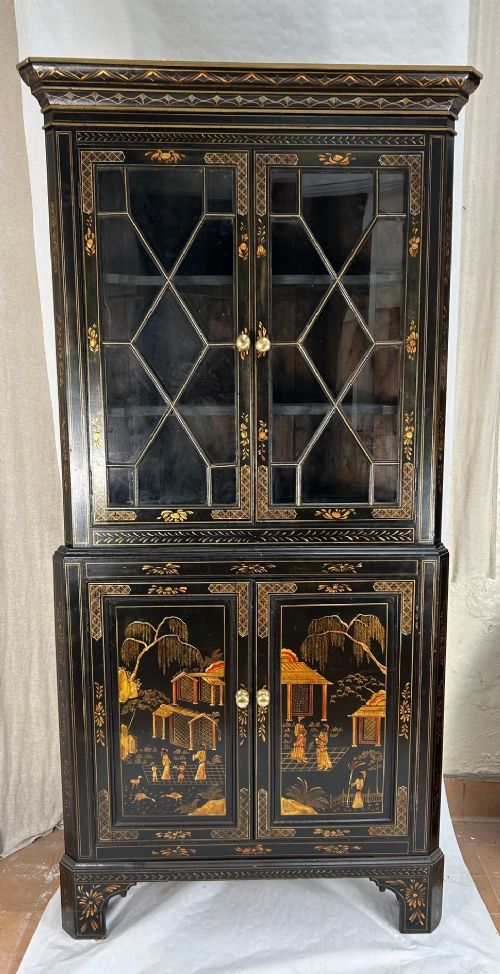
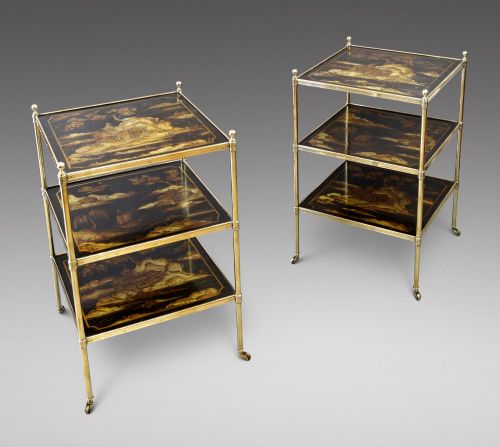
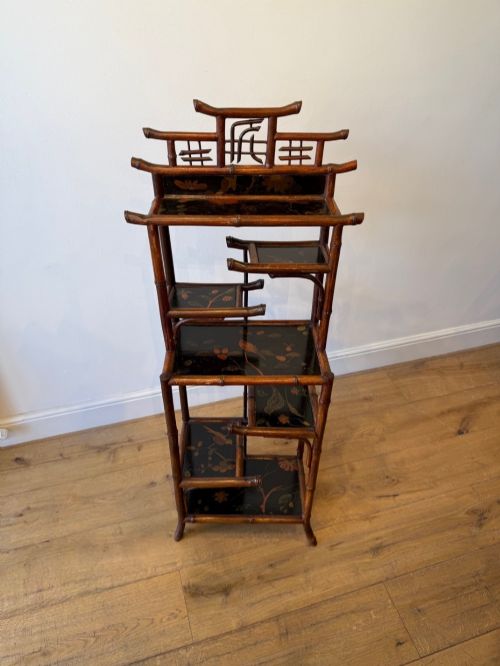
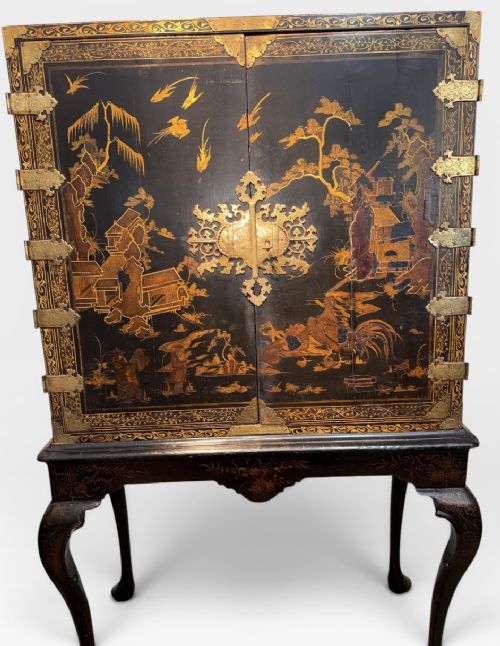
A chinoiserie display stand encompasses various elevated surfaces designed to showcase decorative objects, ranging from plant stands and pedestal tables to cabinets on stands and corner cupboards. Buyers searching for a chinoiserie display stand encounter pieces shaped by distinct periods such as the Regency era, the Edwardian period, and the eighteenth and nineteenth centuries.
The selections on this page feature forms including plant stands, display shelves, side tables, and pier cabinets. These items frequently display styles rooted in Chinese Qing Dynasty aesthetics, Victorian chinoiserie, French Neoclassical influences, and Chinese Chippendale revival designs.
Among these forms, buyers most frequently meet lacquer plant stands, corner cupboards, and cabinets on stands originating from the nineteenth and early twentieth centuries. Each piece utilises traditional Oriental motifs and decorative painting to elevate ordinary display furniture into striking focal points.
Materials and construction methods
These stands and cabinets employ a foundation of solid woods such as mahogany, padouk, hardwood, and bamboo. Artisans built structural frameworks using durable timbers capable of supporting heavy decorative items like marble tops and temple jars.
Surface decoration relies heavily on applied lacquer, gold leaf, and brass work. Craftsmen layered paint and varnish to achieve glossy finishes, often incorporating penwork and hand-painted Oriental scenes directly onto the wood.
Listings incorporate materials spanning mahogany, padouk, brass, marble, and gold leaf across multiple centuries.
Distinctions in craftsmanship
Quality rests in the depth and preservation of the lacquer work and painted ornamentation. Superior examples display crisp detail in the hand-painted motifs and sustained integrity in the underlying wooden frames without excessive degradation.
The integration of secondary materials like inset marble tops, brass fittings, and glass panels separates standard utility items from finer decorative works. Maker attribution, such as pieces associated with Edwards & Roberts or Gabriel Viardot, further elevates the standing of a piece.
Edwards & Roberts·Gabriel Viardot
The Chinoiserie Display Stand Glossary
- Chinoiserie
- European artistic style reflecting Chinese and East Asian artistic influences, prominent in decorative arts and furniture design. It manifests through painted landscapes, figures, and architectural motifs.
- Lacquer
- A durable resin finish applied in multiple coats to wood surfaces, providing a glossy, smooth protective coating. It often serves as the canvas for intricate hand-painted Oriental scenes.
- Penwork
- A decorative technique utilising fine ink lines on wood to create intricate geometric or pictorial designs. It appears on specialised collectors cabinets from the Regency period.
- Padouk
- A dense tropical hardwood prized for its rich reddish colour and durability in fine furniture construction. It provides a robust structure for plant stands and tables.
- Pier cabinet
- A tall, narrow display cabinet designed to fit against the wall space between windows. These pieces showcase porcelain and decorative objects at eye level.
Chinoiserie Display Stand: Frequently Asked Questions
What is a chinoiserie display stand used for?
These stands serve as elevated platforms for displaying porcelain, plants, and decorative objects within a room. Their ornamental surfaces complement existing interior collections.
They function practically as plant stands, lamp tables, or dedicated display cabinets for smaller art pieces.
How do I identify a Regency chinoiserie stand?
Regency pieces often incorporate distinctive penwork, Brighton Pavilion styling, or specific architectural references from the early nineteenth century. They balance classical European forms with Oriental painted decoration.
Examine the turning of the legs and the style of the lacquer work to confirm the period.
Are marble top stands durable?
The inclusion of a marble top provides a sturdy, heat-resistant surface suitable for holding heavy planters or ceramic jardinières. The stone insert adds significant weight and stability to the pedestal base.
Maintenance involves simple cleaning to protect the polished stone from staining.
How do I care for lacquered wood furniture?
Lacquered surfaces require gentle dusting with a soft, dry cloth to prevent scratching the glossy finish. Avoid placing these stands in direct sunlight or areas with high humidity.
Keep moisture away from wooden joints and refrain from using harsh chemical cleaning products.