


Chinoiserie Display Cabinet
A chinoiserie display cabinet brings painted lacquer, gilt motifs and glass shelving together to hold your porcelain.

What these cabinets are
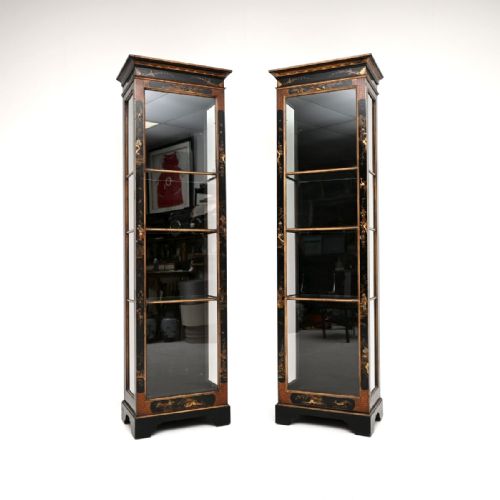
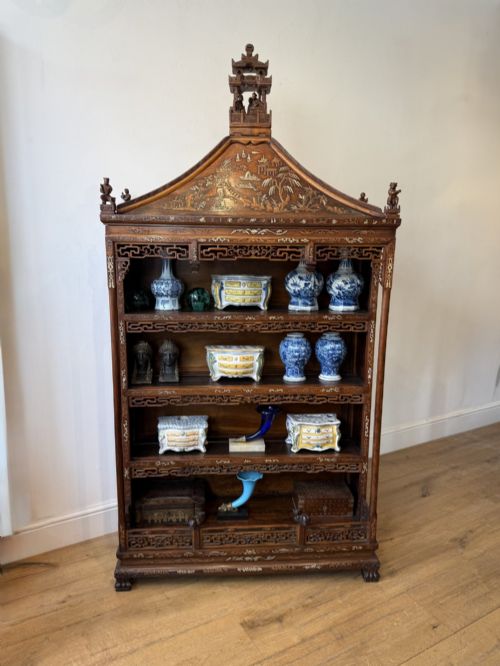
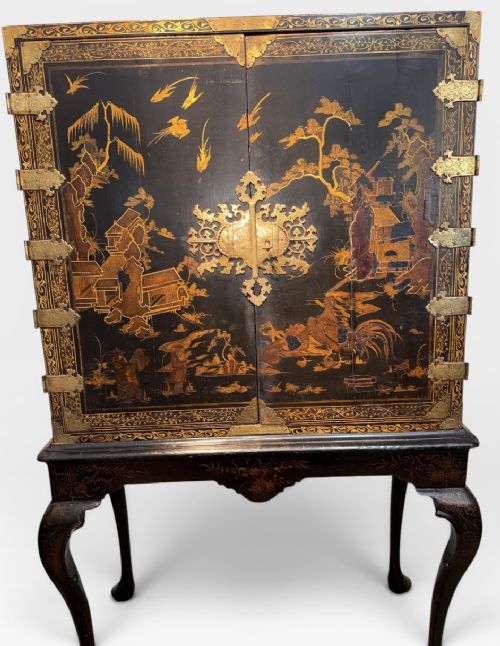
A chinoiserie display cabinet brings painted lacquer, gilt decoration and glass shelving together to showcase collections of porcelain and small objects. You encounter these cabinets across Edwardian, Regency, Art Deco and nineteenth-century periods, alongside pieces dated to nineteen thirty and nineteen hundred.
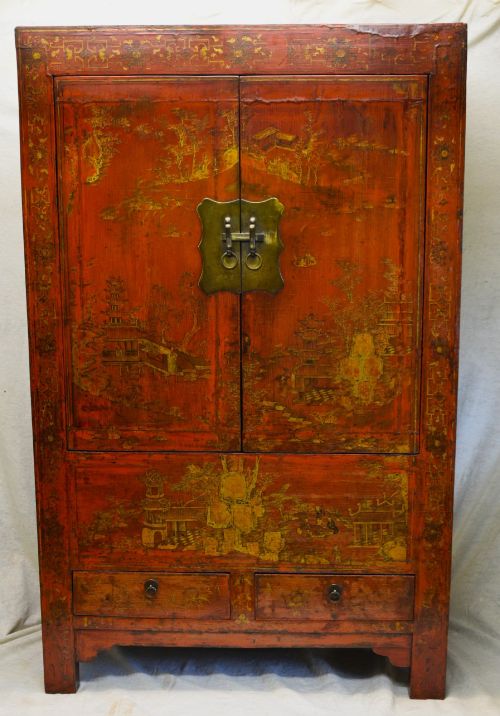
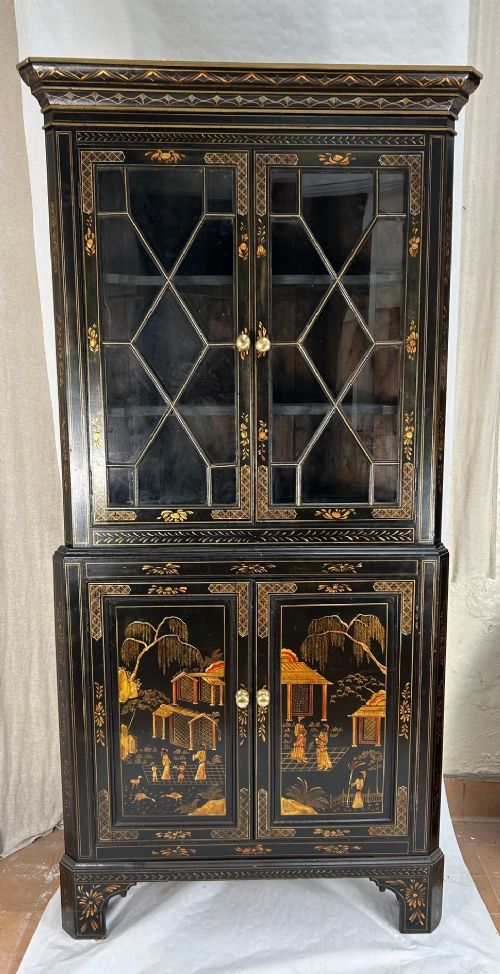
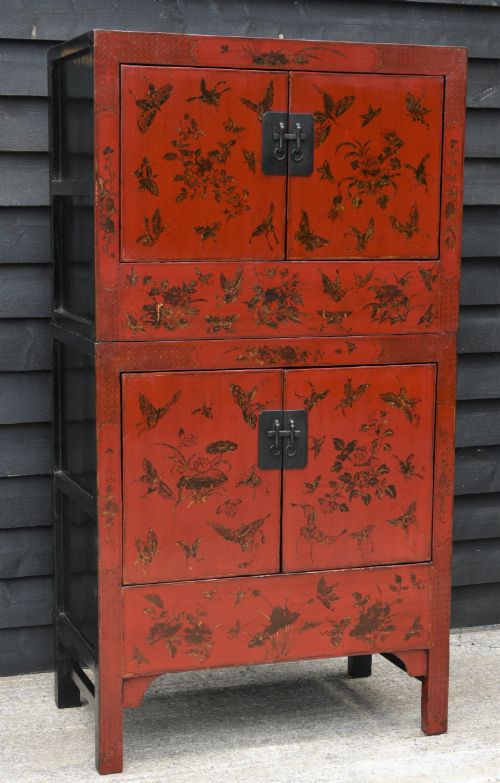
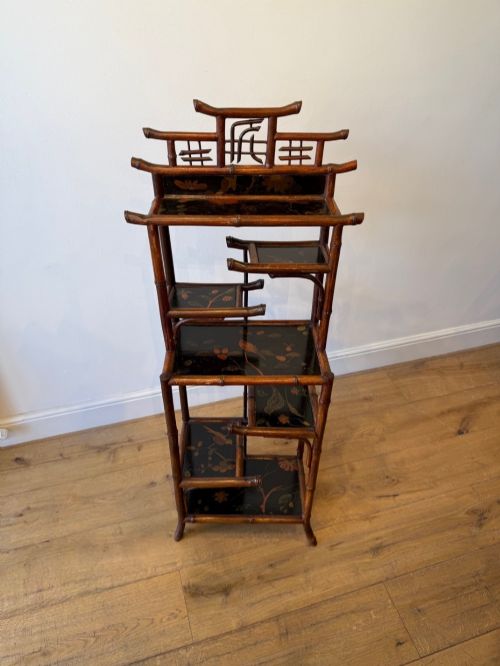
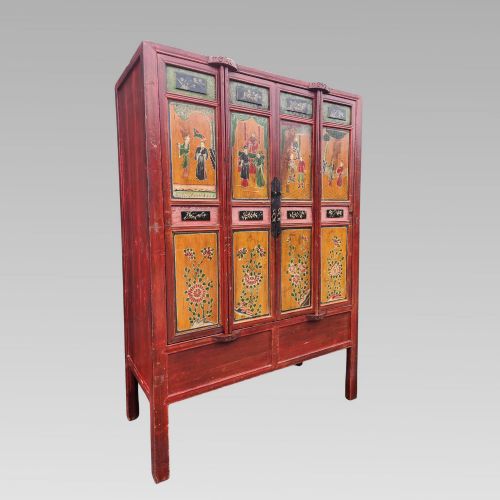
The forms vary considerably across the selection, ranging from corner cupboards and half-moon shapes to bow-front storage units and pier cabinets on stands. Traditional Chinese marriage cabinets and Chinese Chippendale revival styles also appear, offering distinct architectural profiles.
Mahogany, walnut and ebonised or japanned wood provide the structural foundations for these decorative pieces. The overarching style draws heavily on traditional Chinese motifs rendered through European craftsmanship.
Materials and construction
Carpenters utilised solid timbers such as mahogany and walnut to build the foundational carcasses of these storage units, often mounting them on slender stands or bracket feet. Glazed doors and side panels allowed light to reach the interior shelves while protecting the contents from dust.
Makers applied layers of black, red or natural lacquer to the wooden surfaces before adding intricate painted scenes and gold leaf details. Iron hardware and gilt brass fittings frequently completed the closure mechanisms and decorative hinges.
Retail Price Guide 2026
Typical UK retail prices for chinoiserie display cabinet, calculated from the Sellingantiques database of over a million retail prices indexed since 2003. This retail price guide relies exclusively on Sellingantiques data; no external sources or auction records are used, so the figures do not describe the wider market.
Some marriage cabinets hide intricate interior compartments originally intended for storing family ledgers and matrimonial documents.
Distinctions in quality
The sophistication of the hand-painted lacquer and the depth of the gold leaf application separate standard decorative items from superior examples. Finely rendered figures, landscapes and botanical motifs show greater detail and tonal variation across the surface.
Structural integrity and the quality of the timber carcasses also define the upper tier of pieces. Cabinets retaining original glass, uncompromised lacquer finishes and balanced proportions command greater appreciation from collectors.
Edwards & Roberts
The Chinoiserie Display Cabinet Glossary
- Chinoiserie
- European decorative style reflecting Chinese artistic influences through painted motifs and lacquered surfaces. It gained popularity across multiple centuries in furniture and interior design.
- Japanned
- European imitation of East Asian lacquerwork achieved through layers of varnish and metallic dusting. The technique created glossy black or coloured finishes adorned with raised gold designs.
- Chippendale Revival
- Late nineteenth and early twentieth-century style resurrecting the eighteenth-century furniture designs of Thomas Chippendale. These pieces often incorporate elaborate Chinese fretwork and glazed display doors.
- Pier Cabinet
- Tall, narrow display unit designed to fit the wall space between windows. They typically feature glazed doors and elevated stands.
- Chiffonier
- Low sideboard or cabinet equipped with enclosed storage and display surfaces. Regency examples demonstrate distinct proportions compared to later Edwardian iterations.
Frequently Asked Questions
What rooms suit a chinoiserie display cabinet?
These cabinets suit living rooms, dining spaces and hallways where their painted surfaces can catch ambient light.
Their narrow footprints and glass panels allow them to function effectively in smaller areas without dominating the floor plan.
How do I care for lacquered wood?
Keep lacquered surfaces away from direct sunlight and excessive heat sources to prevent the finish from cracking or fading over time.
Dust gently with a dry microfibre cloth and avoid chemical polishes that might damage the delicate gilt decoration.
Are Edwardian cabinets different from Art Deco ones?
Edwardian examples tend to lean into traditional revival forms with intricate hand-painted motifs and mahogany or ebonised frames.
Nineteen thirties Art Deco pieces often present cleaner geometric lines while retaining the characteristic lacquered finish and decorative imagery.
What is a corner cupboard used for?
Corner cupboards utilise awkward right-angle spaces in rooms to provide enclosed shelving for display and storage.
Their triangular footprint allows them to tuck neatly into room perimeters while offering decorative visual weight.