



Chinoiserie Delft Plate
These chinoiserie delft plate examples combine tin-glazed earthenware with hand-painted East Asian inspired scenes, offering collectors historic ceramic artistry for display.
Chinoiserie Delft Plate
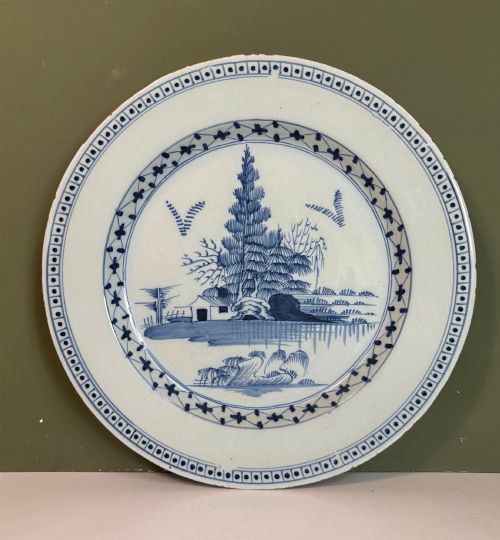
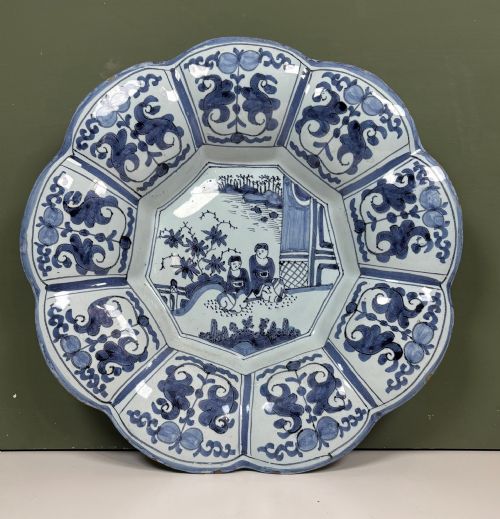
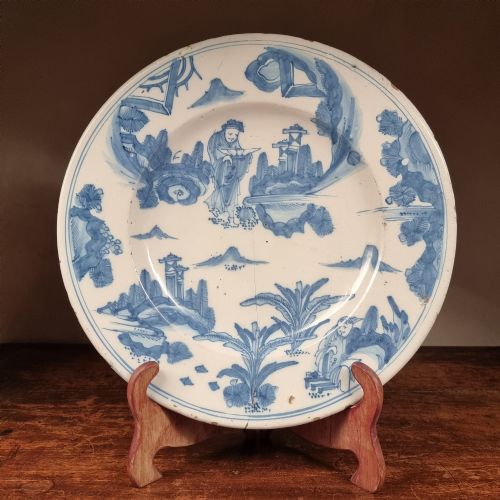
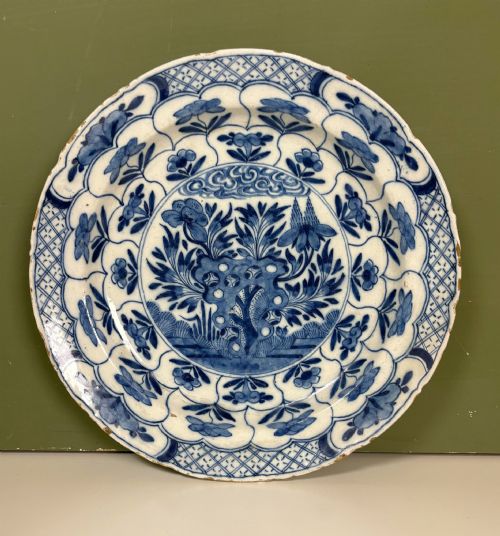
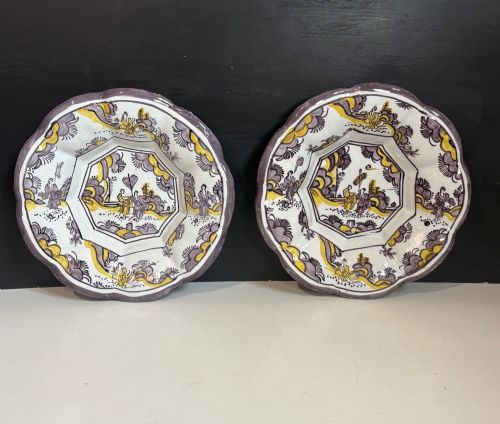
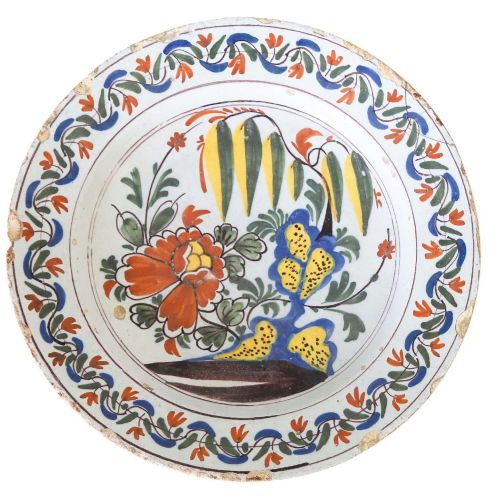
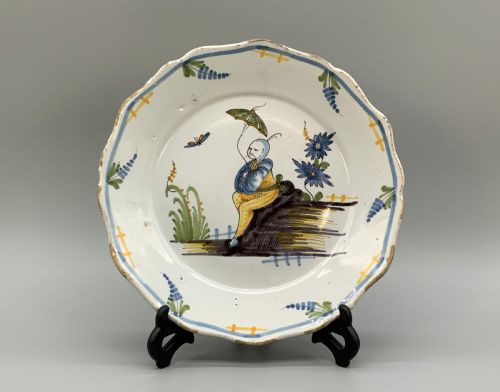
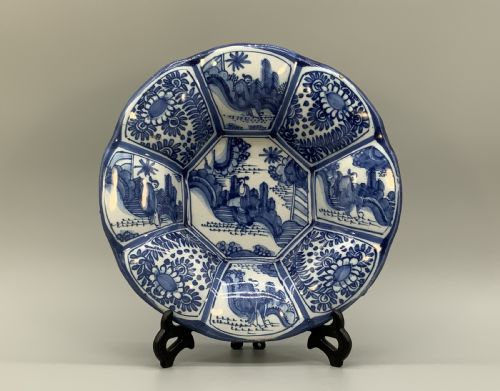
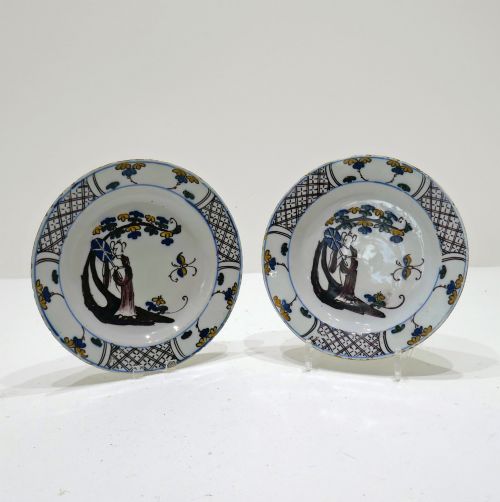
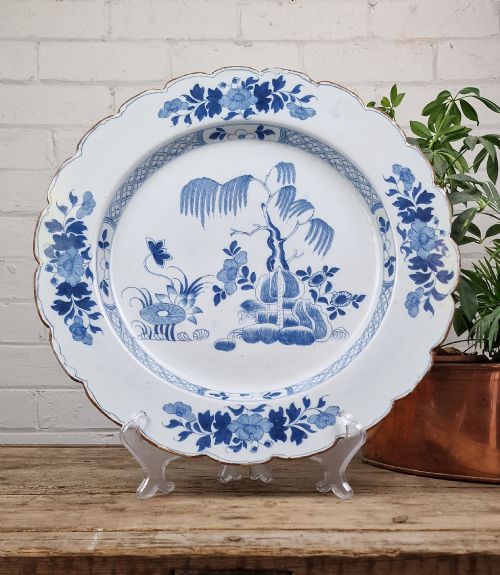
A chinoiserie delft plate brings together tin-glazed earthenware and European interpretations of Chinese motifs, originating primarily across the seventeenth and eighteenth centuries. These items appear as chargers, dishes, and plates bearing blue and white or polychrome decoration.
The versions most common on this page span English and Dutch production centres, dating from seventeen hundred onwards. Makers employed cobalt pigment alongside manganese and yellow to render figures, landscapes, and floral patterns upon ceramic surfaces.
Forms range from smaller plates to large decorative chargers intended for wall hanging or dresser display. Surviving examples reflect both domestic utility and decorative arts traditions of the period.
How they were made
Potters shaped earthenware bodies before coating them in a white tin glaze that provided an opaque, smooth canvas for subsequent painting. Artisans applied cobalt oxide and other pigments directly onto the absorbent unfired or biscuit surface.
The painted pieces underwent high-temperature kiln firing, which fused the metallic oxides into the liquid glaze to create permanent pictorial designs. This technique produced the characteristic glossy finish associated with European delftware production.
Early painters sometimes rendered imaginary Chinese fishermen perched on impossibly steep bridges, revealing European daydreams of distant eastern landscapes.
What varies in quality
Quality rests upon the crispness of the hand-painted brushwork and the complexity of the chinoiserie composition across the tin glaze. Confident lines and varied pigment application elevate individual chargers and plates above simpler commercial output.
The purity and uniformity of the white tin glaze ground also distinguish superior pieces from those with heavy pooling or surface clouding. Additionally, the depth of the cobalt blue or the successful integration of manganese and yellow pigments defines the visual success of polychrome examples.
Bristol Delft·Lambeth Delft·Liverpool Delft·Dutch Delft
The Chinoiserie Delft Plate Glossary
- Tin glaze
- An opaque white ceramic glaze containing tin oxide, used as a ground for painted decoration on earthenware. It gives these plates their characteristic milky appearance.
- Chinoiserie
- European artistic style reflecting Chinese motifs, landscapes, and figures. It appears frequently on eighteenth-century plates and chargers.
- Charger
- A large decorative plate intended primarily for display on walls or sideboards rather than dining use. These items often measure significantly larger than standard dinner plates.
- Polychrome
- Decoration employing multiple colours, such as manganese and yellow alongside blue, rather than a single pigment. This palette adds warmth and complexity to ceramic surfaces.
- Cobalt oxide
- A metallic pigment used to produce deep blue painted decoration under the tin glaze. It remains stable at high kiln temperatures.
Chinoiserie Delft Plate: Frequently Asked Questions
How were delft plates displayed?
Historic households typically mounted larger chargers on walls or arranged them along wooden dressers for decorative impact. Their vibrant tin-glazed surfaces provided colourful focal points within period interiors.
Smaller plates occasionally served functional dining purposes, though surviving examples with fine chinoiserie painting generally indicate preservation as display items.
What colours appear on these plates?
Cobalt blue remains the most common pigment, creating stark monochromatic designs against the white tin-glazed earthenware background. Other pieces incorporate manganese purple and yellow for richer polychrome effects.
English and continental workshops utilised these mineral oxides to render eastern-inspired garden scenes and figures.
How do I date a delft plate?
Dating relies upon stylistic shifts in the tin glaze, body thickness, and the character of the hand-painted chinoiserie motifs. Seventeenth-century items often display heavier earthenware bodies and distinct Kraak-influenced border patterns.
Eighteenth-century examples tend toward lighter fabrics and more naturalistic floral or figurative compositions, sometimes bearing specific regional traits from Bristol or Liverpool.
Were these plates made in England or Holland?
Production occurred across both countries, with major centres established in London, Bristol, Liverpool, and various Dutch towns including Delft. Dutch workshops heavily influenced early English delftware manufacturing techniques.
Distinguishing between English and Dutch output involves examining the ceramic body composition, glaze tint, and specific regional painting habits.