
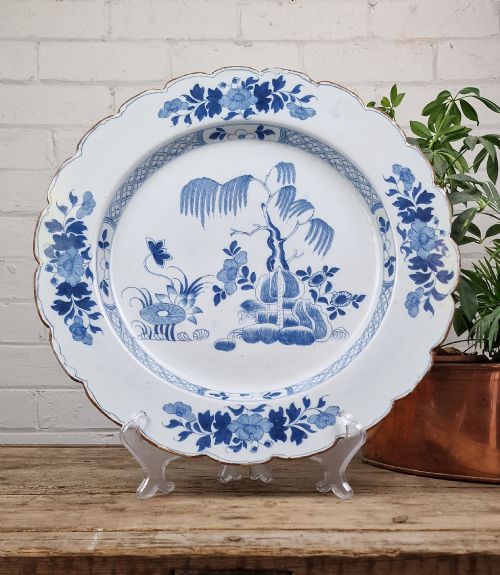


18th Century English Delft
These pieces of 18th century English delft offer tin-glazed earthenware surfaces and hand-painted blue and white or polychrome decoration that collectors prize for historical character.
18th Century English Delft
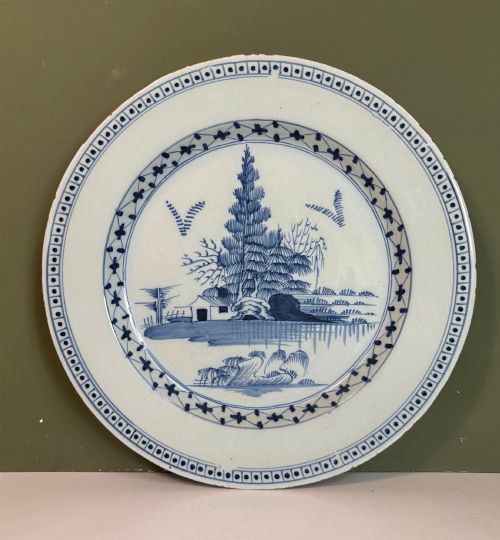
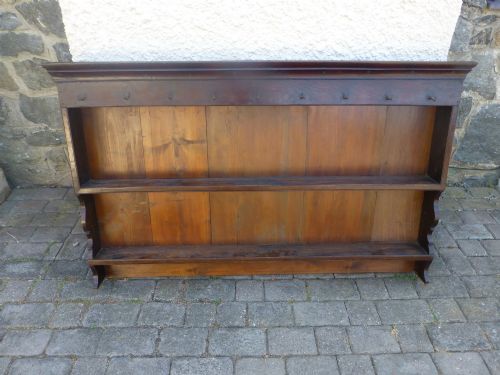
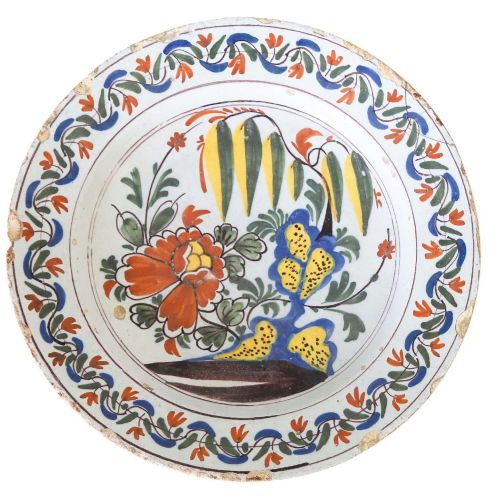
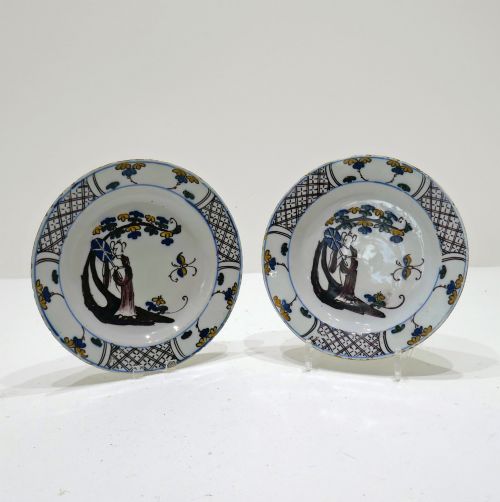
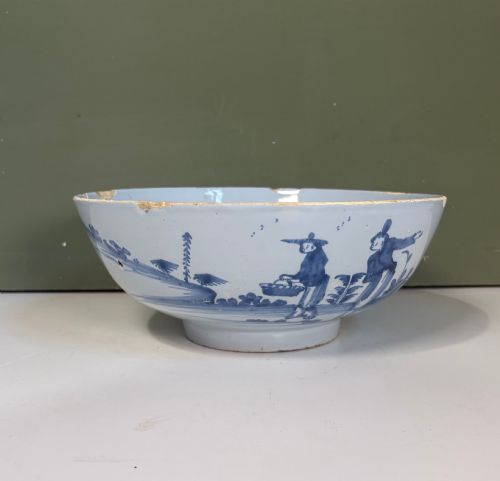
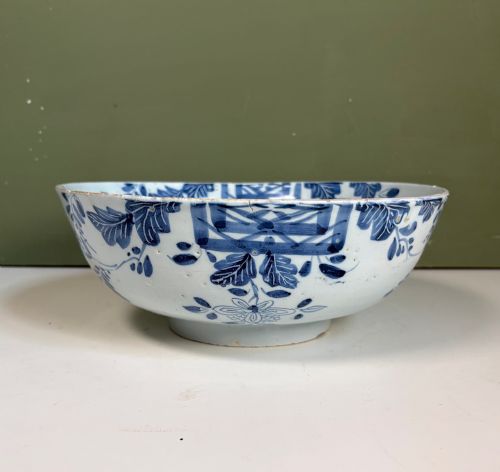
When you search for 18th century English delft, you encounter tin-glazed earthenware objects produced across England during the Georgian era. The selection centres heavily upon chargers, plates, bowls, and wall-mounted plate racks constructed from oak or pine.
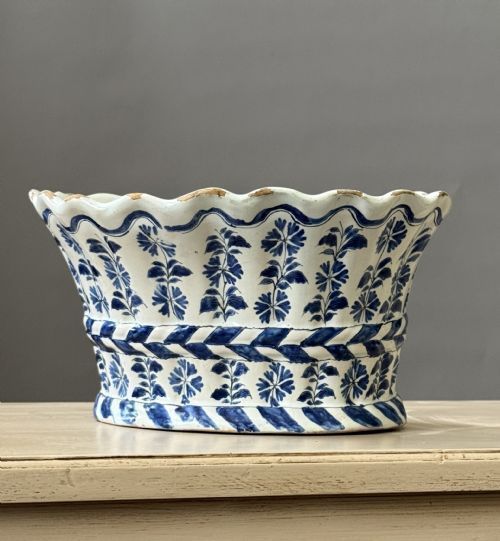
The ceramic items include posset pots, puzzle jugs, bough pots, bottle vases, and marriage plates featuring either cobalt pigment or polychrome decoration. These domestic items display forms that evolved from Dutch prototypes into a distinct English vernacular.
How they were made
Potters shaped local earthenware clay before applying an opaque tin glaze that created a white surface for subsequent painting. Artisans painted directly onto this absorbent unfired glaze using metallic oxides like cobalt pigment.
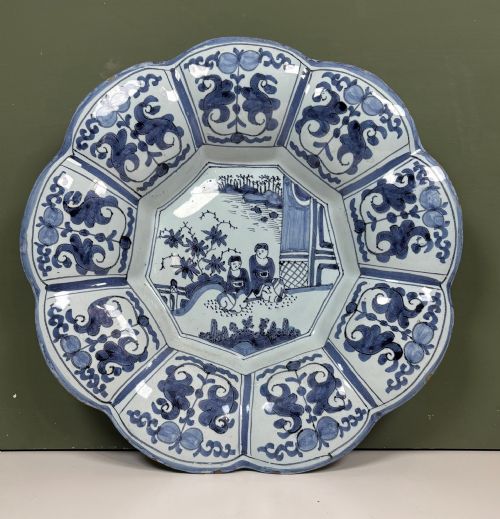
The firing process fused the pigments into the glaze, yielding soft blue and white or multi-coloured Chinoiserie scenes. Furniture pieces such as plate racks utilised sturdy native timbers like oak and pine, often finished with fretwork or columns.
Listings feature extensive examples of tin-glazed earthenware chargers alongside oak and pine plate racks fitted with Corinthian columns and fretwork.
What varies in quality
Quality rests primarily in the fluidity and confidence of the hand-painted brushwork applied to the tin glaze. Pieces with crisp cobalt pigment or well-executed polychrome floral and Chinoiserie motifs stand apart from rigid or hurried execution.
The crispness of the glaze application and the preservation of the earthenware body dictate distinction. In furniture, quality manifests in the architectural detail of oak plate racks, including Corinthian columns or fretwork.
The 18th Century English Delft Glossary
- Tin Glaze
- An opaque white ceramic glaze containing tin oxide that provides the canvas for painted decoration. This formulation absorbs cobalt pigment readily during painting.
- Charger
- A large decorative plate intended for display on a wall or dresser rather than dining use. These large earthenware dishes often measure over thirteen inches across.
- Polychrome
- Decoration employing multiple colours rather than a single pigment. Artisans used this technique to introduce vibrant hues alongside blue.
- Chinoiserie
- European artistic interpretations of Chinese decorative motifs and landscapes. This style appeared frequently on English delft plates and chargers.
- Posset Pot
- A two-handled vessel with a spout and lid used for a traditional hot milk and wine drink. Surviving examples in tin-glazed earthenware remain highly decorative.
18th Century English Delft: Frequently Asked Questions
How do I clean 18th century English delft?
Dust these tin-glazed earthenware items gently with a dry, soft cloth to protect the historic glaze surface from moisture damage.
Avoid immersing antique ceramic pieces in water, as the porous earthenware body beneath the glaze can absorb liquid and cause further crazing.
Were chargers used for dining?
Large chargers served primarily as decorative display pieces on sideboards or plate racks rather than tableware during meals.
Their substantial size and hand-painted cobalt or polychrome surfaces made them status symbols in Georgian dining rooms.
How can I tell English delft from Dutch delft?
English delft typically utilises a slightly pinker or buff earthenware body compared to the paler buff or yellowish fabrics common in continental production.
English tin glaze also tends to exhibit subtle pooling and softer blue pigments influenced by local raw materials and kiln temperatures.