
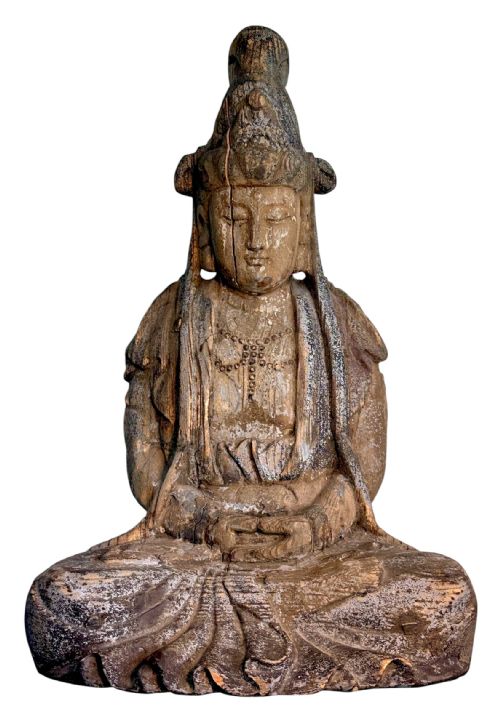


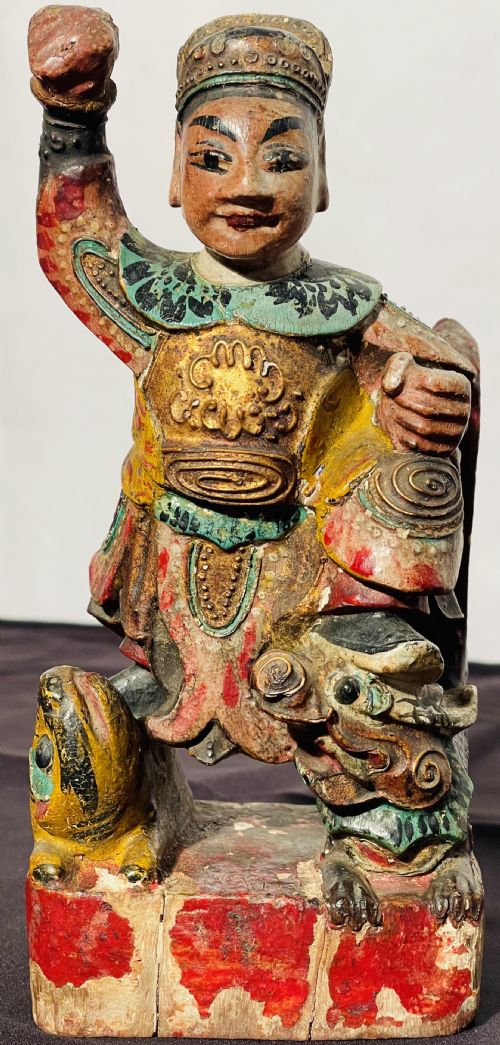
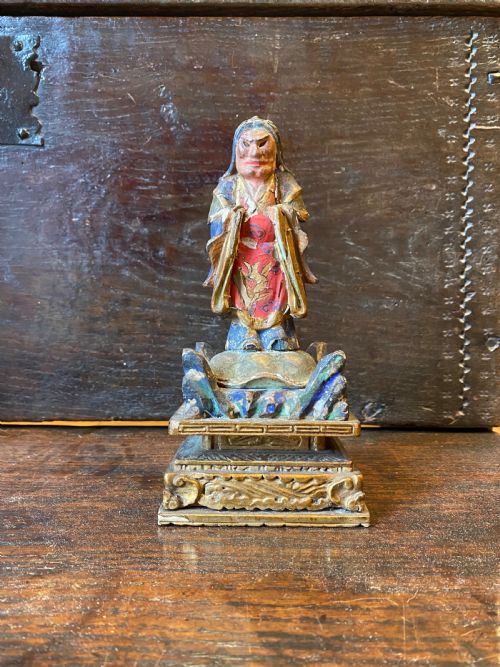


Chinese Wooden Temple Figure
A Chinese wooden temple figure brings centuries of ritual history and striking craftsmanship straight into your interior.
Chinese Wooden Temple Figure
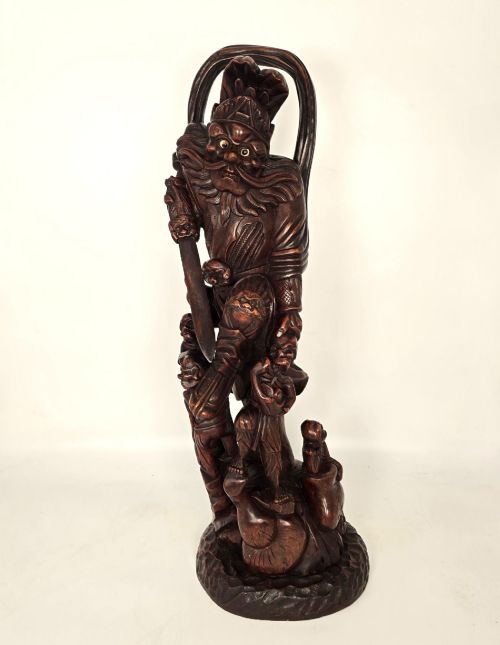
A chinese wooden temple figure comprises carved representations of deities, guardians, and officials originating from sacred spaces. The selections here span the Ming and Qing dynasties through the nineteenth century, reflecting enduring devotional traditions.
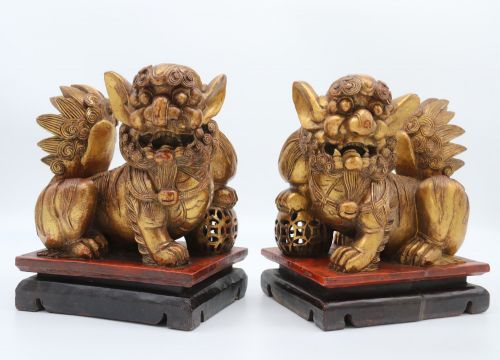
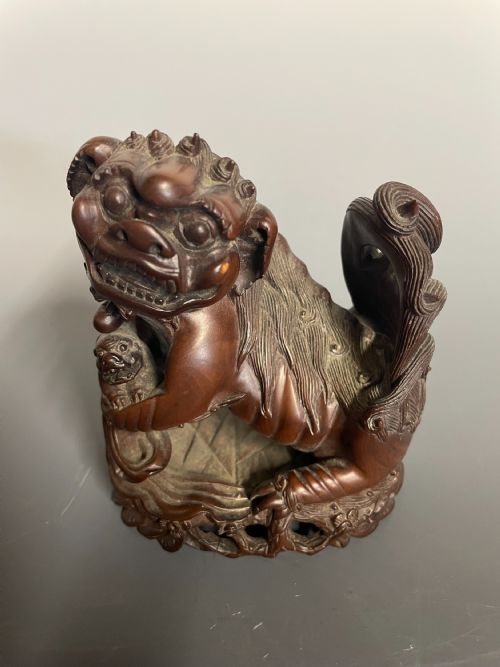
Most examples you encounter take the form of guardian kings, Buddhist lions, Foo dogs, and civil officials. These sculptures frequently serve as architectural salvage or standalone religious statues rather than domestic ornaments.
Makers shaped these subjects from hardwood, boxwood, and general timber before applying complex surface treatments. The resulting works range from monumental guardian figures to smaller medicine figure statues.
Materials and methods
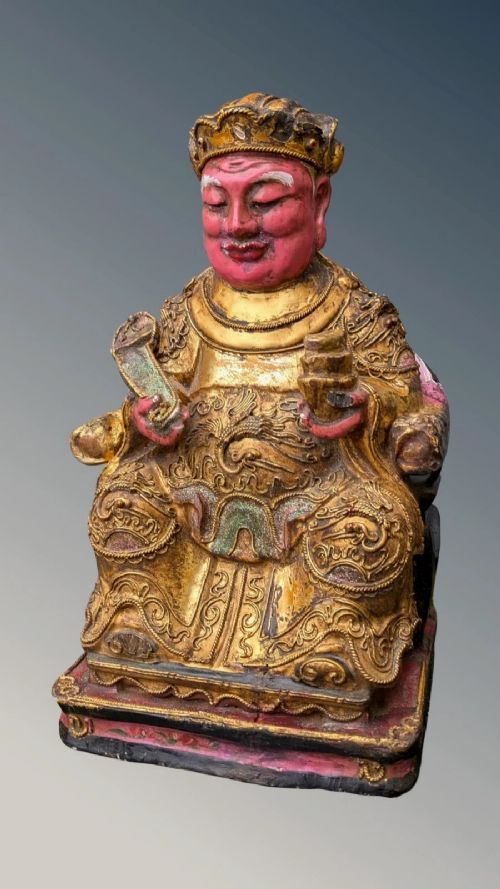
Artisans applied layers of gesso to smooth the wooden substrate before finishing the surfaces. Gold leaf, gilding, and lacquer were then added to elevate the visual presence of deities and temple guardians.
Polychrome painted decoration brought realistic colour to the garments and flesh of figures like civil officials and temple deities. This multi-layered approach combined sculptural carving with rich surface pigmentation.
Some medicine figures were used by patients to point out ailments to physicians when direct contact was restricted.
Variations in quality
The sophistication of the carving dictates the visual authority of the piece, distinguishing dynamic guardian figures from simpler regional works. Finer sculptures demonstrate deep relief, realistic muscle articulation, and detailed facial expressions.
The preservation of original surface finishes significantly influences the character of each piece. Intact layers of polychrome paint, lacquer, and gold leaf reveal the original aesthetic intent more effectively than stripped or heavily restored surfaces.
The Chinese Wooden Temple Figure Glossary
- Lokapala
- A guardian king figure traditionally tasked with protecting a specific cardinal direction in Buddhist cosmology. These monumental sculptures often display fierce expressions and elaborate armour.
- Foo dog
- A symbolic guardian lion representing prosperity, success, and guardianship outside sacred and imperial spaces. Pairs of these creatures frequently flank temple entrances.
- Gesso
- A plaster-like mixture applied to wooden sculptures to prepare a smooth surface for gilding and paint. This ground layer helps bond subsequent decorative applications to the timber.
- Corbel
- A structural piece of stone or wood projecting from a wall to support a weight above. In temple architecture, carved wooden versions often depict mythical subjects.
- Polychrome
- The practice of decorating architectural elements or sculptures in a variety of colours. This technique enhances the realism and ceremonial status of traditional figures.
Chinese Wooden Temple Figure: Frequently Asked Questions
What is a Chinese wooden temple figure?
These pieces are carved wooden representations of deities, guardians, and officials created for traditional religious settings. They reflect centuries of devotion and craftsmanship.
Today, collectors appreciate them as sculptural works of art that carry deep cultural and historical significance.
How were these figures used originally?
Temples and shrines housed these statues to offer protection, honour deities, and inspire reverence among worshippers. Figures like guardian kings and Foo dogs stood as spiritual sentinels.
Some examples also functioned as architectural salvage or domestic devotional objects within traditional Chinese households.
How do I live with a temple figure?
Place your sculpture in a stable environment away from direct sunlight and dramatic temperature fluctuations to protect the wood and surface finishes. A dedicated console table or plinth allows the piece to command the room.
Allow the historical character of the sculpture to complement your interior space without requiring heavy surrounding ornamentation.
How can I tell the periods apart?
Stylistic shifts and the condition of materials help distinguish Ming and Qing dynasty pieces from later nineteenth-century examples. Earlier works often display specific carving techniques and distinct garment folds.
Examining the application of lacquer, gesso, and polychrome paint provides further clues regarding the era of manufacture.