


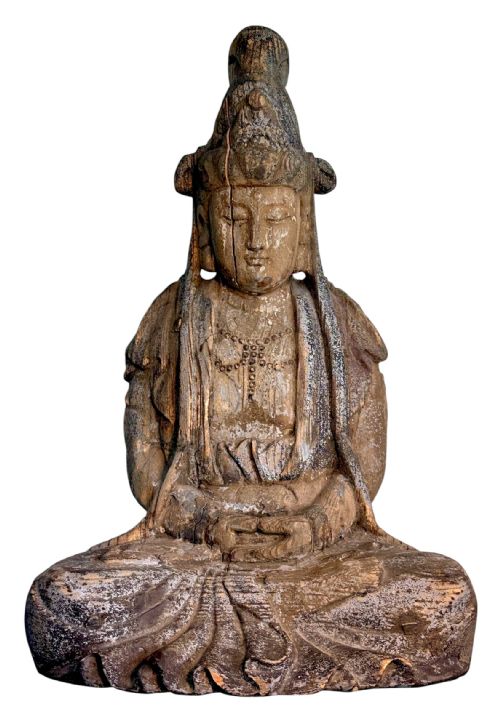


Chinese Temple Sculpture
These Chinese temple sculpture pieces bring centuries of ritual craftsmanship into a room, offering striking guardian figures and deities carved from wood and stone.
Chinese Temple Sculpture
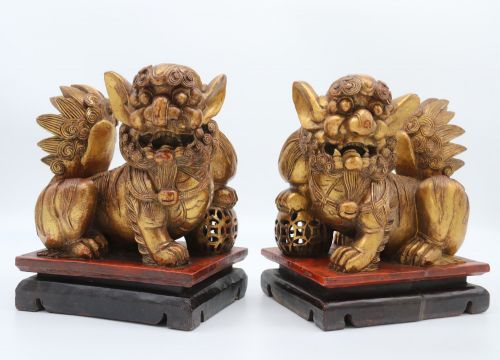
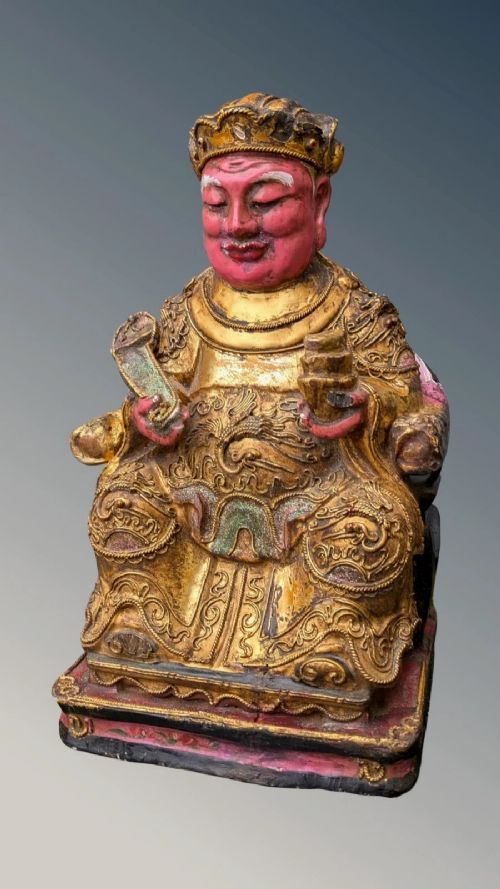
When you search for Chinese temple sculpture, you encounter figures meant to protect sacred spaces or honour deities. These pieces include guardian kings, civil officials, and lion dogs carved for shrines and monastic halls.
The objects on this page predominantly date from the seventeenth century through to the early twentieth century. Wooden figures dominate the selection, often accompanied by stone, bronze, and ceramic representations.
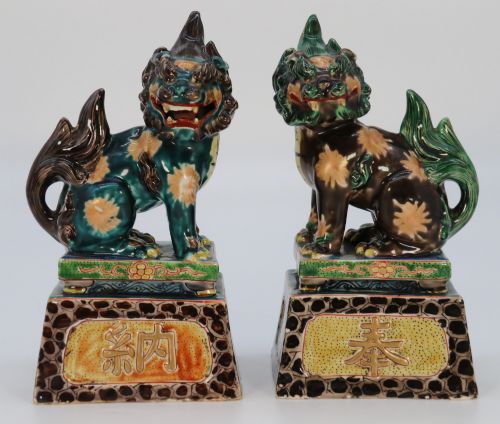
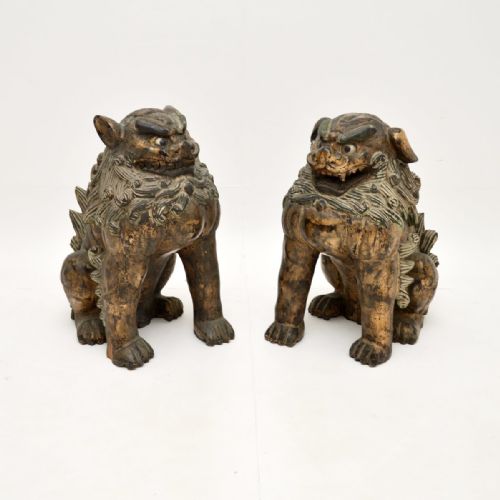
Common forms span monumental temple guardians, matched pairs of foo dogs, and smaller deities originating from the Qing and Ming periods.
Materials and construction methods
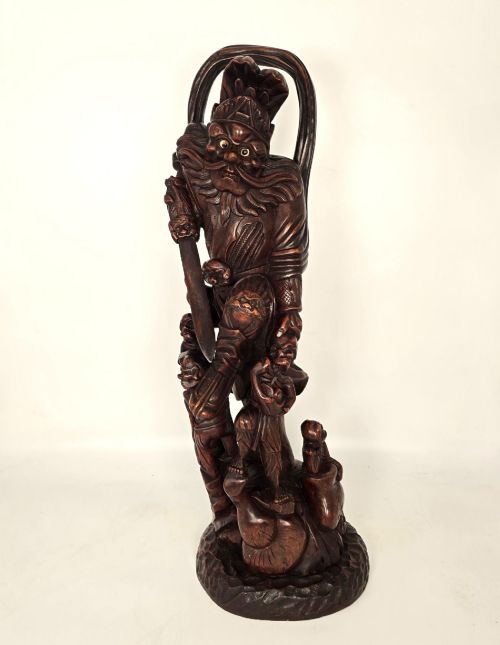
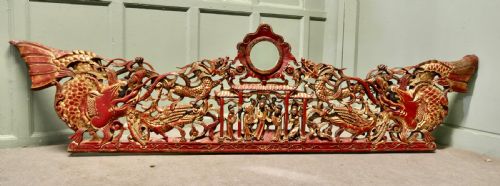
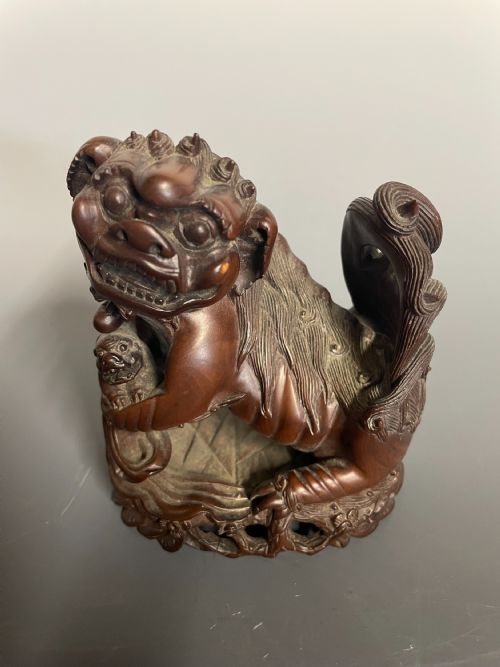
Wood serves as the primary medium, utilising boxwood, hardwood, and gessoed surfaces shaped through detailed carving. Artisans built up complex textures by applying layers of polychrome paint, gold leaf, and lacquer over the timber base.
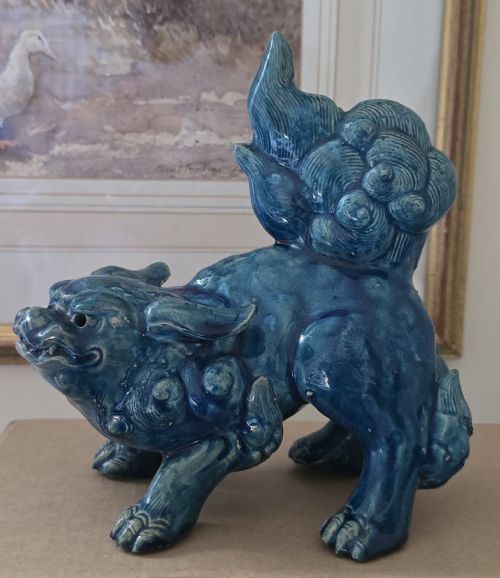
Alternative pieces utilise cast bronze, sandstone, and porcelain with turquoise glazes or enamel work. These diverse materials required specialised casting, carving, and firing techniques suited to ritual architecture.
Chinese Temple Sculpture Retail Price Guide 2026
Typical asking prices for chinese temple sculpture among the pieces listed under this phrase on Sellingantiques today, from the lower quarter to the upper quarter. They describe what is for sale here now, not the wider market.
Listings feature wooden, bronze, stone, and ceramic sculptures spanning periods from the Ming dynasty to the early twentieth century.
Evaluating craftsmanship and condition
Quality rests in the depth of the carving and the preservation of original surface treatments. Finer examples display confident chisel work in the drapery and facial expressions of guardians and deities.
The survival of original polychrome paint, gilding, and lacquer enhances the integrity of a piece. Wear and weathering reveal the age and ritual function of objects removed from temple settings.
The Chinese Temple Sculpture Glossary
- Foo Dog
- A traditional guardian lion figure placed outside temples to ward off negative spirits. These stone or wooden statues typically appear in matched pairs.
- Gilt Wood
- Timber coated with a thin layer of gold leaf or gold paint. This technique catches the light within dim temple interiors.
- Lokapala
- A heavenly guardian king depicted in armour. These figures stand watch at the four cardinal directions in Buddhist temples.
- Qing Period
- The final imperial dynasty of China, lasting from sixteen forty-four to nineteen twelve. Many wooden temple figures originate from this era.
Chinese Temple Sculpture: Frequently Asked Questions
Where were these temple sculptures originally placed?
These figures stood inside sacred halls, near altars, or beside temple entryways to serve as guardians and focal points for devotion. Larger wooden and stone pieces anchored the architecture of monastic sites.
Smaller statues often resided in domestic shrines or smaller temples for daily veneration and offerings.
How do I identify a temple guardian?
Guardians frequently appear in martial posture, wearing armour or flowing robes with dynamic expressions designed to deter malevolent forces. Figures like the Lokapala or Zhenwu stand with commanding presence.
Lion dogs, or foo dogs, sit with one paw resting on a ball or a cub, guarding thresholds with alert postures.
What materials are most common?
Carved wood forms the core of the selection, frequently enhanced with gesso, lacquer, and polychrome paint. Gilt wood finishes also appear regularly among Buddhist figures.
Alternative materials include bronze, sandstone, boxwood, and ceramic with enamel or turquoise glazes.
How should I care for a wooden temple sculpture?
Keep wooden pieces away from direct sunlight and fluctuating humidity to protect the underlying timber and fragile surface layers. Gentle dusting with a soft brush preserves the remaining paint and gilding.
Avoid using liquid cleaners or polishes on antique lacquered or polychromed surfaces.