


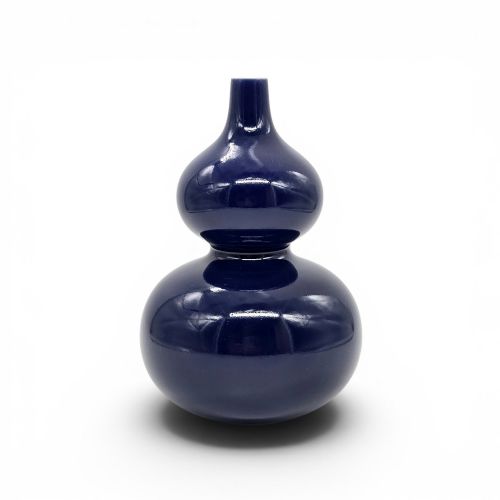
Chinese Porcelain Bottle
These chinese porcelain bottle selections range from miniature snuff containers to large nineteenth-century vases decorated with underglaze cobalt and enamels.
Chinese Porcelain Bottle
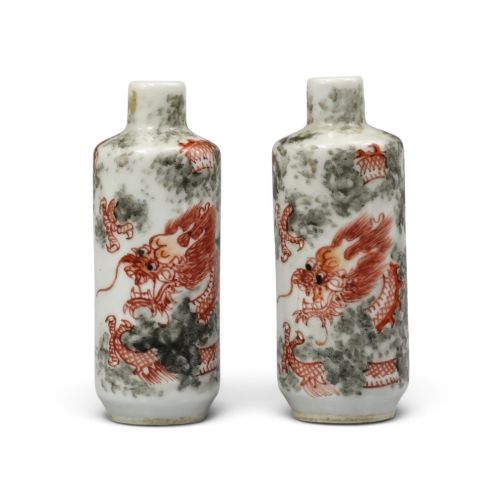
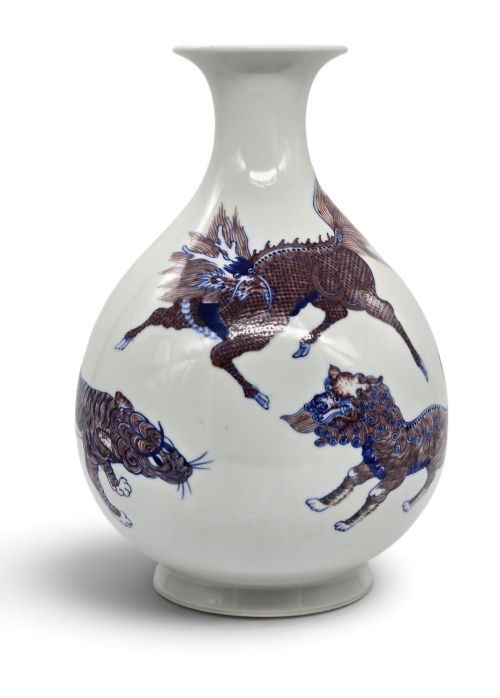
A chinese porcelain bottle takes several distinct forms across this selection, primarily appearing as tall-necked vase vessels and small pocket containers used for snuff. The most frequent examples you will encounter are nineteenth-century snuff bottles painted with figural scenes or dragons, alongside larger bottle vases finished in blue and white.
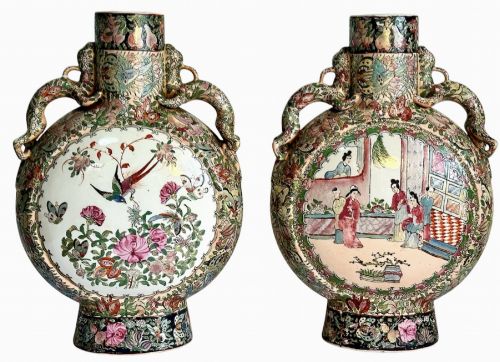
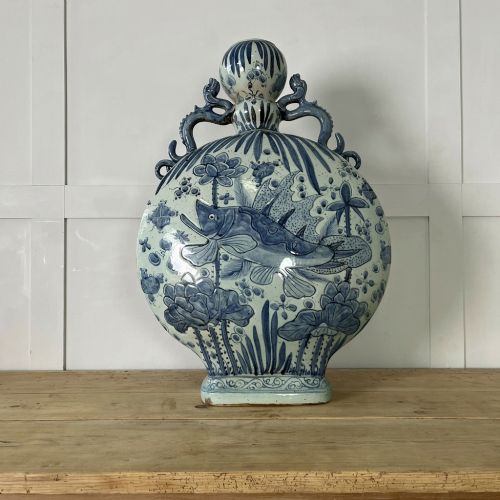
The periods represented span from the eighteenth century through to the early twentieth century, incorporating Qing dynasty pieces and later export items. Forms include garlic-mouth vases, double-gourd vessels, and moon flasks alongside standard globular and cylindrical shapes.
Makers and decorators worked within established imperial traditions, utilising reign marks such as those of the Qianlong and Kangxi eras, though many pieces reflect later nineteenth-century interpretations and republic-period production.
How they were made
Potters shaped high-fired ceramic bodies from refined clay materials, applying mineral pigments directly to the surface before glazing. Cobalt oxide provided the deep underglaze blue, while iron-red, copper-red, and multicolored enamels added contrasting detail over the fired glaze.
Specialised surface treatments defined particular wares, from pale celadon and monochrome turquoise glazes to tea dust finishes and crackle effects achieved through controlled cooling. Artisans often incised floral motifs into the damp clay or painted intricate figural narratives with fine brushes.
Listings feature porcelain pieces spanning from the 18th century to the 1930s, incorporating cobalt glaze, celadon, and enamel finishes.
What varies in quality
Glaze consistency and the purity of the ceramic body also determine quality. Uniform colour without bubbling or pooling, balanced potting, and crisply defined reign marks distinguish the finer vessels in this category.
The Chinese Porcelain Bottle Glossary
- Famille rose
- A palette of opaque enamel colours introduced in the eighteenth century, dominated by pink and rose shades derived from colloidal gold. This technique allowed artists to paint subtle tonal gradations on porcelain surfaces.
- Underglaze blue
- A decoration method where cobalt oxide is applied to the raw ceramic body before applying a clear glaze and firing at high temperatures. The pigment fuses into the ceramic surface during the kiln process.
- Snuff bottle
- A small container designed to hold powdered tobacco, typically fitted with a matched stopper and a tiny ivory or bone spoon. These portable vessels became canvases for miniature painting and carved overlay glass or porcelain.
- Double-gourd
- A vessel shape formed by two joined bulbous spheres resembling a traditional water carrier. This auspicious form symbolises good fortune and longevity in Chinese decorative art.
- Celadon
- A transparent jade-green glaze over a pale grey or white body, resulting from iron oxide reacting in a reduction kiln atmosphere. The resulting finish mimics the appearance of carved jade.
Chinese Porcelain Bottle: Frequently Asked Questions
How are antique chinese porcelain bottles dated?
Dating relies on stylistic markers, reign marks, and potting characteristics specific to dynasties such as the Qing. Potters often included imperial marks, though these can also be honorific copies made in later periods.
Examining the base, the composition of the glaze, and the vibrancy of the cobalt or enamel pigments helps establish the correct production era.
What was the purpose of snuff bottles?
Snuff bottles held powdered tobacco consumed for medicinal and social purposes during the Qing dynasty. Court members and wealthy citizens carried them daily as status items.
The small scale required meticulous miniature painting and carving by specialised artisans.
How do you display bottle vases safely?
Bottle vases require stable surfaces away from high-traffic edges due to their narrow bases and top-heavy proportions. Placing them inside enclosed cabinets protects delicate overglaze enamels from accidental knocks.
Adequate spacing allows the form and surface glaze to be appreciated without visual clutter.
What is the difference between export and imperial wares?
Imperial wares were commissioned for use within the palace and typically exhibit superior refinement, precise mark styling, and sophisticated glaze formulas. Export wares were produced in large quantities for international trade markets.
Export pieces often adapted traditional Chinese motifs to suit European and Western interior tastes.