


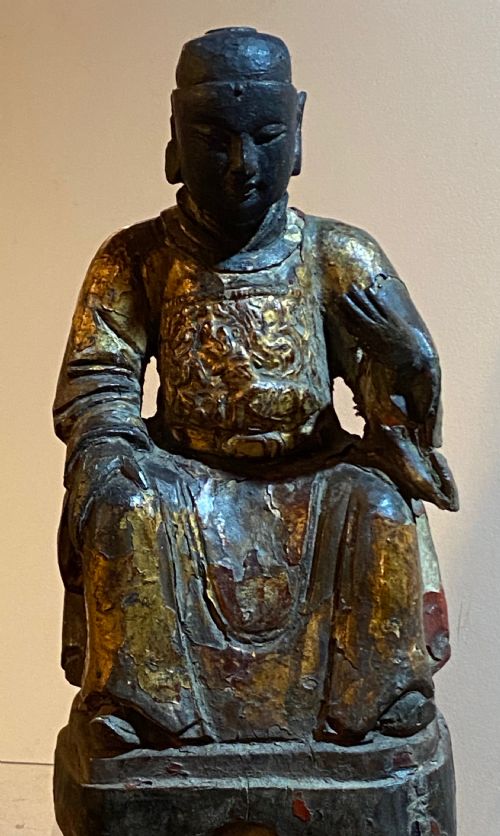

Chinese Polychrome Wooden Figure
A chinese polychrome wooden figure brings carved devotion and layered pigment from centuries past into your room.
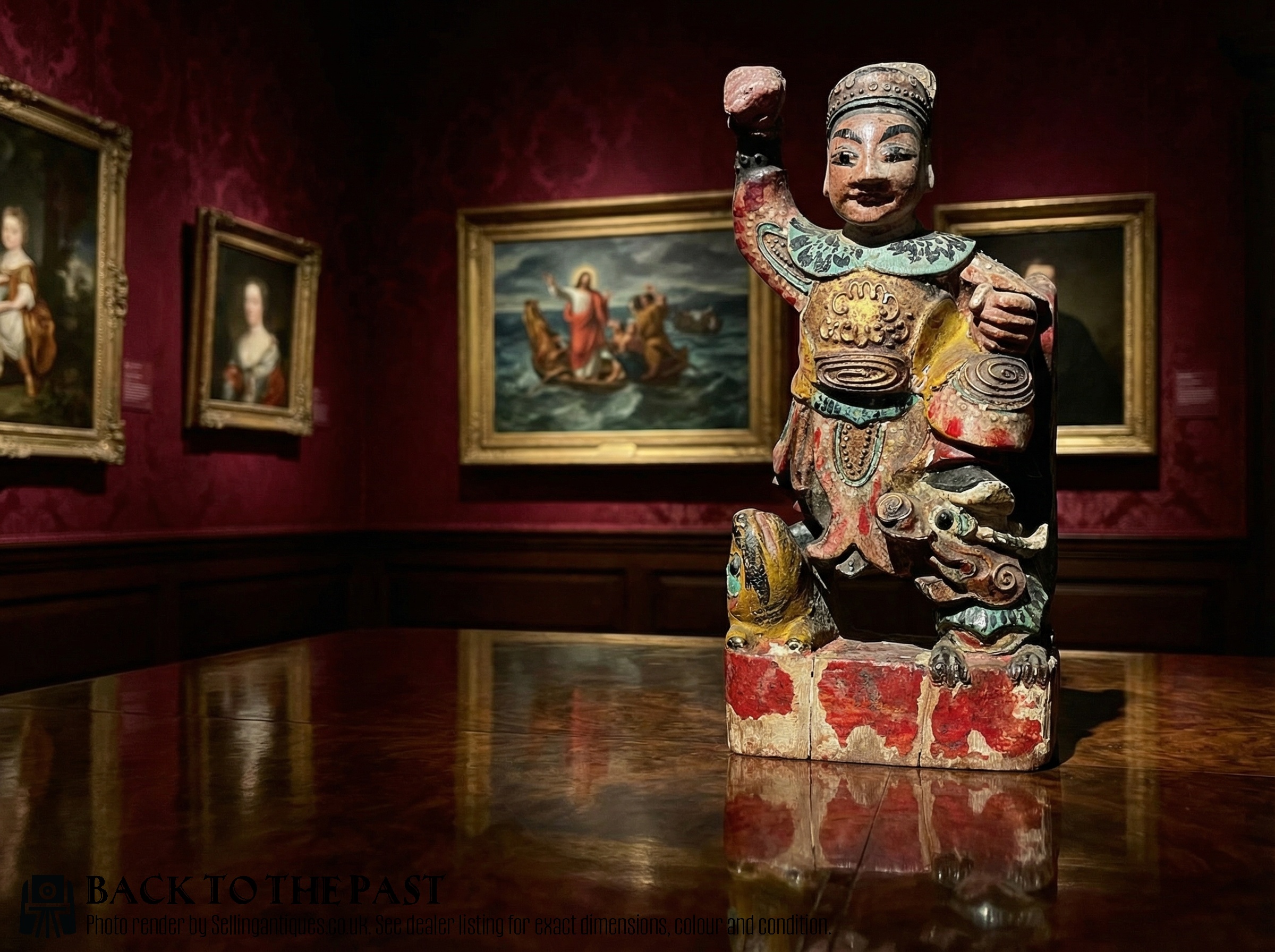
Chinese Polychrome Wooden Figure
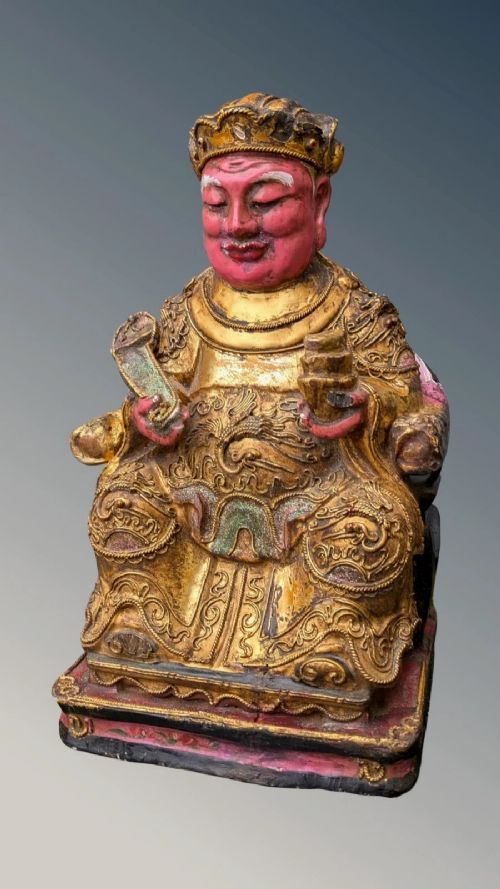
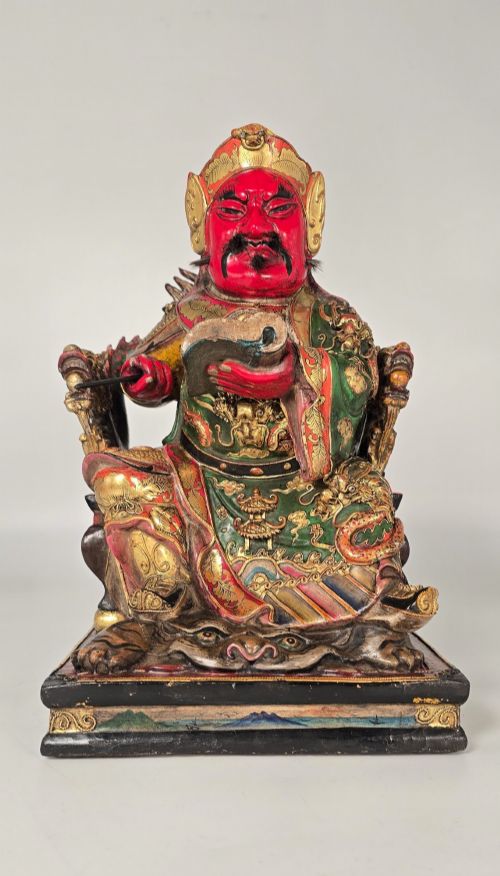
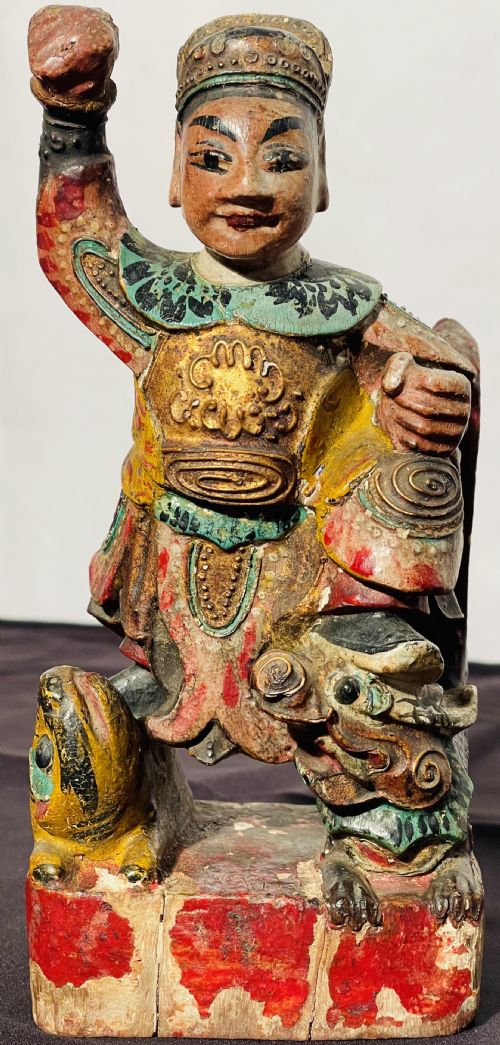
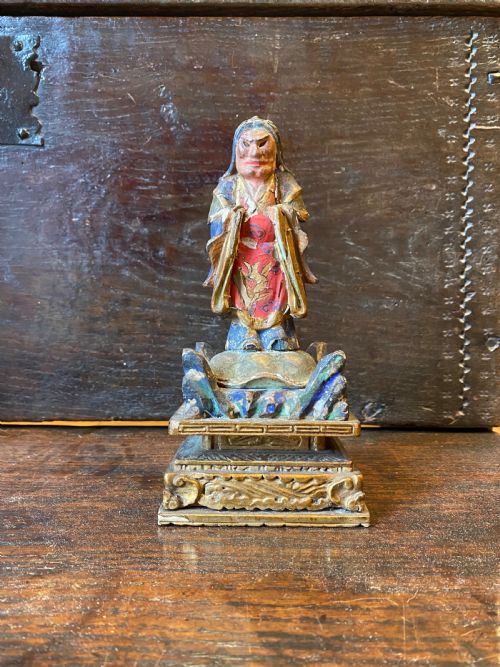
Every chinese polychrome wooden figure on this page is a carved representation of a deity, official, guardian or immortal, shaped from timber and painted by hand. These sculptures capture centuries of tradition, spanning from the seventeenth century through to the early decades of the twentieth century.
The versions most frequently met here depict revered figures such as Guanyin, civil officials, temple guardians and Buddhist immortals. These pieces originate primarily from the Qing dynasty and late Ming periods, taking the form of substantial ritual sculptures and temple figures rather than domestic ornaments.
Materials and construction methods
Makers carved these sculptures from solid wood, applying a layer of gesso to prepare the surface for subsequent decoration. This foundational layer provided a smooth ground for the application of detailed pigments.
Ancient temple guardians stare outwards with fixed intensity, seemingly determined to keep modern dust well away from their gilded robes.
Distinguishing quality in carved figures
The survival of the original surface decoration dictates much of the visual impact. Pieces retaining rich layers of gold leaf, gesso and polychrome pigment offer a more complete representation of their original appearance than those with heavy losses.
The Chinese Polychrome Wooden Figure Glossary
- Gesso
- A plaster mixture applied to wood to create a smooth surface for painting and gilding. It seals the timber before the application of colour.
- Guanyin
- A bodhisattva associated with compassion, frequently depicted in carved wooden sculptures. This figure appears often in temple art.
- Qing Dynasty
- The final imperial dynasty of China, ruling from the mid-seventeenth to the early twentieth century. Many carved wooden sculptures date from this extensive period.
Chinese Polychrome Wooden Figure: Frequently Asked Questions
How do I care for a wooden polychrome sculpture?
Keep the sculpture away from direct sunlight and steady sources of heat to protect the delicate wooden substrate and the historical pigments.
Maintain a stable indoor environment with consistent humidity levels to prevent the gesso and paint layers from lifting or flaking away over time.
How can I tell the period of a figure?
Dating relies upon observing the style of the carving, the cut of the garments, and the specific composition of the underlying gesso and pigments.
Earlier examples from the seventeenth century often display more robust proportions and distinct tool work compared to later nineteenth-century interpretations.
Where were these temple figures originally placed?
Sculptures of this scale stood upon altars or within architectural niches inside traditional temples and ancestral halls across China.
Their commanding presence was designed to overlook worshippers and protect the sacred spaces they inhabited.