



Chinese Polychrome Wood Carving
These Chinese polychrome wood carving pieces bring vivid colour and rich narrative detail into a room.
Chinese Polychrome Wood Carving
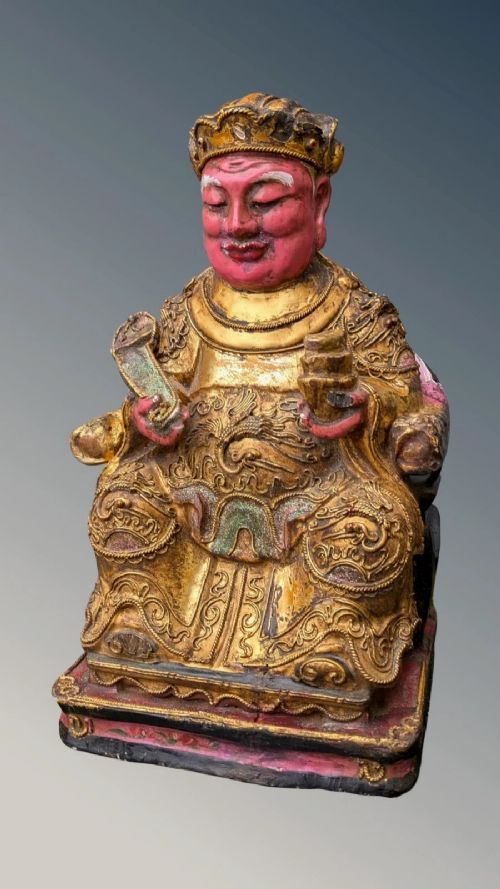
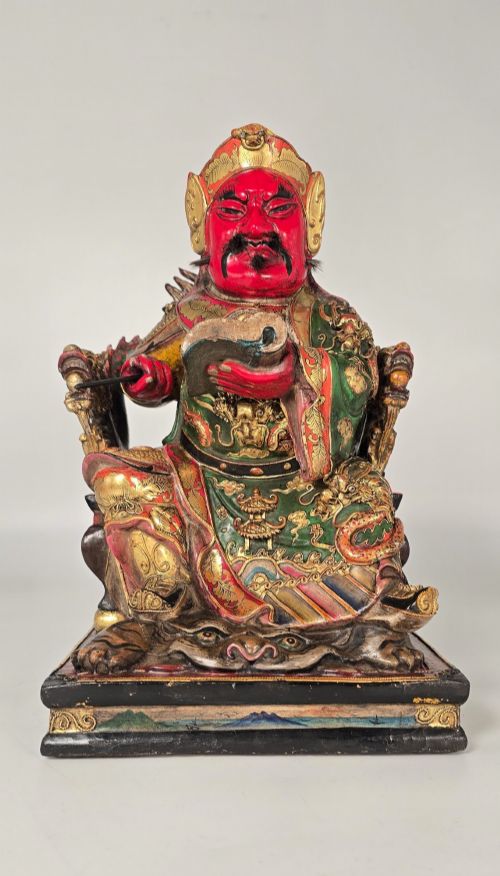
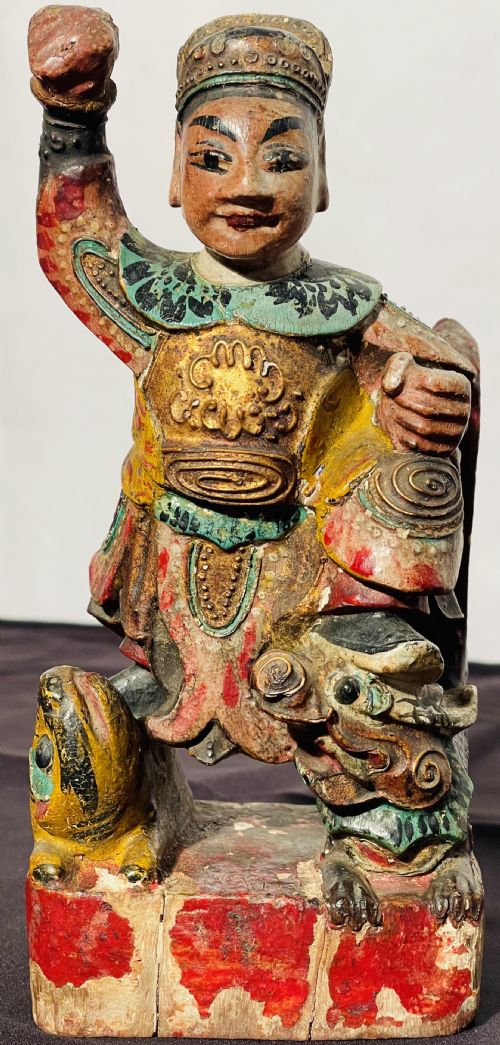
A chinese polychrome wood carving encompasses sculptural figures, temple guardians, and architectural panels dating from the seventeenth century through to the early twentieth century. Buyers seeking these works often encounter figures of deities, scholars, and officials rendered in high relief alongside decorative wall plaques.
The selections span distinct dynastic eras, notably the Qing and Ming periods, reflecting traditional craftsmanship from southern China and export markets. Many survive as individual statues or matching pairs designed for domestic or ritual spaces.
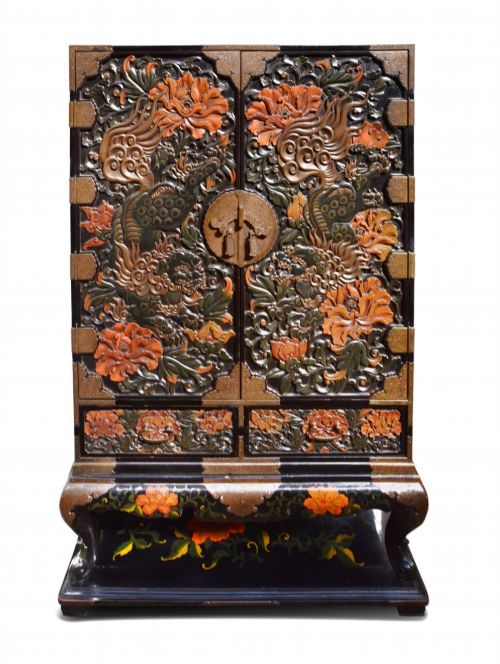
Cabinets, wall panels, and occasional seating also incorporate carved wooden elements finished with painted pigment and lacquer. The inventory ranges from compact decorative plaques to monumental temple figures.
Assessing quality
Surface integrity also defines the tier of a piece, particularly where gold leaf and hand-painted details remain intact beneath later layers of wear. The harmonious integration of lacquer, pigment, and gesso indicates a disciplined workshop origin.
Buddhist immortals and temple guardians keep a watchful, heavily gilded eye over the entire collection.
The Chinese Polychrome Wood Carving Glossary
- Polychrome
- Decoration executed in multiple colours of paint or pigment. This technique brings depth and visual narrative to carved wooden figures.
- Gesso
- A plaster-like mixture applied to wood to provide a smooth base for painting and gilding. It secures the bond between the wooden substrate and surface pigment.
- Qing Dynasty
- The final imperial dynasty of China, spanning from sixteen forty-four to nineteen twelve. Many figural carvings and decorative panels date from this extended era.
- Guanyin
- A revered bodhisattva often depicted in carved wood sculptures. These figures typically display serene facial expressions and elaborate flowing robes.
Chinese Polychrome Wood Carving: Frequently Asked Questions
How do I date a Chinese wooden carving?
Dating relies upon stylistic markers associated with dynastic periods such as the Ming and Qing eras. Tool marks, wood shrinkage, and the ageing of underlying gesso provide further chronological context.
Surface finishes also help establish age, as early pigments and gold leaf weather in distinct ways compared to later twentieth-century productions.
Where were these carvings originally displayed?
Many figural sculptures originated within temple settings as ritual figures, deities, or guardian statues meant for veneration. Architectural panels and wall plaques formed part of elite domestic interiors.
Smaller carved panels and cabinets were frequently produced for export markets, finding places in European and domestic homes as decorative furnishings.
How should I care for polychrome wood?
Protect the fragile pigment and gold leaf by maintaining stable humidity and temperature levels away from direct sunlight. Sudden environmental shifts cause the wood to expand or contract, threatening the gesso layer.
Dust the surface gently with a soft, dry brush and avoid applying liquid cleaning agents or polishes directly to the painted areas.
What is the difference between panels and figures?
Carved panels and wall plaques present narrative scenes or decorative motifs in low and high relief for vertical display. Figures and statues represent specific deities, officials, or immortals carved in the round for freestanding placement.
While panels frequently utilise lacquer and export styles, temple figures often feature layered polychrome pigment over gesso and wood.