


Gold Leaf Wooden Statue
A gold leaf wooden statue brings devotional or decorative gravity to a room, drawn from centuries of European, Asian and regional carving traditions.
Gold Leaf Wooden Statue
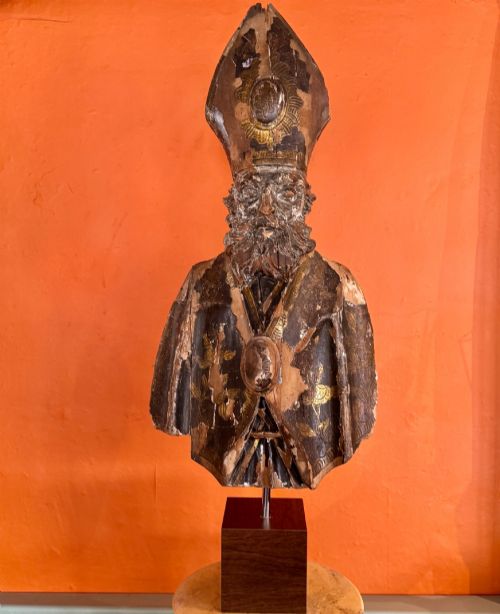
A gold leaf wooden statue is a carved sculptural object surfaced in fine metallic leaf, often combined with polychrome paint or gesso. When you search for this phrase, you encounter forms ranging from religious ecclesiastical busts and shrine figures to secular figures and decorative floor lighting supports.
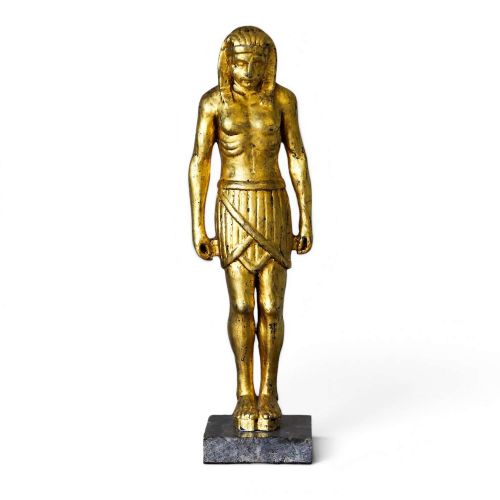
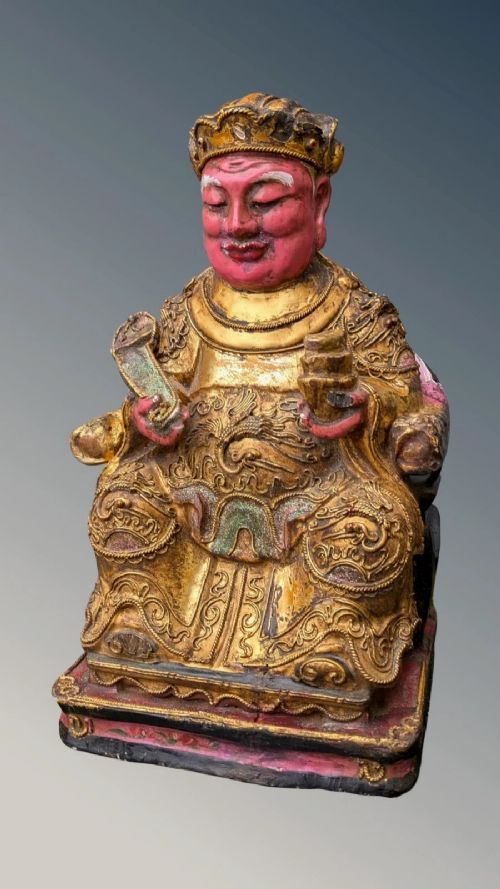
The pieces on this page span several centuries, including examples from the sixteenth, seventeenth, eighteenth and nineteenth centuries, alongside twentieth-century regional works. You will find distinct stylistic roots here, from Italian and Venetian Baroque and the Renaissance to Egyptian Revival, Qing period carving, and Burmese Mandalay traditions.
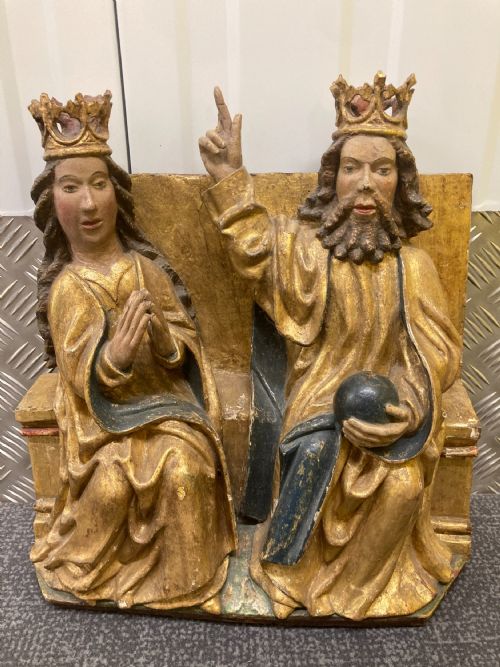
Object types vary widely across these listings, taking the form of standalone sculptures and busts, decorative figures, torcheres, shrines, and reliquaries. The common thread is carved wood treated with gilt or parcel-gilt finishes, whether portraying saints, deities, angels, or decorative blackamoor figures.
How they were made
The construction begins with timber carved into complex sculptural forms, utilising woods suited to detailed regional work. Artisans then applied layers of gesso to the carved wooden surface to create a smooth, stable ground for subsequent gilding and painting.
Fine sheets of gold leaf were laid over the prepared surface, sometimes complemented by polychrome paint to render flesh tones, garments, and decorative attributes. Parcel-gilt treatments left parts of the underlying wood or paint exposed to create contrast with the gilded areas.
Current listings feature carved wood pieces from the sixteenth century to the twentieth century, incorporating gold leaf, gesso, and polychrome paint.
What varies in quality
The application and survival of the gesso, gold leaf, and polychrome layers dictate visual coherence. Superior surfaces retain their original harmony without heavy modern overpainting, allowing the interplay of carved grain and metallic lustre to endure.
The Gold Leaf Wooden Statue Glossary
- Giltwood
- Wood that has been coated with gold leaf or gold paint. This finish creates a reflective, luminous surface common on European decorative arts and ecclesiastical furniture.
- Gesso
- A plaster mixture used as a smooth base for paint or gold leaf on wood. It fills tool marks and provides a brilliant ground for subsequent gilding.
- Torchere
- An ornate stand or tall floor lamp designed to hold a light source. In wooden sculpture, these often take the form of decorative figures bearing candle holders or trays.
- Shabti
- A small funerary figure placed in Egyptian tombs. Nineteenth-century examples often reflect the European fascination with antiquities during the Grand Tour.
Gold Leaf Wooden Statue: Frequently Asked Questions
How do I clean a gilded wooden statue?
Dust the surface gently with a soft, dry brush to prevent accumulation. Avoid all water, liquid cleaners, and abrasive cloths, which can lift fragile gold leaf.
Keep the piece away from direct sunlight and fluctuating humidity to protect the underlying wood and gesso foundation from cracking.
Where were most of these figures made?
The pieces originate from diverse workshops across Europe and Asia, with strong representation from Italian and Venetian studios. You also find examples rooted in Chinese Qing period craftsmanship and Burmese Mandalay traditions.
Each region employed distinct carving styles and finishing techniques, reflecting local religious practices and decorative arts.
Can I place these statues outdoors?
These wooden statues are strictly intended for interior environments. Changes in weather, moisture, and temperature will cause carved timber to warp, split, and degrade.
Furthermore, moisture will quickly ruin historical gesso, polychrome paint, and gold leaf finishes.
What does parcel-gilt mean?
Parcel-gilt refers to an object that is only partially gilded, with certain areas left as exposed wood or painted surfaces. This creates visual contrast between the reflective gold leaf and the matte textures beneath.
It was frequently used on Venetian and Italian decorative figures to emphasise specific garments or architectural details.