



Chinese Oriental Pedestal Table
A chinese oriental pedestal table brings carved timber and inset stone into a room to elevate plants, vases or lamps.
Chinese Oriental Pedestal Table
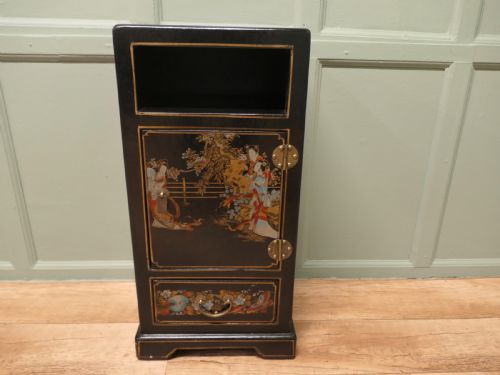
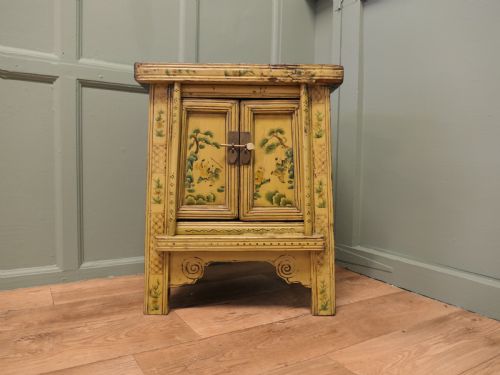
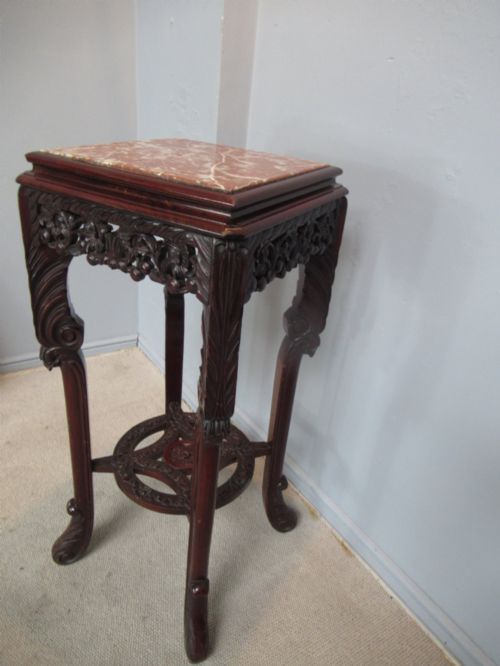
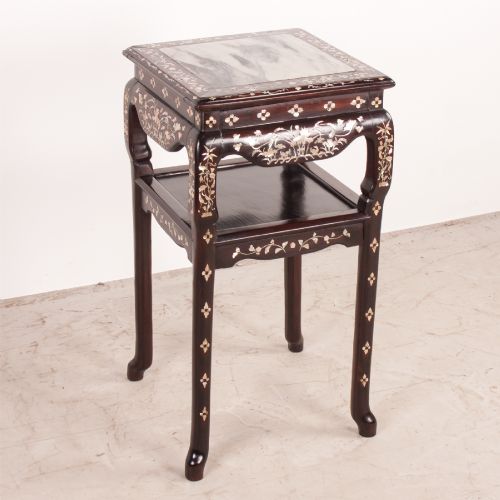
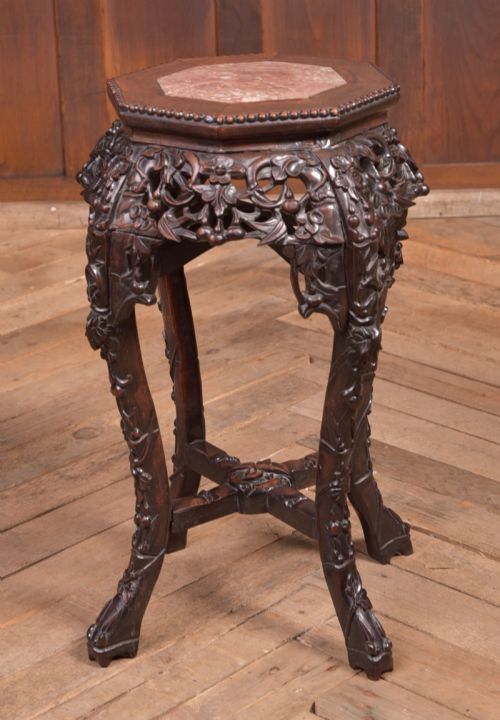
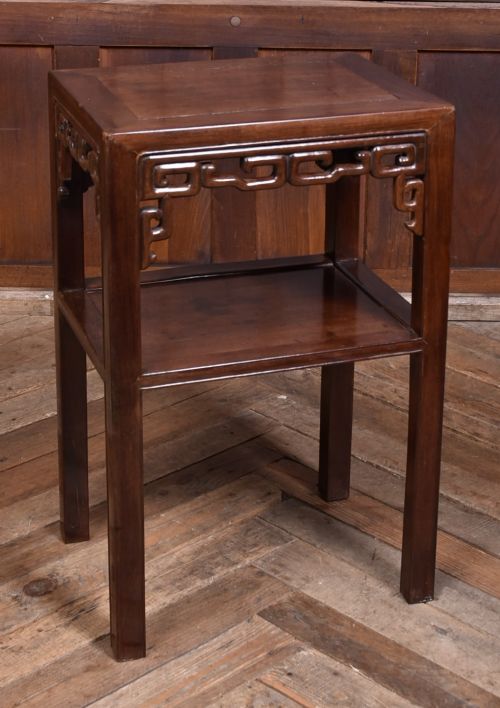
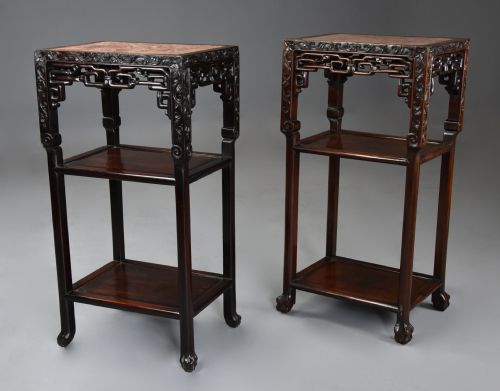
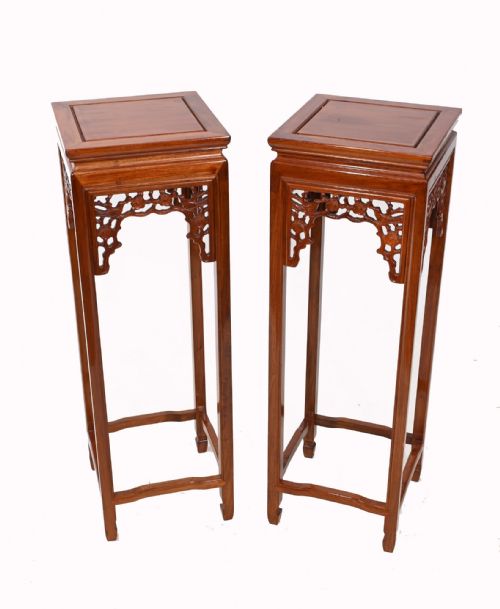
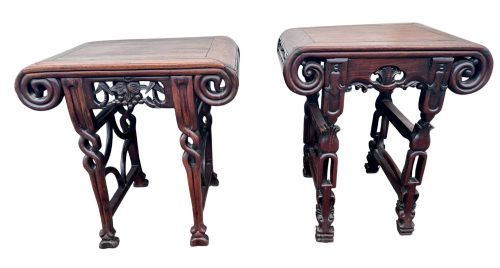
A chinese oriental pedestal table typically takes the form of a plant stand, jardiniere stand or occasional table designed for display. These pieces originate from periods spanning the nineteenth century into the early twentieth century, incorporating Qing Dynasty and Chinese Export traditions.
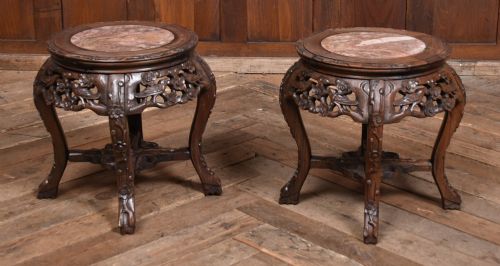
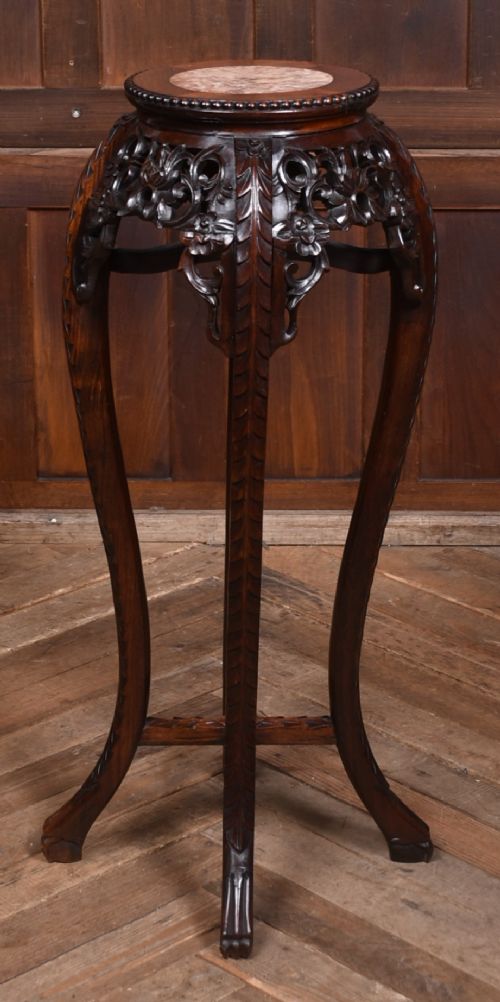
Buyers encounter low pot stands and tall pedestal stands most frequently on this page. They function as surfaces for ceramics or lighting, using compact footprints to suit various interior settings.
Materials and construction
These tables utilise dense timbers such as hardwood, rosewood, padouk and huali wood. Joinery techniques support heavy top surfaces without relying on metal fixings.
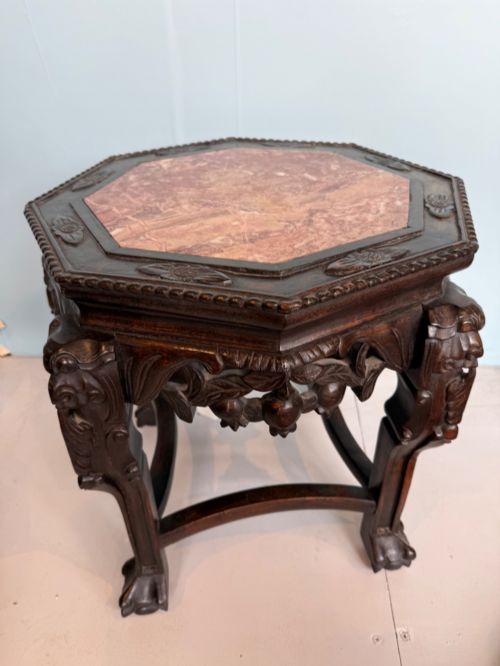
Insets of marble, rouge marble or quartz feature centrally within wooden frames to hold water-heavy planters. Carved decoration, mother-of-pearl inlay, lacquer and ebonisation complete the decorative scheme.
An unusual rootwood table exists on this site featuring a deep quartz top for eccentric geological charm.
What separates examples
Depth and crispness of the wood carving distinguish higher grade examples from simpler production. Relief work depicting dragons or floral motifs shows the hand of a skilled maker.
The choice of secondary materials matters greatly. Natural stone insets with balanced veining and dense, well-figured rosewood or padouk indicate superior selection of raw components.
The Chinese Oriental Pedestal Table Glossary
- Jardiniere
- A decorative pot or container for plants, which these tall stands are specifically engineered to support.
- Padouk
- A heavy, durable tropical hardwood noted for its reddish tone and dense grain structure.
- Marble
- A metamorphic rock used here as a cool, moisture-resistant tabletop inset for holding heavy vases.
- Qing Dynasty
- The imperial dynasty ruling China until nineteen twelve, whose aesthetic heavily influences these export pieces.
- Chinoiserie
- European interpretation of Chinese artistic motifs, seen on painted or decorated cabinets from the nineteenth century.
Chinese Oriental Pedestal Table: Frequently Asked Questions
What is a chinese oriental pedestal table used for?
These tables provide elevated display surfaces for heavy ceramic planters, bronze vessels and lamps. Their tall, narrow proportions suit corners and alcoves where standard furniture proves too bulky.
Historically, scholars and collectors used them to showcase single items of value. Today, they serve domestic interior roles for houseplants and decorative objects.
How do I identify the wood?
Close inspection of weight and grain reveals the timber species. Rosewood and padouk exhibit heavy density and dark reddish hues, whereas general hardwood displays varied grain patterns.
Surface finishes like ebonisation or clear polish alter the visual appearance but the heft of the timber remains distinct.
Are marble tops original?
Marble and quartz insets are typically fitted directly into a recessed wooden channel during initial construction. They provide a stable, water-resistant surface for damp plant pots.
Matching stone edges to the surrounding timber rebate indicates original placement rather than later repair.
How do I care for the surface?
Dust regularly with a dry cloth and avoid exposing timber and lacquer to direct heat or moisture. Use protective pads beneath ceramic planters to prevent scratching the stone or wood.
Applying occasional appropriate furniture wax maintains the finish on exposed hardwood areas.