






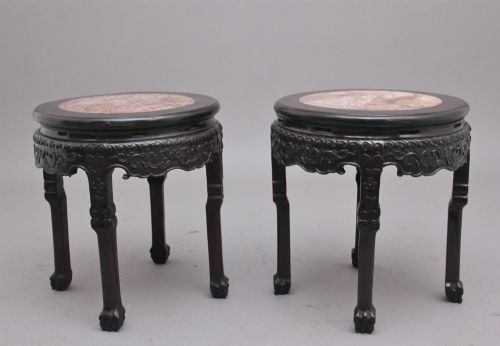



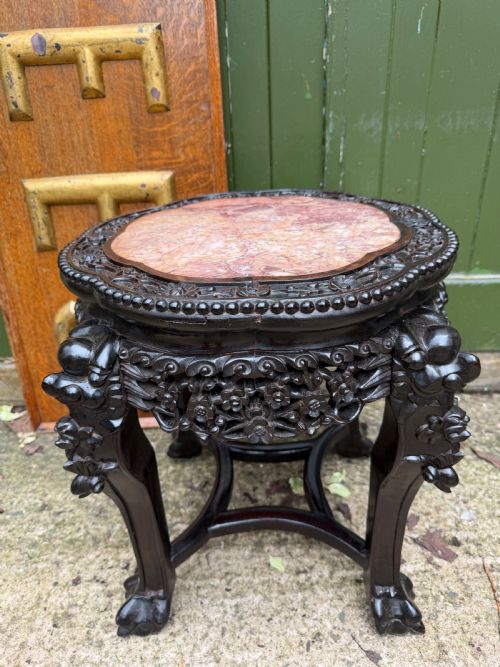

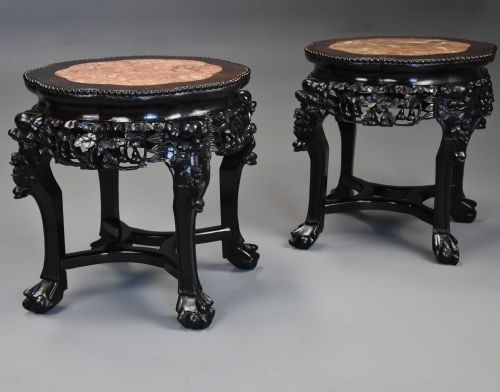
Chinese Marble Plant Stand
A chinese marble plant stand brings together dense tropical timber and cool stone to elevate a room's focal flora.

Chinese Marble Plant Stand
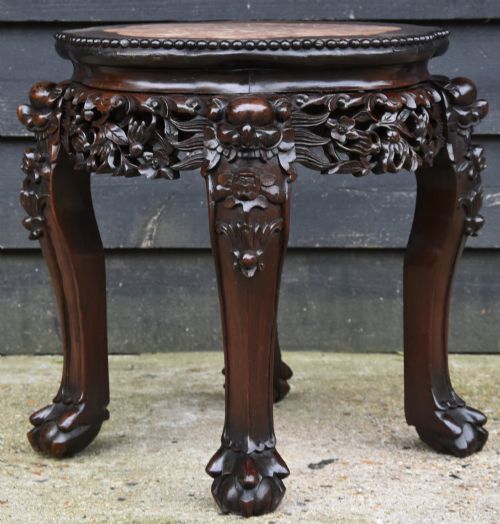
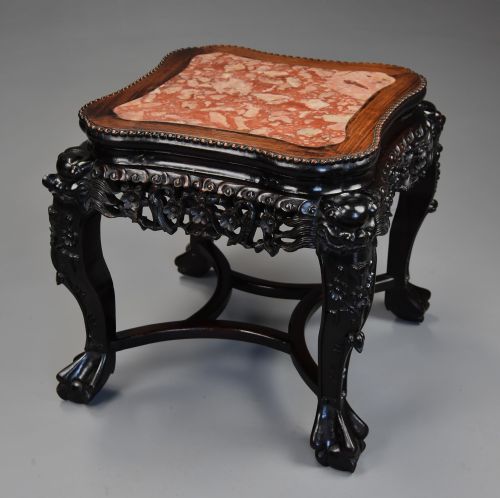
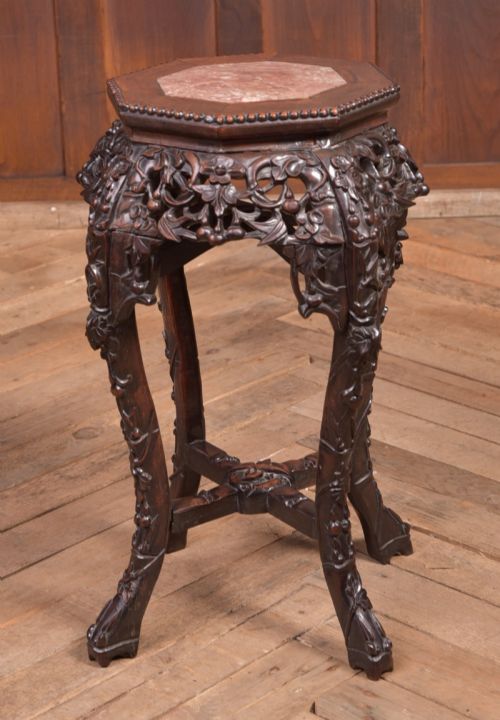
A chinese marble plant stand typically presents as a low occasional table, a tall pedestal, or a compact jardiniere holder designed to display heavy ceramic vessels. Most examples originate from the late nineteenth century, spanning the Qing Dynasty through to the Edwardian period.
The profile ranges from rectilinear forms to shaped circular and multi-sided tops supported by carved aprons and cabriole legs. These pieces double as side tables, lamp stands, and vase supports in both traditional and eclectic interiors.
Materials and Techniques
Makers utilised dense Asian hardwoods including rosewood, padouk, hongmu, and rootwood, selecting them for their natural weight and dark colour. These timbers were carved with deep relief ornamentation, showing floral motifs, scrolling tendrils, and animal forms.
The central inset is composed of shaped marble, frequently variegated rouge or white stone, bedded flush into the wooden frame. Selected pieces incorporate mother-of-pearl inlay or quartz to accent the timber surfaces.
Chinese Marble Plant Stand Retail Price Guide 2026
Typical asking prices for chinese marble plant stand among the pieces listed under this phrase on Sellingantiques today, from the lower quarter to the upper quarter. They describe what is for sale here now, not the wider market.
Materials recorded across the inventory include rosewood, padouk, hongmu, and rootwood.
Evaluating the Pieces
Quality rests upon the depth and crispness of the wood carving, where finer examples display undercut work and well-defined motifs rather than shallow stamping. The density and grain of the selected timber also indicate the tier of production.
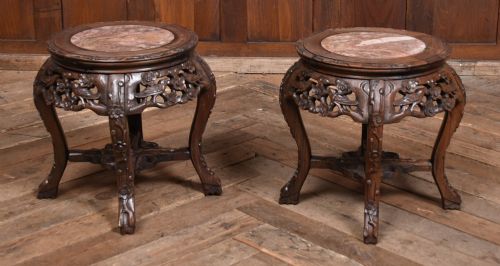
The fit of the marble insert matters significantly, with superior pieces featuring stones precisely contoured to the wooden channel without excess gap-filling. Matched pairs and unusual rootwood formations command particular attention from collectors.
The Chinese Marble Plant Stand Glossary
- Hongmu
- A traditional Chinese term for dense red-black hardwoods used in fine furniture making. It translates literally to red wood.
- Padouk
- A heavy tropical timber displaying a distinctive reddish hue that darkens with age. It provides a stable base for intricate wood carving.
- Inset top
- A panel of marble or stone dropped flush into a wooden frame. This construction accommodates the weight of heavy urns and vases.
- Rootwood
- Timber fashioned from the gnarled underground growth of a tree. It yields irregular, organic shapes utilised in rustic stands.
Chinese Marble Plant Stand: Frequently Asked Questions
What is a chinese marble plant stand used for?
These pieces function primarily as elevated platforms for heavy ceramic planters, urns, and vases. They lift foliage off the floor to showcase the plant and protect flooring from moisture.
In modern rooms, they serve equally well as small side tables, lamp stands, or bedside surfaces. Their compact footprints make them versatile additions to corners and tight spaces.
How do I identify a nineteenth-century stand?
Nineteenth-century examples display traditional joinery methods and heavy tropical hardwoods such as rosewood and padouk. The carving is executed by hand, resulting in natural variations across the surface.
Look for the patination of the timber and the character of the marble inset. Late Victorian and Qing Dynasty pieces exhibit specific regional carving styles tied to their export period.
Are these stands sturdy enough for heavy pots?
They are engineered specifically to bear substantial weight, as their original purpose involved supporting large ceramic fishbowls and heavy bronze vessels. The combination of dense hardwood and solid stone creates a low centre of gravity.
Freestanding square and circular bases distribute weight evenly down through the carved legs. Even slender pedestal forms utilise heavy timber framing to ensure stability.
How do I clean the marble insert?
Wipe the stone surface with a soft, damp cloth using mild, neutral soap if necessary. Avoid acidic cleaners, vinegar, or harsh chemicals that can etch the polished marble finish.
Dry the stone thoroughly after cleaning to prevent water spots. Maintain the surrounding hardwood with appropriate wax rather than silicone polishes.