
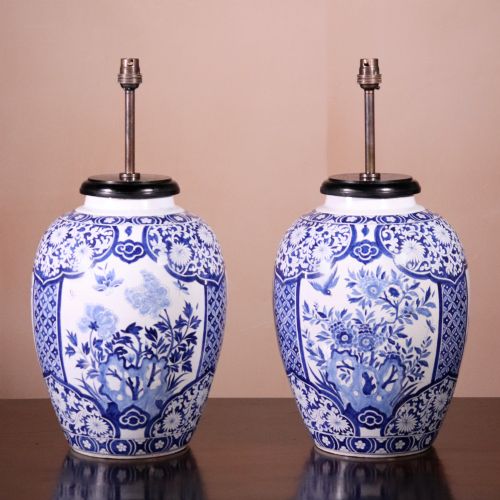


Chinese Jar Lamp
A chinese jar lamp brings together historic ceramic vessels and domestic lighting, offering a practical way to display antique porcelain in a room.
Chinese Jar Lamp
A chinese jar lamp takes a ceramic vessel, most often a ginger jar or ovoid vase, and adapts it to hold electrical fittings for illumination. The pieces encountered here stem principally from the nineteenth century, including items dated between eighteen eighty and nineteen hundred, alongside styles associated with the Qing dynasty and Chinese export production.
The ceramic body typically retains its original painted decoration, such as blue and white cobalt designs, famille rose, famille verte, powder blue, or celadon glazes. Many examples originate as lidded vases or ginger jars that were converted into table lamps at a later date, occasionally paired with fabric or silk shades.
Beyond standard ginger jars, the selection encompasses monumental vases, crackleware bodies, and items fitted with brass, ormolu mounts, or gold leaf. Alongside porcelain vessels, the broader category occasionally includes wooden furnishings intended to support lighting.
Materials and Construction
The primary material is porcelain, shaped into jars and vases, then decorated with hand-painted enamel colours or cobalt blue beneath the glaze. Potters utilised traditional firing techniques in kilns, producing variations such as crackleware glazes and smooth powder blue surfaces.
Metalwork plays a secondary structural and decorative role, with brass and ormolu mounts fitted to the ceramic bases to secure the lamp fittings. Wooden elements and fabric or silk components complete the construction for domestic use.
Listings demonstrate a strong presence of nineteenth-century porcelain, with blue and white ginger jars forming the most frequent ceramic form.
Distinctions in Quality
Quality rests upon the fineness of the porcelain body and the precision of the hand-painted decoration, where crisp lines and rich enamel tones elevate a piece above simpler output. The integration of metal mounts, such as cast ormolu or heavy brass, adds structural refinement to the finished lamp.
The original state of the ceramic vessel prior to conversion influences the overall standing of the piece, particularly where matching pairs survive intact with balanced proportions and well-preserved glazes.
Samson Porcelain
The Chinese Jar Lamp Glossary
- Famille Rose
- A palette of opaque enamel colours dominated by pink or rose shades, introduced during the Qing dynasty. It appears widely on nineteenth-century decorative jars and vases.
- Famille Verte
- A ceramic decoration style relying predominantly on green enamels alongside other colours, frequently seen on antique table lamps.
- Celadon
- A pale green jade-like glaze applied to porcelain vessels, prized for its subtle tone and smooth finish.
- Ormolu
- Gilt bronze mounts applied to furniture and ceramic objects for decorative and structural support. It frequently frames the base or collar of a converted jar lamp.
- Prunus Blossom
- A traditional decorative motif depicting blossoming plum branches against a cracked ice background, commonly rendered in blue and white on ginger jars.
Chinese Jar Lamp: Frequently Asked Questions
Are these lamps converted from old jars?
Many examples begin life as nineteenth-century ceramic ginger jars or lidded vases before being adapted into functional table lamps.
This conversion process retains the original painted body while integrating modern wiring and fittings for household use.
How do I identify a nineteenth-century piece?
Dating relies on stylistic markers such as cobalt blue tones, enamel palettes like famille rose, and characteristic potting methods from the eighteen eighties and nineties.
Examining the base and the ceramic body helps determine the period of manufacture.
What styles of decoration are common?
Blue and white designs and prunus blossom motifs appear frequently across the selection, alongside polychrome famille verte and celadon glazes.
Export styles and chinoiserie interpretations also feature prominently among the listed vessels.
How should I place a jar lamp in a room?
These lamps function effectively as decorative focal points on side tables, cabinets, or pedestals where their painted porcelain surfaces receive adequate light.
Pairing them with neutral fabric or silk shades allows the colourful ceramic body to remain the primary visual feature.