




Chinese Hardwood Stools
Chinese hardwood stools bring dense timbers and carved forms together to anchor a room with enduring seating and display surfaces.
Chinese Hardwood Stools
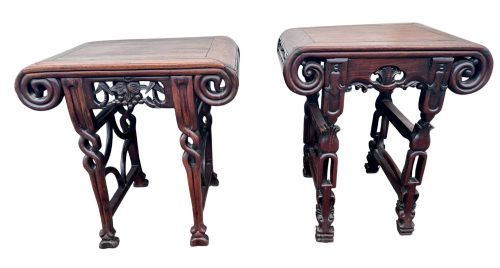
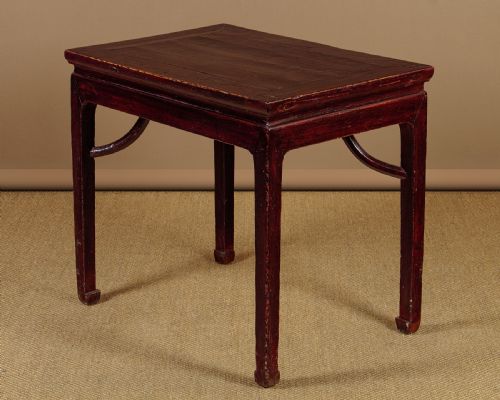
Chinese hardwood stools encompass low tables, barrel stools, altar benches, and plant stands shaped by Qing dynasty traditions and provincial workshops. These pieces serve multiple roles within a room, functioning as occasional seats, side tables, or elevated platforms for porcelain and plants.
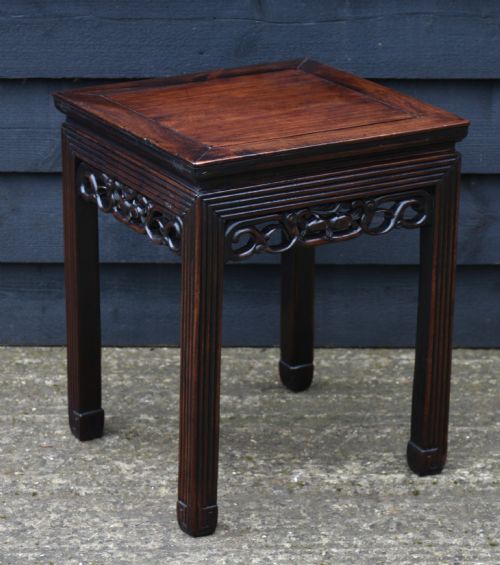
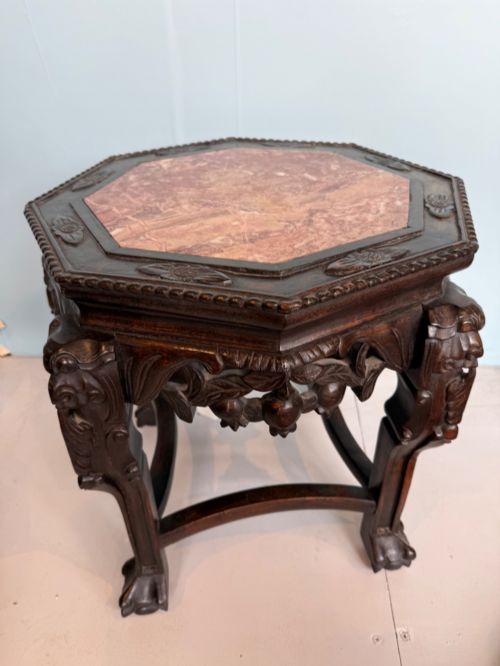
The version most commonly met on this page is the carved hardwood stool or stand dating from the nineteenth century, often fashioned from dense timbers like hongmu or rosewood. Many feature inset marble or porcelain panels, while others take the form of drum shapes or low square configurations.
Makers produced these items in matched pairs and single examples, utilising robust joinery to create sturdy frames. The inventory ranges from rustic elm forms to elaborately carved huali wood window seats and barrel-shaped occasional tables.
Materials and Construction
Craftsmen built these pieces from heavy, durable timbers including rosewood, hongmu, elm, teak, and ebonised hardwood. These dense woods allowed for intricate carving without compromising the structural integrity of the frame.
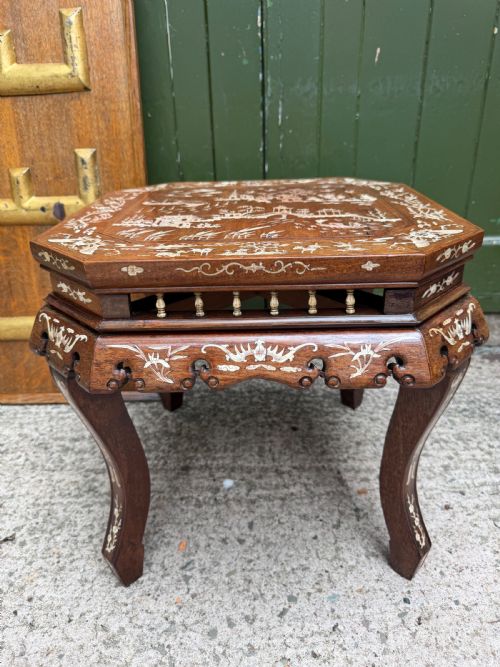
Makers frequently integrated contrasting materials into the wooden framework, setting rouge marble tops, porcelain panels, and mother-of-pearl inlay directly into the timber. Traditional joinery methods secured the elements together without relying on modern metal fasteners.
Listings feature items dated across the nineteenth century, 1880, 1890, 1900, 1920, and the Victorian era, utilising rosewood, marble, hongmu, elm, lacquer, and ebonised timber.
Quality and Craftsmanship
The standard of a piece rests on the depth and crispness of the carving, alongside the selection of the wood. Dense timbers with rich grain patterns, such as hongmu and huali, elevate the visual weight of the item.
The integration of inset elements like marble and porcelain panels indicates higher workmanship, particularly when fitted flush into the surrounding hardwood frame. Matched pairs and unusual forms, such as barrel shapes or drum designs, demonstrate greater ambition from the workshop.
The Chinese Hardwood Stools Glossary
- Hongmu
- A dense, heavy Chinese hardwood prized for its dark colour and fine grain. Artisans frequently used it for high-status stands and stools.
- Huali
- A traditional Chinese aromatic hardwood valued for its decorative grain. It appears on carved dressing stools and window seats.
- Altar bench
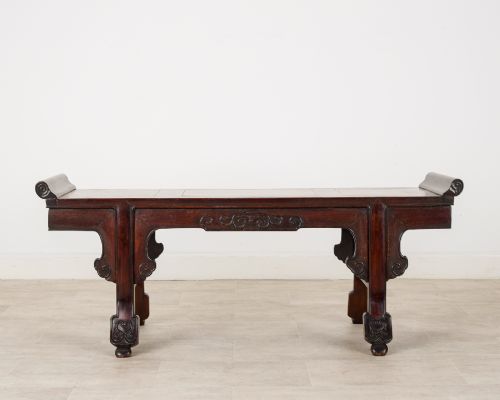
- A long, narrow wooden table or seat form derived from traditional temple furnishings. These pieces often feature stepped ends or openwork carving.
- Barrel stool
- A cylindrical seating form inspired by traditional ceramic garden seats. Examples are constructed from hardwood with inset panels or carved drum detailing.
- Porcelain panel
- A decorative ceramic insert fitted into the wooden top of a stand or table. These panels display painted scenes or crackle glazes.
Chinese Hardwood Stools: Frequently Asked Questions
How were Chinese hardwood stools used?
These pieces served as movable seating, window seats, and stable surfaces for holding plants, lamps, or decorative vessels. Their compact proportions allowed them to move easily between rooms for various domestic tasks.
In traditional interiors, taller stands elevated precious objects to eye level, while low stools and benches provided versatile seating around living spaces.
What woods are used in these stools?
Makers utilised dense tropical and domestic timbers such as hongmu, rosewood, huali, teak, and elm. Ebonised finishes were also applied to achieve a uniform dark surface.
The choice of material often dictated the level of carved detail, with harder timbers supporting sharper, deeper relief work.
How do I date a Chinese hardwood stool?
Dating relies on stylistic markers from the nineteenth century, the Qing dynasty, and the transitional period towards 1900. Construction methods, timber choice, and the presence of specific decorative motifs provide the primary clues.
Provincial pieces often display simpler rustic qualities, whereas formal export pieces exhibit tighter joinery and refined carving.