
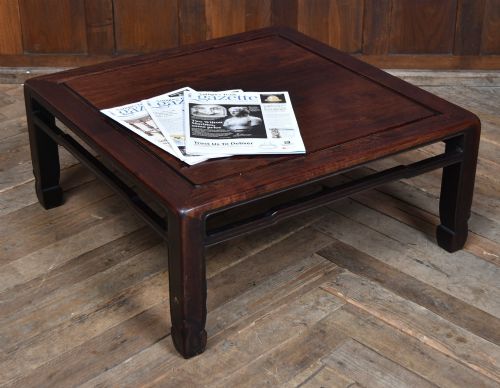
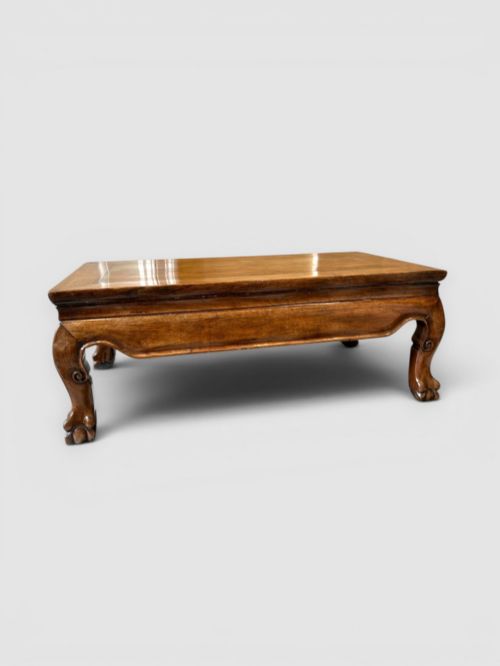


Chinese Hardwood Opium Table
A chinese hardwood opium table is a low-slung, sturdy form that brings a grounded silhouette and rich timber grain to modern sitting rooms.
Chinese Hardwood Opium Table
A Chinese hardwood opium table is a low, horizontal form historically used on heated platforms or seating platforms for dining, resting or smoking. These pieces function readily as contemporary coffee tables in modern interiors, offering a compact footprint combined with solid construction. The selection here spans the nineteenth century through the early decades of the twentieth century, encompassing both plain rectangular shapes and carved scroll-end designs.
Most examples originate from the Qing Dynasty and the subsequent Republic period, showing traditional Chinese craftsmanship adapted for export or domestic use. Buyers frequently encounter rectangular low tables alongside circular variants and matched pairs suitable for placing side by side. These objects merge utility with distinct regional styling, often designated interchangeably as kang tables or coffee tables.
Construction and Materials
Carpenters constructed these tables using dense timbers such as padouk, rosewood, huali wood, hongmu, and elm. These heavy hardwoods allowed for precise joinery without relying on excessive metal fasteners, providing long-term stability for low furniture.
Surfaces often received hand-carved detailing, particularly at the scroll ends, aprons, and legs, whilst others remained plain to highlight the natural grain and patina of the wood. Some pieces utilised ebonised treatments to achieve a dark, uniform appearance, while others retained the warm reddish-brown tones inherent to padouk and rosewood.
Materials documented across the pieces include padouk, rosewood, huali wood, hongmu, elm, and ebonised hardwood.
Assessing Quality
Quality rests upon the selection of timber and the depth of the natural patina built up over generations of use. Dense, heavy woods like padouk and huali command greater interest due to their superior grain definition and structural integrity.
Carving execution separates standard utilitarian items from finer examples. Crisp, deeply undercut scroll ends and well-proportioned framing distinguish the work of skilled joiners from simpler workshop output.
The Chinese Hardwood Opium Table Glossary
- Kang table
- A low platform table designed to sit atop a heated brick bed or seating surface in traditional Chinese homes. These tables share the same low proportions and form as opium tables.
- Padouk
- A heavy, durable tropical hardwood prized for its reddish-brown colour and dense grain. It provides exceptional stability for traditional joinery.
- Huali wood
- A fragrant and highly decorative Chinese hardwood prized for its distinctive figures and rich tone. It was frequently utilised in Qing Dynasty seating and low tables.
- Scroll-end
- A structural feature where the ends of the tabletop or aprons curl outward in a volute form. This design detail is characteristic of traditional kang tables.
- Hongmu
- A categorical term for dense, red-toned Chinese hardwoods. Artisans used these timbers to create durable, high-status household furnishings.
Chinese Hardwood Opium Table: Frequently Asked Questions
How were opium tables used originally?
These low tables sat upon raised platforms or beds where people gathered for resting, socialising, and consuming tea or opium. Their compact height suited domestic activities performed from a seated or reclining position.
Today, the same proportions make them suitable as low coffee tables in front of modern sofas. They anchor a room by keeping sightlines open across the living space.
Can I use an opium table as a coffee table?
Their low profile and sturdy build make them practical alternatives to standard modern coffee tables. They easily accommodate books, trays, and decorative objects while maintaining a low visual weight.
Most living rooms benefit from the contrast between low timber surfaces and upholstered seating. Their historic character adds warmth to contemporary interiors.
What is the difference between an opium table and a kang table?
The terms describe essentially the same low table form used in traditional Chinese domestic settings. Kang refers specifically to the heated brick platform the table originally rested upon.
Western trade and collecting habits introduced the label opium table during the nineteenth and early twentieth centuries. Both names appear interchangeably across the historic evidence.
How do I date an antique Chinese low table?
Dating relies on examining the timber species, joinery techniques, and surface patina accumulated over time. Nineteenth-century examples often exhibit heavier padouk or rosewood construction with hand-carved scroll ends.
Early twentieth-century pieces from the Republic period maintain traditional forms while sometimes showing shifts in scale and finish. Comparing the wear patterns against documented examples helps confirm the period.