
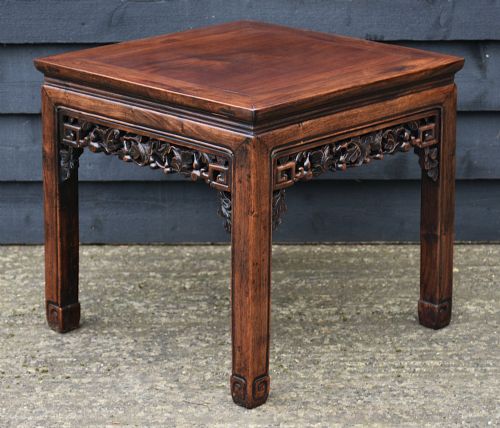
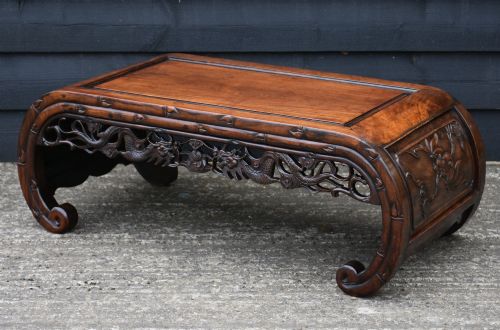


Carved Wood Kang Table
A carved wood kang table is a low domestic surface for sitting or serving, offering dense timber construction and intricate scroll ends that anchor a room.
Carved Wood Kang Table
A carved wood kang table sits low to the floor, built for traditional domestic use on platforms or seating surfaces. These low forms serve modern interiors as coffee or side tables, bringing historical utility into contemporary spaces.
Most examples found here date from the nineteenth and early twentieth centuries, spanning the Qing Dynasty and the Republic Period. You will frequently encounter scroll-end designs or tables finished with dragon details and miniature altar proportions.
The profile remains consistently low and rectangular, designed to support daily living objects within reach of seated occupants. Regional Chinese workshops produced these pieces in varied dimensions, maintaining a functional height across all periods.
Materials and construction methods
Cabinetmakers built these low surfaces from dense timbers including rosewood, padouk, huali wood, hongmu, elm, and occasional red lacquer applications. These heavy woods provide the structural strength needed for low, unbraced frames.
Carving is applied directly to the dense timber, shaping scroll ends, apron details, and dragon motifs into the solid structure. Surface finishes rely on the natural patina of the dense hardwoods developed through age and handling.
Listings feature low tables spanning the eighteenth century through the early twentieth century, constructed from dense hardwoods and red lacquer.
Assessing quality and finish
Quality rests in the crispness of the wood carving and the depth of the natural patina on the timber. Superior examples display sharply defined scroll ends and intricate dragon details that remain clear across the low frame.
The choice of dense hardwood, such as figured rosewood, hongmu, or huali, dictates the substance and visual weight of the piece. Tables with well-maintained surfaces and balanced proportions represent the finest output of Qing workshops.
The Carved Wood Kang Table Glossary
- Kang
- A heated brick platform used in northern rooms for sitting and sleeping. A carved wood kang table sat atop this platform to hold tea or books.
- Huali wood
- A fragrant and dense Chinese hardwood prized for furniture. Its varied grain patterns lend distinct visual character to low tables.
- Padouk
- A heavy, durable tropical timber with a reddish hue. Cabinetmakers utilised this material for robust low furniture frames.
- Scroll-end
- A structural profile where the short ends of the table tabletop curve outward and upward. This design echoes traditional architectural forms.
- Hongmu
- A category of dense, dark Asian hardwoods translating to red wood. Pieces built in hongmu exhibit substantial weight and dark patination.
Carved Wood Kang Table: Frequently Asked Questions
What is a kang table used for?
A kang table served as a low domestic surface for serving tea, writing, or holding small objects while occupants sat upon a raised platform.
Today, these low proportions suit modern living spaces well when placed before low sofas or utilised as accent coffee tables.
How do I date a carved wood kang table?
Dating relies on stylistic markers from the Qing Dynasty and early twentieth-century periods, alongside the type of timber used by the workshop.
Examining the depth of the patina and the execution of carved details helps place the piece within the nineteenth or early twentieth century.
What timbers were used for these tables?
Cabinetmakers constructed these low surfaces from dense Asian hardwoods including rosewood, hongmu, huali wood, padouk, and elm.
Selected examples also feature red lacquer finishes applied over the wooden core to create a smooth, protective surface.
Are all these tables low to the floor?
These tables are designed specifically as low furniture pieces intended to sit on platforms or floors rather than at standard chair height.
Their compact elevation remains a defining characteristic across all regional styles and nineteenth-century production periods.