




Brown Hardwood Coffee Table
A brown hardwood coffee table brings deep timber grain and rich regional carving directly into a room from diverse nineteenth and early twentieth century traditions.
Brown Hardwood Coffee Table
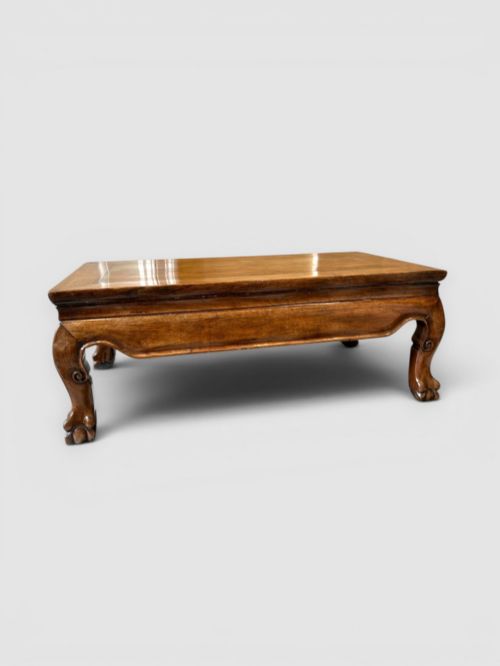
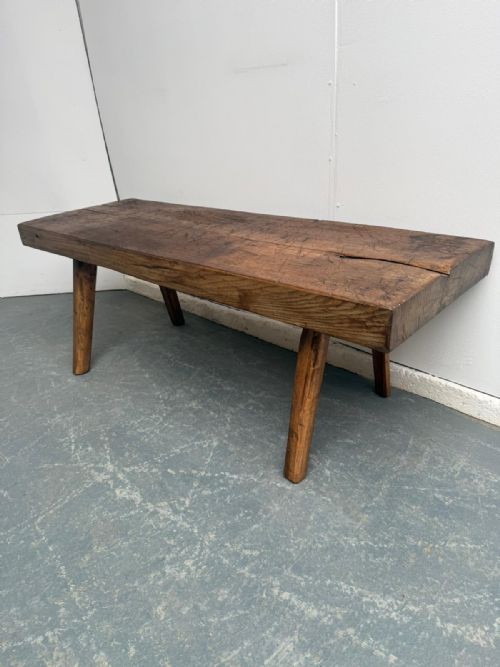
A brown hardwood coffee table draws from a wide mix of cultural forms, frequently originating as lower domestic platforms or specialised furnishings rather than standard Western tables. Buyers encounter low opium tables, Kang tables, and folding occasional pieces alongside repurposed benches and chests adapted for modern living.
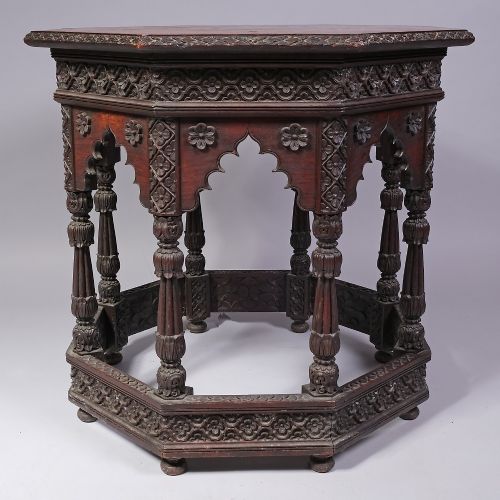
The selection on this page leans heavily toward nineteenth-century and early twentieth-century examples shaped by Chinese export, Anglo-Indian, and traditional craftsmanship. These pieces bridge historical utility and contemporary interior placement through dense timber construction and low silhouettes.
Materials and construction
Makers utilised dense timber species such as teak, rosewood, oak, and padouk, often supplemented with secondary woods or contrasting inlays of bone and copper. This reliance on heavy native hardwoods provided the structural integrity needed for intricate surface detailing and long-term durability.
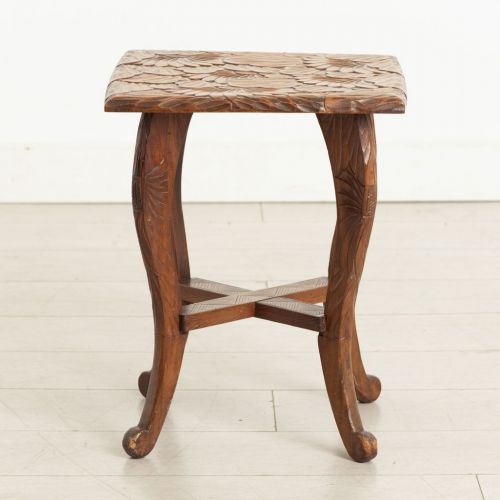
Carpenters employed traditional joinery combined with intensive hand carving to render complex motifs like dragons, scroll ends, and figurative animal supports. Surfaces were frequently finished to highlight the natural grain and deep patination of the timber over decades of use.
Listings feature items dated from the Victorian era through the early twentieth century, incorporating traditional Chinese and Indian regional forms.
Assessing quality
Quality rests primarily in the crispness and depth of the hand carving, where sharper chisel work and well-defined motifs distinguish master workshops from simpler production pieces. The natural patina of the wood also dictates standing, with undisturbed ageing and rich surface warmth elevating a piece.
Structural honesty and the integration of secondary materials like copper tops or bone accents influence overall merit. Pieces that retain original joinery without heavy modern intervention command greater respect among collectors of regional furniture.
Liberty of London
The Brown Hardwood Coffee Table Glossary
- Kang table
- A low platform table traditionally used in Chinese homes for sitting, dining, or resting on a heated brick bed. These tables feature prominent scroll ends or carved aprons.
- Opium table
- A low, sturdy coffee table variant derived from traditional nineteenth-century forms used in East and Southeast Asia. They typically stand on short legs and display carved wooden surfaces.
- Padouk
- A heavy, durable tropical hardwood prized for its rich reddish-brown colour and stability. Craftsmen utilised it extensively for fine Chinese export furniture.
- Patina
- The deep sheen and surface texture developed by timber over long periods through handling and exposure. A good patina indicates genuine age and consistent care.
- Anglo-Indian
- A descriptive term for furniture made in India during the British colonial period, blending local craftsmanship with European forms and intense decorative carving.
Brown Hardwood Coffee Table: Frequently Asked Questions
What is an opium table?
An opium table is a low wooden platform traditionally utilised in Asian interiors for dining, resting, or serving.
Today, these sturdy pieces function effectively as low coffee tables in contemporary spaces, offering rich timber grain and carved details.
How do I identify Chinese export furniture?
Chinese export pieces combine traditional Eastern forms, such as Kang tables or nests of tables, with dense hardwoods like padouk and rosewood.
They frequently display intricate hand-carved dragon motifs or scroll ends designed to appeal to Western markets during the nineteenth and early twentieth centuries.
How should I care for hardwood furniture?
Maintain hardwood surfaces by dusting regularly with a dry cloth and avoiding placement near direct heat sources or strong sunlight.
Occasional application of appropriate natural waxes helps preserve the historic patina and protects the dense timber grain.