
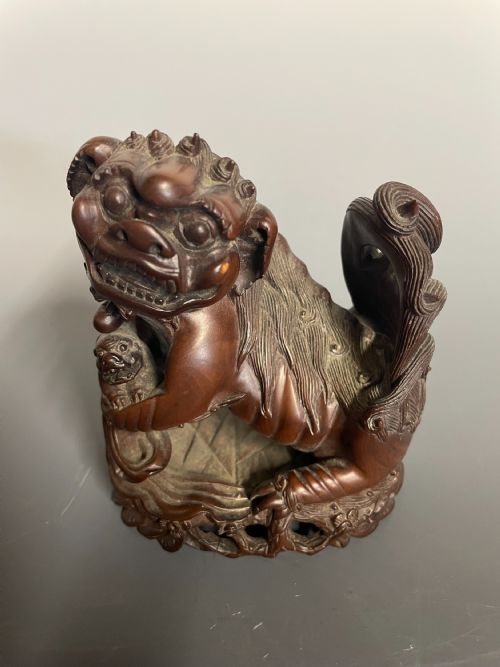


Chinese Guardian Statues
These chinese guardian statues stand as fierce protectors, carved in wood, cast in bronze or shaped in ceramic to guard sacred spaces.
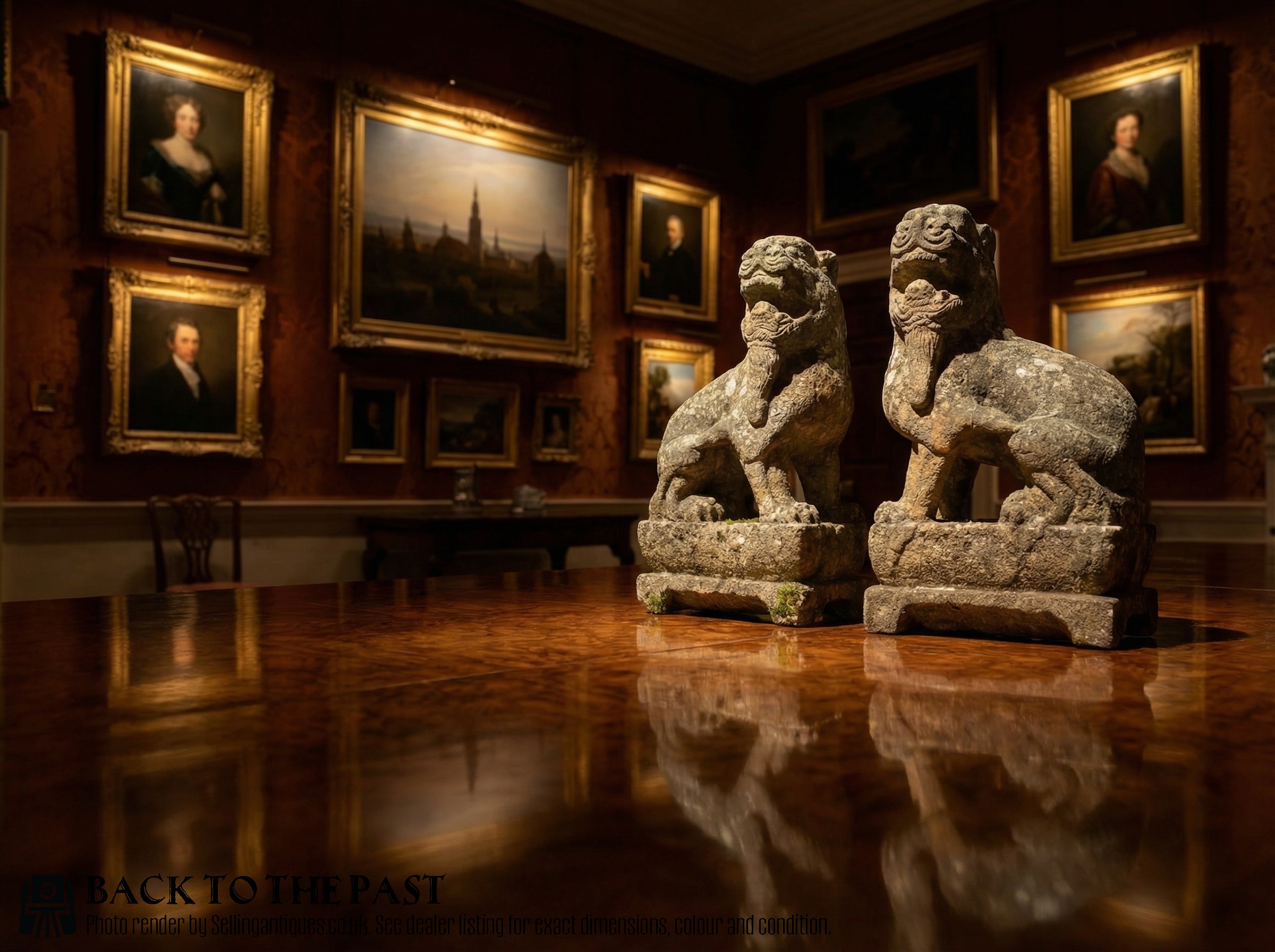
Chinese Guardian Statues
When searching for chinese guardian statues, buyers encounter powerful mythical protectors rendered in various forms, from temple temple guardians and Foo dogs to Buddhist lions. The pieces available span eras like the Qing dynasty and Victorian periods, often appearing as monumental wooden figures or paired shelf ornaments.
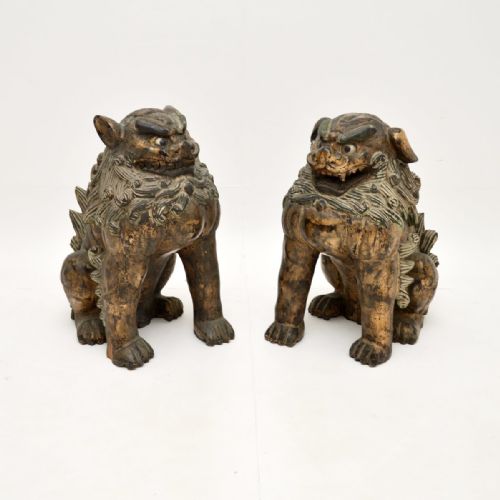
Most examples found in the current selection take the form of paired Foo dogs or temple lions, fashioned from materials such as carved hardwood, gilt wood, pottery and bronze. These figures trace their origins through the nineteenth and early twentieth centuries, reflecting traditional Chinese and Japanese Meiji aesthetics.
Makers utilised diverse media to shape these protective beasts, producing everything from large temple sculptures to domestic bookends in soapstone and jade marble. The assortment balances monumental architectural carvings with smaller decorative objects designed for interior placement.
Materials and Techniques
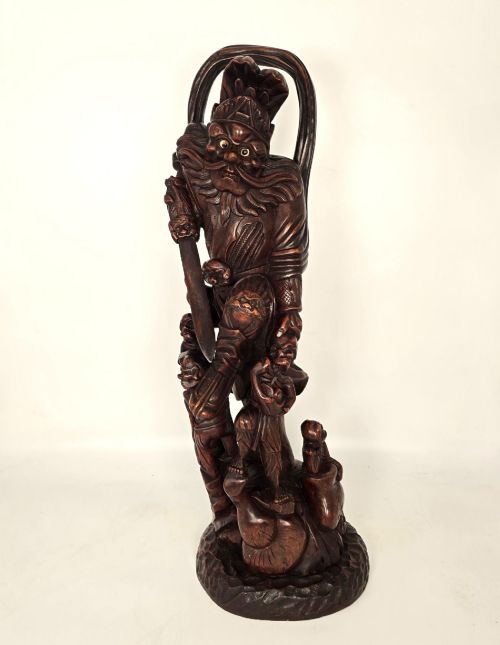
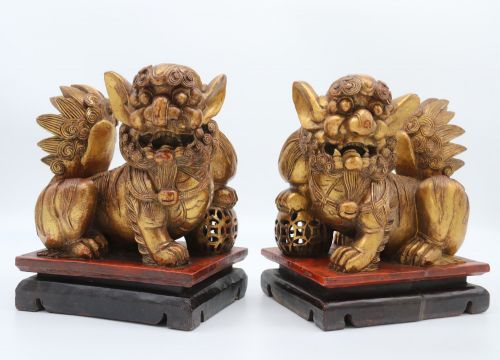
Artisans shaped these figures using traditional woodworking methods, carving dense media like boxwood, root wood and hardwood to capture the muscular forms of guardian lions. Many wooden examples receive gilding, lacquer or polychrome paint applications to enhance surface detail.
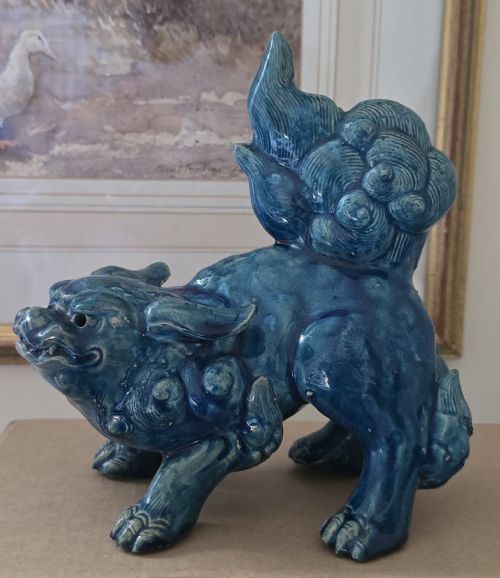
Ceramic and pottery versions involve earthenware, terracotta and porcelain bodies finished with turquoise, sancai or pale green glazes. Metal variants employ bronze and cast iron casting techniques, producing heavy temple guards and bookends with substantial patination.
Listings feature organic materials like boxwood and root wood alongside cast bronze, terracotta, earthenware and soapstone.
Assessing Quality
Quality rests in the sculptural depth of the carving and the fidelity of the casting, where master carvers define muscular tension and facial expression with precision. Superior pieces display intricate detail in the mane, claws and decorative trappings without relying on surface paint to mask imprecise form.
The choice of medium and the preservation of original finishes dictate the standing of a piece, with high-grade works showing well-maintained gilding, lacquer or natural wood grain. Monumental scale combined with balanced proportions separates ambitious temple statuary from smaller domestic ornaments.
The Chinese Guardian Statues Glossary
- Foo Dog
- A traditional Chinese guardian lion, also known as a Shi Shi or temple dog, placed to ward off malevolent spirits. These figures frequently appear in pairs guarding entrances.
- Lokapala
- A Buddhist guardian king, often depicted as a muscular heavenly king standing atop a demon. Monumental examples of these figures survive from temple settings.
- Sancai
- A three-colour ceramic glaze technique common in Chinese pottery, typically utilising amber, green and cream tones. This glaze appears on historic pottery guardian figures.
- Shishi
- A Japanese term for stone lion guardian statues, sharing stylistic roots with Chinese Buddhist lions. These pieces often date from the Meiji period.
- Zhenwu
- A powerful Daoist deity and martial god who serves as a northern warrior guardian. Statues of this figure often incorporate gilt and polychrome wood.
Chinese Guardian Statues: Frequently Asked Questions
Where were these statues originally placed?
These figures typically stood outside temple gates, imperial tombs and official residences to provide spiritual protection against harmful influences.
Smaller versions functioned domestically as bookends or decorative mantle objects within private studies.
Are these figures always displayed in pairs?
Traditional guardian figures are frequently cast or carved as pairs representing male and female counterparts, balancing yin and yang energies.
One animal typically holds a brocade ball while the other restants a cub under its paw.
How do I care for wooden guardian carvings?
Wooden sculptures require stable indoor humidity levels to prevent the timber from splitting or warping over time.
Dusting with a dry, soft cloth preserves the historic surface treatments without introducing moisture.
What distinguishes a Foo dog from a temple lion?
The terms are often used interchangeably, though Foo dogs specifically refer to stylized Chinese guardian lions rooted in Buddhist tradition.
Their visual traits derive from real lions introduced via trade, combined with traditional Chinese iconography.