
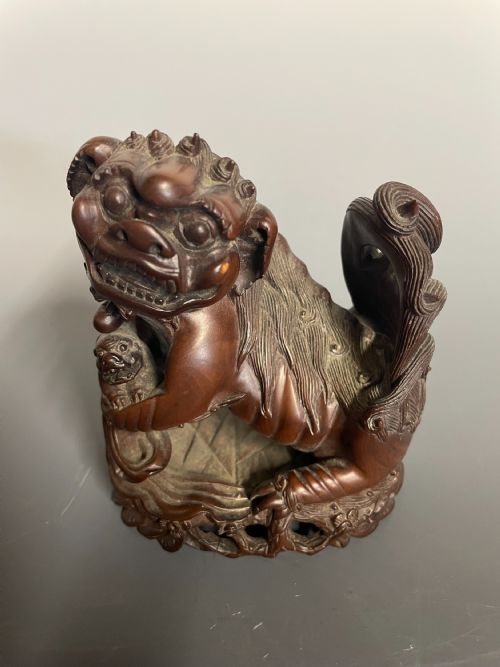


Chinese Guardian Lion Figure
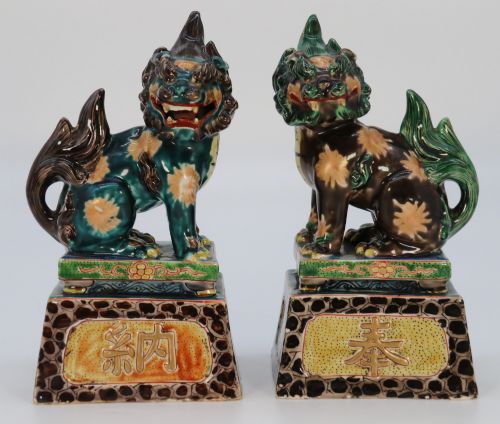
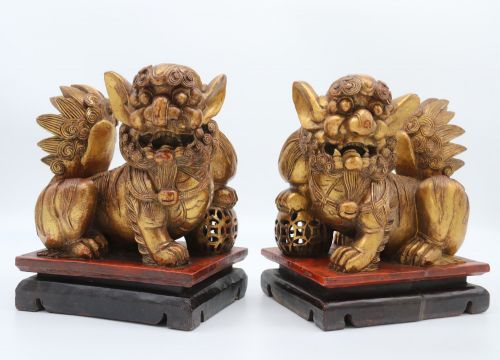
These Chinese guardian lion figure examples range from carved root wood to sancai earthenware, standing ready to protect a threshold or a shelf.
Chinese Guardian Lion Figure
A Chinese guardian lion figure represents a traditional guardian animal placed to protect homes, temples and public buildings. When someone searches for a chinese guardian lion figure, they encounter forms varying from fierce temple guards to domestic decorative pairs.
The pieces on this page span several centuries and styles, including Qing Dynasty ceramics, Japanese Meiji period examples and Victorian interpretations. Common manifestations include pairs of bookends, temple lions in bronze, and carved wooden sculptures.
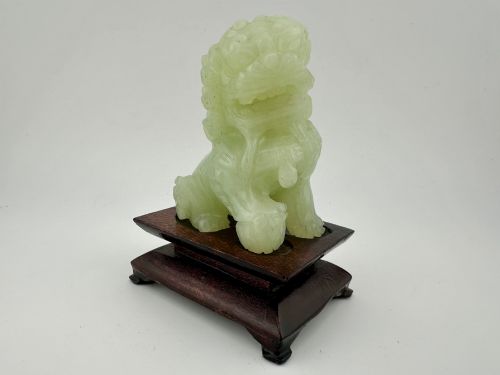
Makers shaped these creatures in materials as diverse as soapstone, boxwood, cast iron and porcelain. Each figure embodies the distinct artistic conventions of its period, whether modeled as a fierce guardian or a stylized temple lion.
How They Were Made
Carvers utilised dense timbers such as boxwood and root wood to create intricate sculptures, often enhancing the surface with gilt and lacquer. Artisans also worked with soapstone, shaping the soft mineral into detailed pairs of figures and bookends.
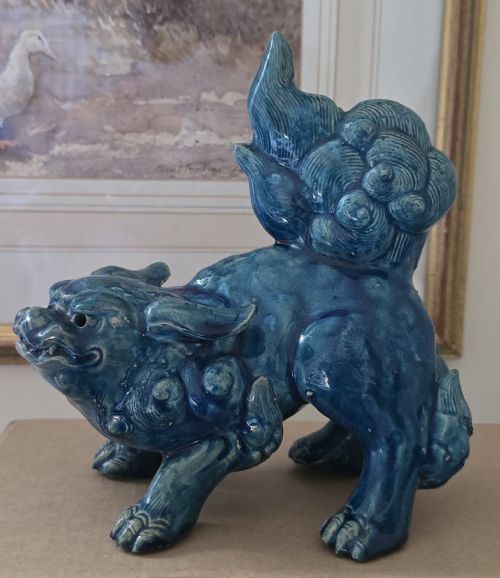
Ceramic examples required skilled potters to apply sancai glazes, turquoise glazes, or enamel over earthenware and porcelain. Metalworkers cast bronzes and brass, sometimes finishing the heavy temple lions with gilding.
Materials recorded on this page range from delicate porcelain and turquoise glaze to heavy cast iron and massive thirty-five kilogram bronze temple lions.
What Varies in Quality
For ceramic and bronze pieces, the integrity of the glaze or the crispness of the cast defines the upper tier of the range. Pairs that retain their original matched proportions and surface patination command greater attention than mismatched or heavily restored items.
The Chinese Guardian Lion Figure Glossary
- Shiwan
- A type of Chinese pottery known for expressive figurative sculpture and rich glazes. Shiwan wares often depict Buddhist lions with dynamic postures and textured surfaces.
- Sancai
- A three-colour glaze tradition used extensively in Chinese ceramics. The technique combines amber, green and cream tones.
- Foo Dog
- A common Western term for Chinese guardian lions. These mythical beasts derive from Buddhist temple iconography.
- Meiji Period
- A Japanese historical era spanning from 1868 to 1912. Works from this time display distinct regional interpretations of Asian artistic themes.
- Qing Dynasty
- The last imperial dynasty of China, lasting from 1644 to 1912. Many decorative figures originate from this prolonged period of artistic output.
Chinese Guardian Lion Figure: Frequently Asked Questions
What is a Chinese guardian lion figure?
A Chinese guardian lion figure is a traditional sculptural representation of a mythical protector beast. These figures traditionally stood in pairs outside important buildings to ward off harmful spirits.
Over time, smaller versions were created for interior display, serving both decorative and symbolic functions in homes and studies.
How were these lions used historically?
Historically, large pairs stood guard at the gates of imperial palaces, temples, and government offices. They served as powerful symbols of authority and protection.
Smaller domestic versions found places inside rooms, on desks, or as bookends to protect libraries and bring auspicious energy to the household.
Are these figures always made of ceramic?
No, these figures appear in a wide variety of materials according to the maker's medium and period. Common materials include bronze, brass, boxwood, root wood, soapstone, and cast iron.
Ceramics and porcelain represent a large share of surviving pieces, often finished with specialised glazes like sancai or turquoise.
How can I tell the period of a figure?
Dating relies on examining the material, the style of the carving or casting, and the characteristics of the glaze. Qing Dynasty pieces often show specific stylistic conventions in the mane and claws.
Comparing the object's wear patterns, manufacturing techniques, and regional traits helps place it within periods such as the nineteenth century or the Victorian era.