
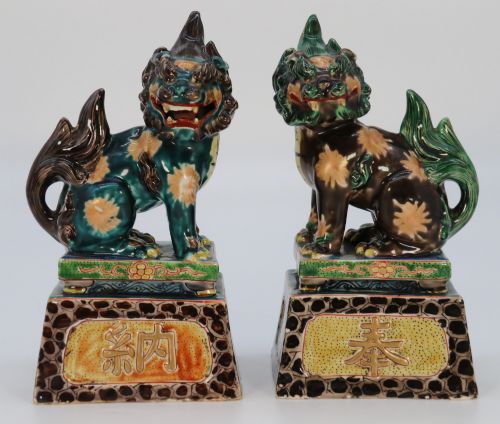
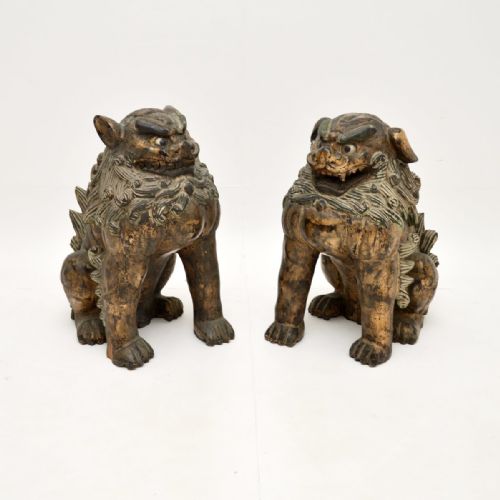
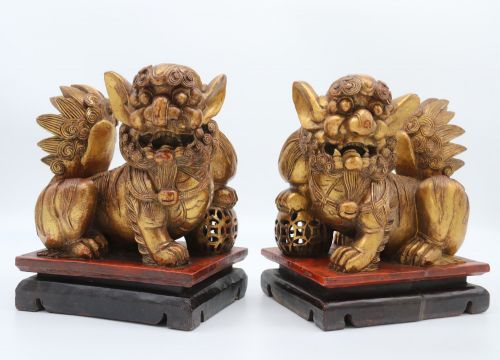
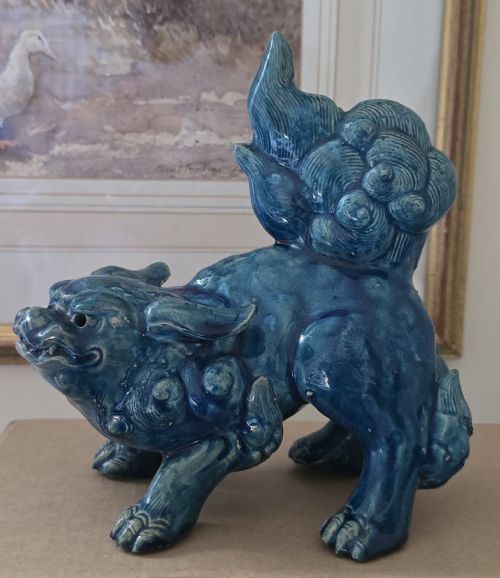
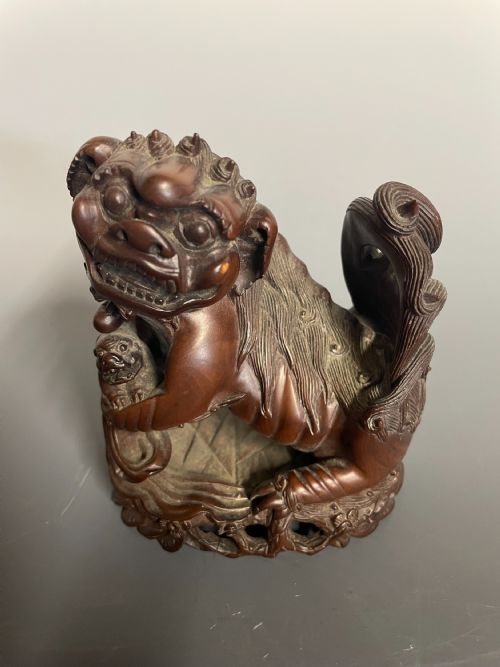


Chinese Temple Lion Statue
These Chinese temple lion statue pieces are protective guardian figures designed to watch over sacred spaces, offering fierce symbolic defence and enduring cultural presence.
Chinese Temple Lion Statue
A chinese temple lion statue represents the traditional guardian figures placed outside sacred spaces, palaces, and homes to ward off malevolent spirits. Buyers encounter these sculptures rendered in diverse forms ranging from single figures to balanced pairs.
The selections span multiple eras, including pieces from the eighteenth century, the nineteenth century, and the early twentieth century. Common stylistic classifications encompass Qing Dynasty workmanship, Tibetan Buddhist art, and traditional Chinese aesthetics alongside related Japanese Meiji period examples.
Object types include standalone statues, decorative figures, ceramic sculptures, and solid wood carvings. These guardian representations appear as fierce temple guard dogs or stylized Buddhistic lion dogs intended for interior display.
Materials and construction methods
Artisans fashioned these figures using organic materials such as boxwood, carved wood, and hard stone, often enhancing the surface with gilt, polychrome paint, or dark lacquer. Bronze and brass castings provide heavier metallic alternatives, while ceramic versions utilise glazes ranging from turquoise to pale green.
Carving techniques yield intricate detail in wooden and stone sculptures, contrasting with the smooth finishes of glazed pottery and porcelain. Metal examples demonstrate traditional casting methods resulting in substantial weights for temple guards.
One recorded pair weighs an impressive thirty-five kilograms, proving these protective guardians take their gatekeeping duties rather seriously.
Evaluating craftsmanship and detail
Material selection also dictates overall grade, where dense hardwoods, heavy cast bronzes, or finely controlled ceramic glazes signify higher workshop standards. Age-related wear should integrate naturally with the material without obscuring the intended sculptural form.
The Chinese Temple Lion Statue Glossary
- Foo dog
- A colloquial western term for the guardian lions or lion dogs originating in Chinese tradition. These figures guard doorways and sacred precincts.
- Shishi
- The Japanese equivalent of the Chinese guardian lion figure. These representations appear in Japanese Meiji period art.
- Shiwan
- A style of ceramic ware associated with southern Chinese kilns. Pieces from this tradition often feature distinctive heavy glazes.
- Chinoiserie
- European artistic style reflecting Chinese motifs. This aesthetic influenced various decorative objects and figures produced abroad.
- Qing Dynasty
- The final imperial dynasty of China spanning from the seventeenth to the early twentieth century. Many traditional decorative arts originate from this extended period.
Chinese Temple Lion Statue: Frequently Asked Questions
What is a Chinese temple lion statue?
These pieces represent traditional guardian figures derived from Buddhist iconography, commonly known as foo dogs or lion dogs. They symbolise protection and authority.
Historically placed at thresholds and important entrances, these sculptures serve to guard the space and deter harmful influences.
How were these statues used?
Guardians traditionally stood outside temples, imperial tombs, and official residences in matched pairs representing yin and yang. The male typically holds a ball under its paw, while the female restrains a cub.
In domestic settings, smaller versions functioned as interior decorative objects and symbols of high status.
How do I date a temple lion statue?
Dating relies upon stylistic markers, material composition, and manufacturing techniques characteristic of periods like the Qing Dynasty or the Meiji period. Examining tool marks and surface patination helps determine age.
Wood and ceramic pieces exhibit ageing differently than cast bronze or stone sculptures.
How do I care for these statues?
Care depends entirely on the material, requiring gentle dusting for wood and stone, while glazed ceramics benefit from occasional soft wiping. Avoid harsh cleaning agents that damage patinas and glazes.
Stable indoor humidity preserves wooden and lacquered surfaces against cracking.