
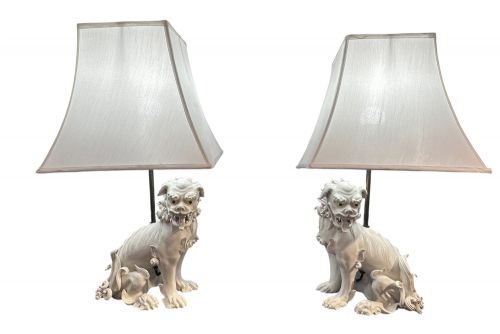


Chinese Foo Dogs Pair
A chinese foo dogs pair brings guardian spirit and bold form into a room, cast in bronze, carved in wood, or shaped in porcelain.
Chinese Foo Dogs Pair
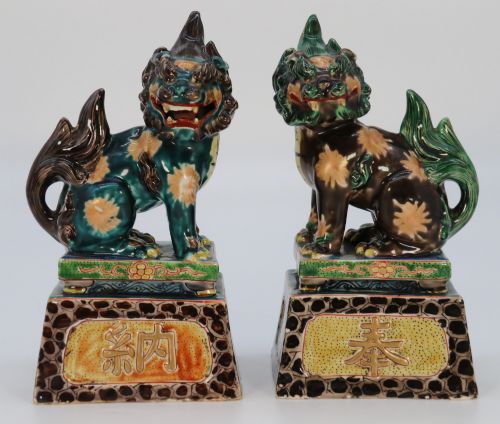
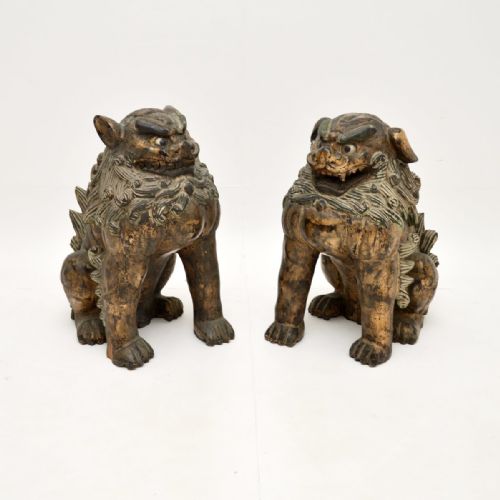
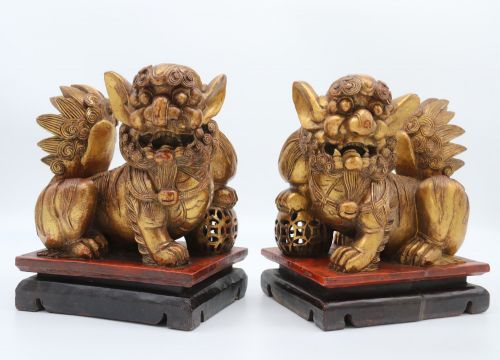
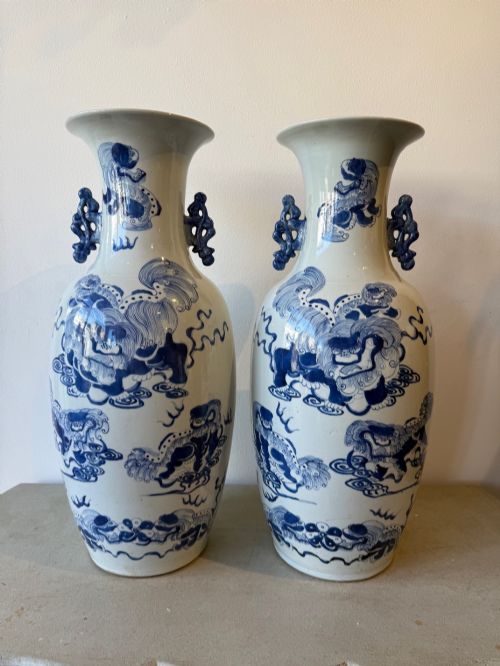
When you search for a chinese foo dogs pair, you are looking at guardian figures traditionally placed outside temple gates and important doorways to ward off harmful spirits. These matched guardian figures appear across this page in various forms, most commonly as decorative figures, statues, and bookends.
The pieces listed here span the nineteenth century into the early twentieth century, taking shape as porcelain vases, soapstone desks seals, and heavy bronze temple lions. You will also find carved wood and cast iron interpretations reflecting Qing Dynasty aesthetics and later Victorian adaptations.
These pairs divide into seated temple guardians, smaller scholarly desk ornaments, and functional items such as lamps and incense burners. Each pair maintains the traditional dynamic where one animal holds a brocade ball and the other restures a cub.
Materials and methods
Sculptors shaped these figures from diverse materials including soapstone, jade marble, padouk wood, and cast iron, applying hand-painted glazes, gilt, and enamel to porcelain surfaces. Bronze and brass castings capture intricate mane details and muscular forms through traditional metalworking techniques.
Carved wooden examples utilise dense timbers finished with lacquer and gilding, while ceramic pairs rely on Sancai glazes and blanc de chine finishes to create smooth, reflective surfaces.
Materials across these listings include porcelain, brass, ceramic, gilt, glaze, enamel, bronze, and soapstone, reflecting periods from the 1850s to 1920.
Distinctions in quality
The finer pairs demonstrate exceptional hand-carving depth in wood or soapstone, where facial expressions remain sharp and muscular anatomy stays defined rather than soft. Cast bronze and brass versions show crisp chasing work on the fur and claws, avoiding the surface pitting found in simpler castings.
Glazed ceramic and porcelain pairs rely on even colour distribution and precise hand-painted enamel details, distinguishing high workshop output from mass production. The weight and stability of the material, especially in large bronze or stone temple lions, also indicate the care taken during production.
The Chinese Foo Dogs Pair Glossary
- Foo Dog
- A traditional guardian figure, properly known as a Buddhist lion or Shi Shi, symbolising protection and prosperity. These creatures combine the majesty of the lion with the loyalty of the dog.
- Blanc de Chine
- A white porcelain produced in Dehua, China, known for its milky glaze and smooth texture. This material often appears on figures and lamp bases from the late nineteenth and early twentieth centuries.
- Sancai
- A three-colour glaze technique traditionally using green, amber, and cream or white tones. Potters applied these lead-glazed colours to ceramics during firing to create subtle runs and mottled effects.
- Soapstone
- A soft, talc-based metamorphic rock favoured for intricate carving due to its dense, soapy texture. Artisans polished these stones to a smooth finish for desk seals and ornamental bookends.
- Padouk
- A heavy, durable tropical hardwood with a reddish-orange hue that deepens with age. Cabinet makers utilised this timber for furniture and decorative display tables.
Chinese Foo Dogs Pair: Frequently Asked Questions
What is a chinese foo dogs pair?
A chinese foo dogs pair consists of two matched guardian lion figures traditionally positioned as protectors in Chinese architecture and domestic settings.
They represent traditional guardian spirits, with one typically holding a symbolic ball under its paw and the other guarding a cub.
How were they used?
Historically, these figures stood outside temples, palaces, and official residences to ward off negative energy and project authority.
In domestic settings, smaller pairs served as decorative mantel ornaments, bookends, incense burners, or lamp bases.
How do I style them at home?
Place a matched pair symmetrically on a mantelpiece, console table, or flanking a doorway to maintain their traditional guardian function.
Heavier bronze or stone pairs anchor larger rooms, while porcelain and soapstone versions suit desks and bookshelves.
How do I date these figures?
Dating relies on examining the material composition, tool marks on wood or stone, and the characteristics of glazes on porcelain or ceramic pairs.
Nineteenth-century examples often display heavier casting, hand-carved details, and traditional Qing aesthetic markers compared to later adaptations.