



Glazed Ceramic Foo Dog
These glazed ceramic foo dog figures are protective temple guardians brought inside for ornament, prized for their expressive stance and vibrant colour.
Glazed Ceramic Foo Dog
A glazed ceramic foo dog represents a traditional guardian lion, frequently referred to in listings as a Buddhist lion, Shi lion, or dog of Fo. You encounter these protective figures across various forms including decorative objects, table lamps, and distinct ceramic sculptures.
The examples available here stretch from the nineteenth century into the early twentieth century, taking in both Chinese Qing Dynasty pieces and Japanese Meiji period creations. These range from single sculptural figures to matched pairs intended for symmetry on a surface.
How they were made
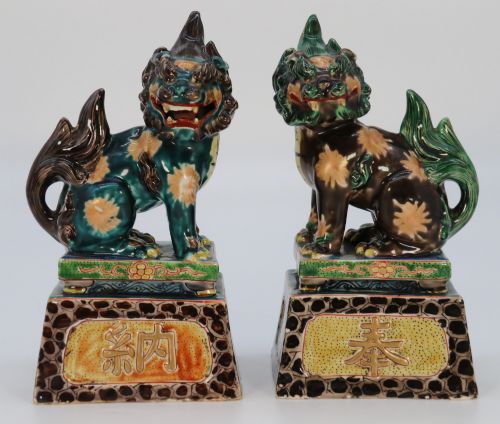
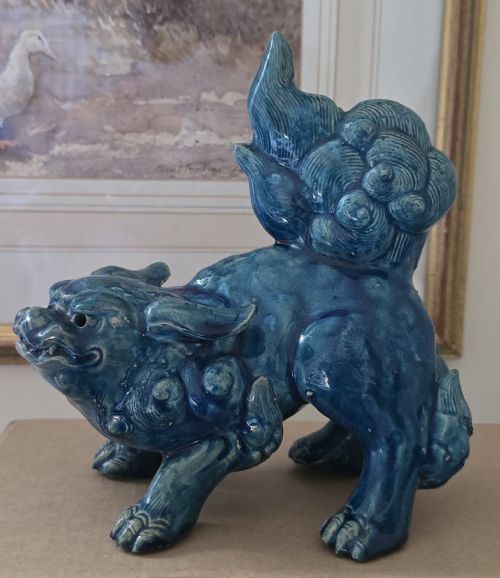
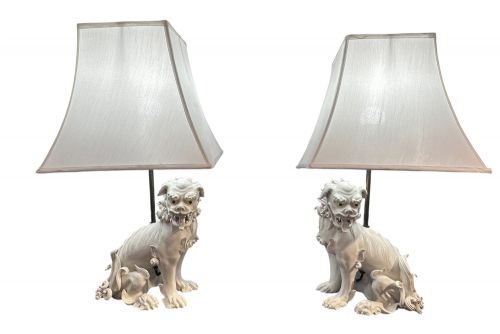
Makers shaped these sculptures from porcelain, earthenware, and general pottery before applying heavy layers of glaze and enamel. Surface decoration often incorporates turquoise glaze, pale green glaze, blanc de chine, or traditional sancai colour palettes.
Certain pieces receive additional embellishment through the selective application of gold leaf over the fired ceramic body. Potteries in regions such as Shiwan and Kutani utilised local clays and specialised kilns to achieve their characteristic finishes.
The listings combine Chinese Qing Dynasty and Japanese Meiji period pieces, utilising porcelain, earthenware, and pottery.
What varies in quality
The success of a glazed ceramic foo dog rests on the vigour of the modelling and the control of the kiln during firing. Stronger examples display crisp muscular definition in the paws and mane, whereas lesser pieces lose detail beneath thick, pooled glaze.
Palette control similarly divides the range, with lively turquoise, sancai, and enamel work commanding attention over flat or muddy colour application. The integration of functional elements, such as lamp fittings, respects the primary sculptural form of the guardian.
The Glazed Ceramic Foo Dog Glossary
- Foo dog
- A Western term for a Chinese guardian lion or Buddhist lion, traditionally placed outside temples to ward off evil spirits. These ceramic adaptations bring that monumental symbolism into domestic interiors.
- Shiwan
- A pottery production centre in Guangdong province known for heavy, expressive ceramic sculptures and distinctive glazes. Pieces from this tradition often emphasise texture and dramatic posture.
- Kutani
- A style of Japanese coloured porcelain originating from Ishikawa prefecture, recognisable by detailed overglaze enamel work. Figures from this tradition frequently employ rich palettes.
- Blanc de chine
- A French term for white porcelain produced in Dehua, China, showing a smooth ivory or milk-white glaze. This finish allows the sculptural contours of the guardian figure to dominate.
- Sancai
- A traditional three-colour Chinese glaze technique combining amber, green, and cream or white tones. These overlapping colours run naturally across the ceramic body during high-temperature firing.
Glazed Ceramic Foo Dog: Frequently Asked Questions
What is a foo dog?
A foo dog is actually a representation of a lion, styled as a mythical guardian beast in traditional East Asian architecture and art. They symbolise protection and authority, traditionally stationed in pairs outside gates or doorways.
Over time, smaller versions were modelled in ceramic and porcelain for domestic display. On this page, you find them shaped as standalone figures, vases, and table lamps.
How do I date a ceramic foo dog?
Dating relies on examining the ceramic body, the characteristics of the glaze, and the stylistic traits of the period. Pieces from the nineteenth century often show heavier potting and traditional sancai or turquoise glazes.
Early twentieth-century pieces, including those adapted into lamps, reflect later manufacturing techniques and export demands. Comparing the modelling style to documented Qing and Meiji examples provides further context.
Are foo dogs always found in pairs?
Historically, guardian lions were placed as symmetrical pairs where one animal guards the entrance and the other protects the interior. Traditionally, the male holds a embroidered ball under his paw while the female restrains a cub.
In the selection here, you encounter both matched pairs and individual figures. Single pieces function well as standalone decorative objects on a desk or mantelpiece.
Where should I place a foo dog?
Because these figures served as protective guardians, they traditionally flank entryways, mantels, or prominent pieces of furniture. Their strong silhouettes and bright glazes make them effective focal points in a room.
When configured as table lamps, they combine sculptural presence with functional lighting. Ensure they sit on stable surfaces where their weight and glaze can be appreciated up close.