


Chinese Temple Lions Pair
These Chinese temple lions pair decorative figures bring traditional guardianship and sculptural presence into any room.
Chinese Temple Lions Pair
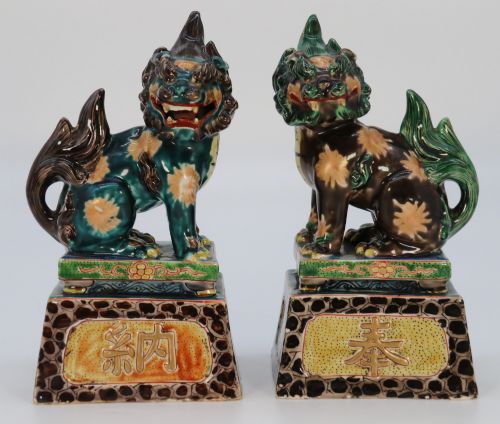
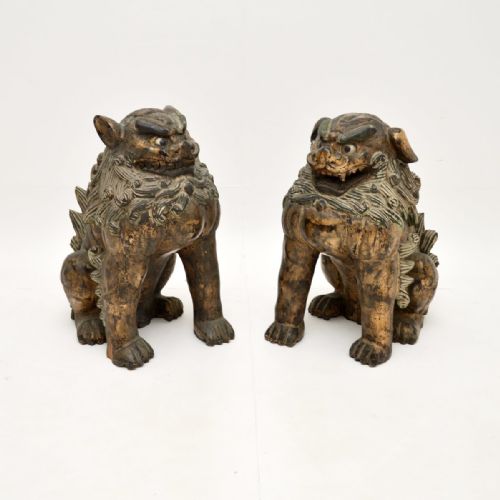
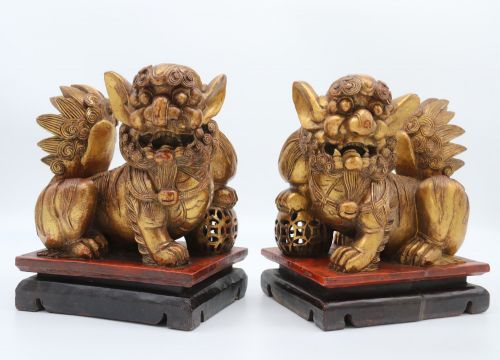
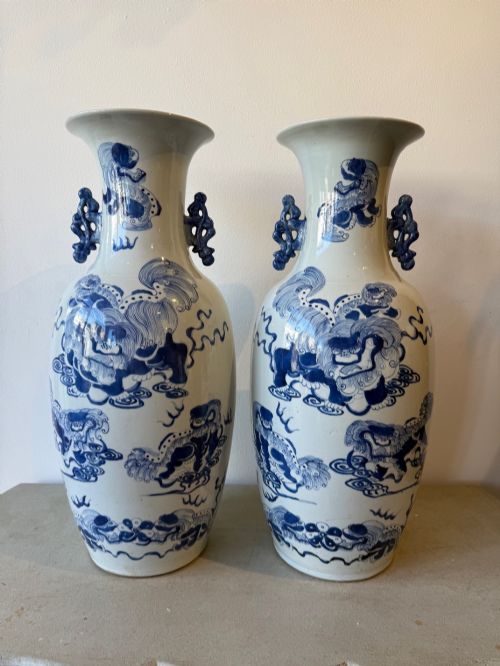
A chinese temple lions pair consists of guardian figures modelled after traditional Buddhist temple dogs, often known as foo dogs. These sculptures appear in forms such as carved wood, pottery, bronze, stone, and cast iron across the inventory.
Most examples date from the nineteenth century into the early twentieth century, spanning periods like the late Qing dynasty and 1920. Buyers encounter pairs fashioned in Chinese traditional, Tibetan Buddhist, and Chinoiserie styles.
Makers produced these protective beasts for architectural placement at gates and altars, though domestic decorative figures remain the most common items found on this page.
Materials and Construction
Artisans carved these figures from dense hardwoods, applying gilt and lacquer finishes to highlight intricate mane and facial details. Bronze and stone versions utilise casting and hand-chiselling techniques suited to heavier sculptural work.
Ceramic and pottery pairs receive polychrome paint or monochrome glazes before firing, capturing the muscular forms of traditional temple guardians. French cast iron examples demonstrate how European foundries adapted these Asian motifs using industrial casting methods.
One heavy cast iron pair was made in France, proving that European ironfounders thoroughly enjoyed guarding French mantelpieces with Chinese mythical beasts.
Assessing Quality
Quality rests upon the depth of hand-carving in wood and stone specimens, where crisp muscle definition separates superior items from softer castings. Bronze and pottery pairs show distinction through the precision of the glaze or the richness of the applied gilt and lacquer.
Proportion and stance dictate the visual impact of a pair, with balanced symmetry between the left and right guardian indicating careful workshop production. The integration of traditional Buddhist iconographic details also marks the distinction between standard decorative output and finer artistic work.
The Chinese Temple Lions Pair Glossary
- Foo Dog
- A colloquial western term for the guardian lions traditionally placed outside imperial palaces and temples. These mythical beasts combine the majesty of a lion with the loyalty of a dog.
- Qing Dynasty
- The final imperial dynasty of China, lasting from sixteen forty-four to nineteen twelve. Pieces from this era often display traditional court iconography and distinct stylistic markers.
- Shiwan
- A famous pottery production centre in Guangdong province known for expressive ceramic figures and rich glazes. Shiwan ware often depicts mythological subjects with vigorous modelling.
- Chinoiserie
- European artistic style reflecting Chinese artistic influences, popular from the seventeenth century onwards. This aesthetic reinterprets Asian motifs through western decorative traditions.
- Polychrome
- Decoration executed in multiple colours on ceramics, wood, or stone surfaces. This technique adds vivid realism and pattern to sculptural figures.
Chinese Temple Lions Pair: Frequently Asked Questions
What is a chinese temple lions pair?
A chinese temple lions pair comprises two guardian statues traditionally placed outside gates to ward off negative spirits. They represent mythical beasts combining leonine power with canine loyalty.
Collectors and decorators prize these matching figures as statement pieces for mantlepieces, entrances, and display cabinets.
Were they used inside homes?
Historical temple lions guarded the thresholds of sacred buildings, imperial palaces, and government offices. Smaller domestic versions later appeared for interior display.
Today, homeowners place them on tables, pedestals, or hearths to anchor a room's decorative scheme.
How do I date carved wood figures?
Dating relies on examining tool marks, timber shrinkage, and the wear patterns on lacquer and gilt surfaces. Wood patination develops over decades of handling and atmospheric exposure.
Comparing stylistic proportions with documented Qing dynasty and nineteenth-century examples helps confirm the period.
Are bronze and brass pieces heavy?
Metal temple lions, particularly bronze and cast iron examples, possess substantial weight often exceeding normal decorative objects. Some large specimens weigh thirty-five kilograms or more.
Buyers must ensure supporting furniture possesses adequate load-bearing capacity before placement.
How should I clean glazed pottery?
Glazed pottery requires gentle dusting with a soft brush to protect delicate polychrome paint and aged surfaces. Avoid harsh chemical cleaners that might strip the original glaze.
Stable indoor humidity preserves ceramic bodies and prevents micro-fissures in the glaze layer.