


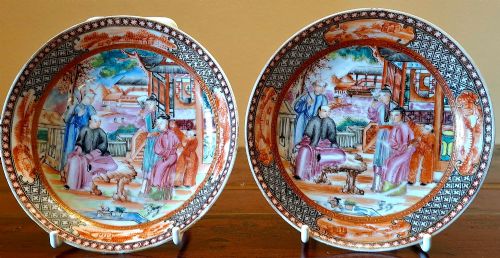

Chinese Export Saucer
A chinese export saucer brings global trade history to the tea table, offering delicate porcelain and hand-painted artistry crafted centuries ago.
Chinese Export Saucer
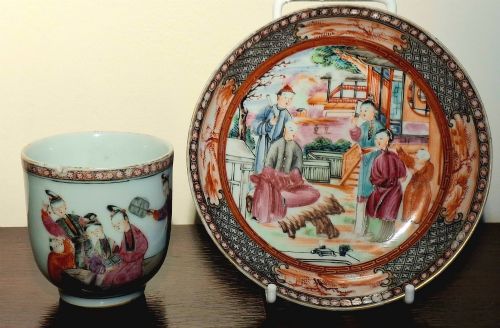
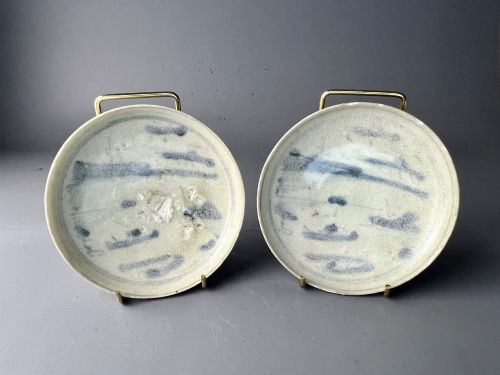
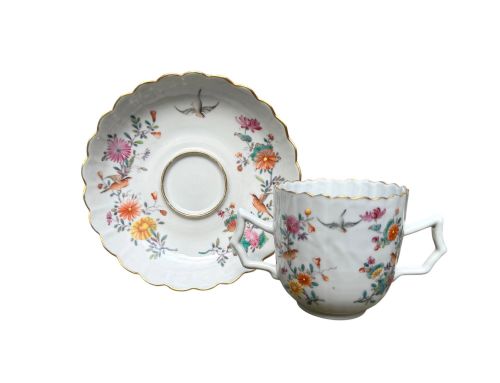
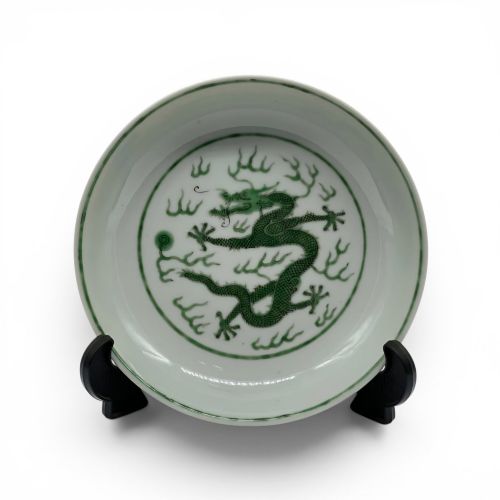
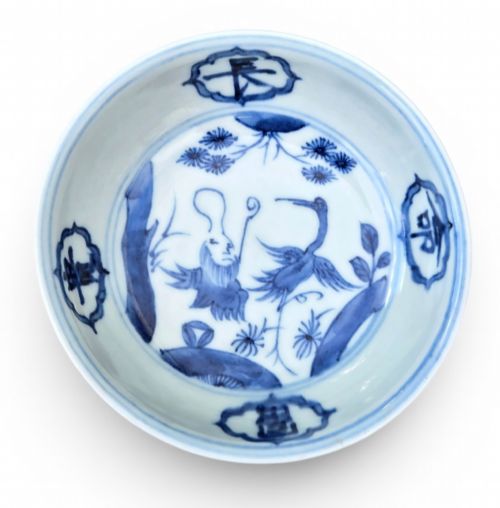
A chinese export saucer represents the historic trade wares made in China specifically for Western markets during the eighteenth and nineteenth centuries. These small ceramic dishes frequently arrive paired with teabowls or as standalone decorative pieces bearing intricate enamel or cobalt glaze scenes.
Most examples found here date from the eighteenth century, particularly the Qianlong period, alongside nineteenth-century Canton and Qing dynasty items. Collectors encounter diverse forms ranging from deep saucer-dishes to standard tea wares featuring Mandarin palette designs and Amsterdam Bont decoration.
Makers produced these functional items to satisfy European demand for oriental luxury goods, adapting traditional Chinese shapes for Western dining customs. The surviving pieces demonstrate the rich exchange of artistic motifs between Eastern kilns and Western buyers.
Factors That Determine Quality
Purity of the porcelain body and precision in throwing or moulding set the foundation for a superior dish. Finer pieces display thin, even walls and smooth glazing without warping from the kiln firing.
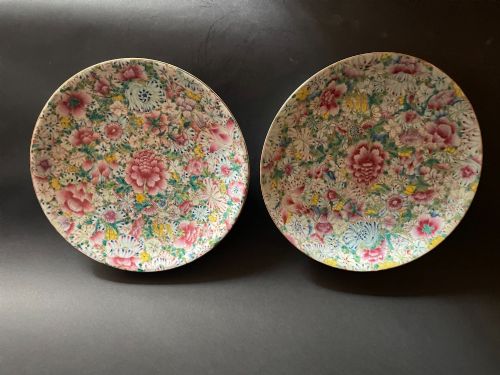
Artistic execution in the hand-painted enamels separates standard production from exceptional work. Crisp linework, balanced composition, and rich application of famille rose or cobalt pigments indicate skilled workshop output.
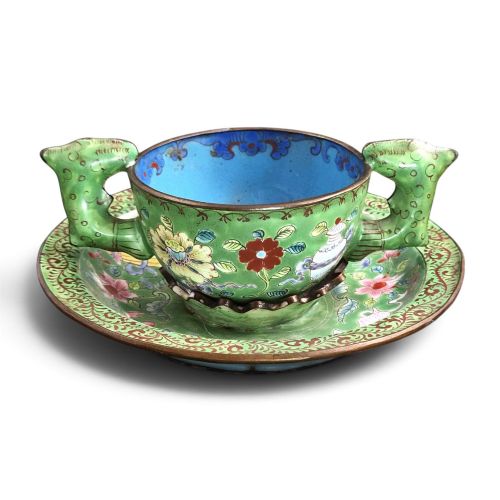
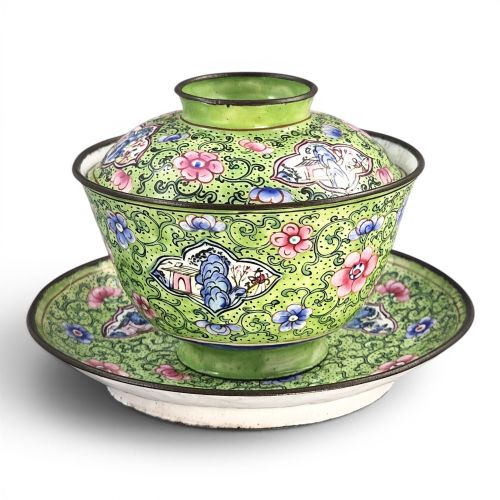
Materials across the selection range from traditional porcelain and soft-paste ceramic to copper-based Canton enamel accented with gold leaf.
The Chinese Export Saucer Glossary
- Famille rose
- A major palette of Chinese ceramic enamels introduced in the eighteenth century, dominated by opaque pink or rose colours. This technique allowed for subtle shading and detailed pictorial scenes.
- Mandarin palette
- A style of Chinese export porcelain decoration featuring complex figural scenes within elaborate borders. These patterns typically depict courtly figures or daily activities in vibrant enamels.
- Cobalt glaze
- A mineral oxide used under the glaze to produce deep blue decoration on porcelain before firing. It remains stable at high kiln temperatures.
- Soft-paste porcelain
- A ceramic material containing glass frit or white clay fired at lower temperatures than hard-paste porcelain. It often exhibits a slightly warmer tone and creamy texture.
- Canton enamel
- Painted enamel ware produced in Guangzhou for export, frequently applied to copper rather than ceramic bases. The technique shares decorative motifs with contemporary porcelain.
- Amsterdam Bont
- Chinese export porcelain decorated or retouched in Dutch workshops with additional enamel colours after initial importation. This practice created distinctive hybrid decorative schemes.
Chinese Export Saucer: Frequently Asked Questions
How do I date a Chinese export saucer?
Examine the style of the porcelain body, the palette of the enamels, and any specific reign marks or historical design indicators.
Eighteenth-century Qianlong pieces often feature fine porcelain and precise Mandarin palette painting, while nineteenth-century items display heavier Canton enamel work.
Were these saucers used for drinking tea?
These pieces served as companions to teacups in historical tea sets, catching drips or holding the cup.
Over time, many survived independently as decorative dishes or collector's cabinet items rather than functional tableware.
What is the difference between blue and white and famille rose?
Blue and white pieces utilise cobalt glaze applied under the transparent glaze before a single high-temperature firing.
Famille rose items incorporate opaque overglaze enamels fired at lower temperatures to achieve a multicoloured palette including pinks, greens, and yellows.
How should I display my saucer safely?
Display these delicate porcelain items using stable plate stands designed to support the rim without putting pressure on the centre.
Keep them away from direct sunlight and high-traffic areas where accidental bumps might cause damage.
Are all export saucers marked with dynasties?
Most export wares made for Western markets lack imperial reign marks because they were produced for commercial trade rather than domestic court use.
Instead, dating relies on stylistic analysis of the painting techniques, forms, and decorative motifs.