


Chinese Export Lamps
Chinese export lamps bring vibrant ceramic bodies and rich metal mounts into domestic spaces.
Chinese Export Lamps
Chinese export lamps combine traditional ceramic vessels with lighting fittings, creating decorative pieces suited for domestic interiors.
Buyers encounter 18th century and 19th century porcelain bodies alongside Victorian and Edwardian adaptations.
The selection includes ginger jars, tea canisters, and vases mounted as table lamps alongside matching pairs.
Materials and construction
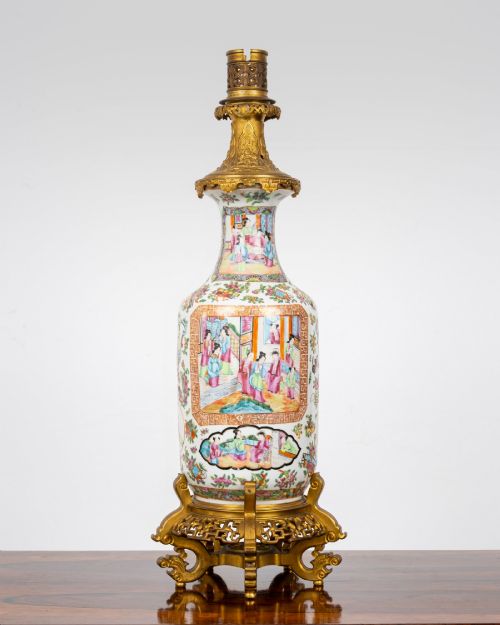
Porcelain and earthenware bodies utilise hand-painted glazes including famille rose, famille verte, and blue and white designs.
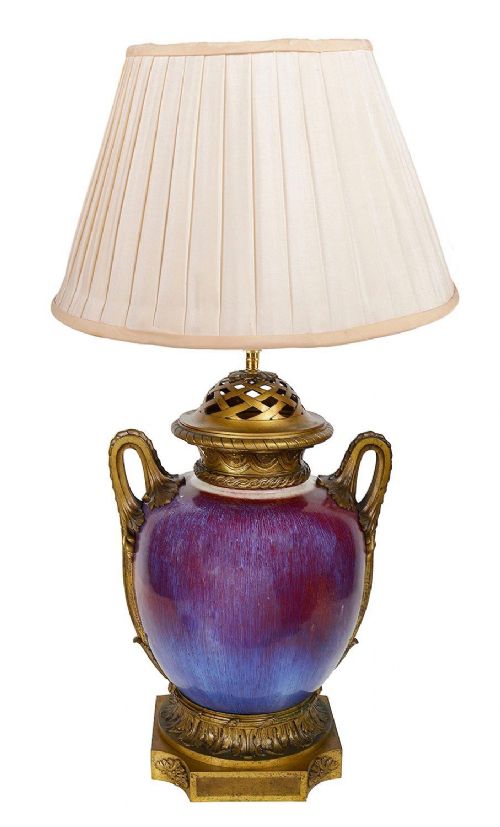
Mounts of brass, gilt bronze, and ormolu secure the ceramic vessels, while stands employ hardwood, marble, and lacquer.
Listings feature porcelain vessels mounted with brass, gilt bronze, and ormolu across the 18th and 19th centuries.
Distinguishing quality
Execution of hand-painted detail and the crispness of ceramic glazes set superior pieces apart from standard examples.
Integration of metal mounts, whether brass or ormolu, reflects the precision of the conversion work.
The Chinese Export Lamps Glossary
- Famille Rose
- A palette of opaque enamels dominated by pink, used extensively on Chinese porcelain during the Qing dynasty and later export wares.
- Cloisonné
- Enamelling technique where thin metal wire creates compartments on a vessel surface, filled with coloured paste and fired.
- Ormolu
- Gilded bronze mounts applied to furniture and ceramic bases, originating in French decorative arts.
- Celadon
- Pale green glazed ceramic finish, prized for its subtle tone and jade-like appearance.
- Rose Medallion
- A specific style of Cantonese porcelain decoration featuring panels of figures alternating with birds and flowers.
Chinese Export Lamps: Frequently Asked Questions
What periods do these lamps date from?
The pieces span the 18th century through to the Edwardian era, incorporating Victorian conversions.
Most items date to the 19th century, utilising older vases fitted for illumination later.
Are these lamps sold as pairs?
Many listings include matched pairs of vases converted into twin table lamps.
Single lamp configurations also appear across the selection.
What materials form the bases?
Bodies consist primarily of porcelain and pottery, paired with brass or gilt bronze mounts.
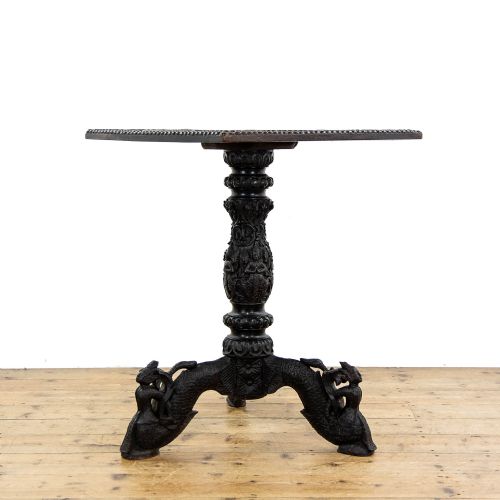
Support tables utilise hardwood, marble tops, and ebonised timber.
How do these lamps integrate into interiors?
They serve as functional table lighting while introducing decorative ceramic colour and pattern to a room.
Associated side tables and stands provide coordinated display surfaces.