

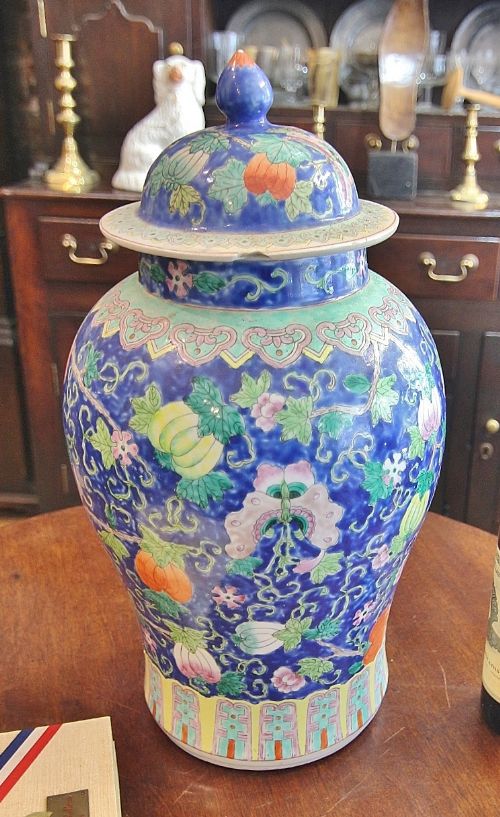
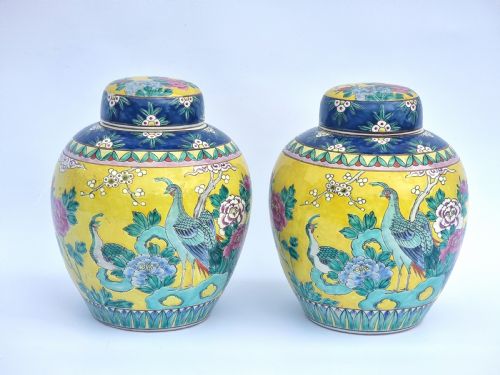


Chinese Enamel Ginger Jar
A Chinese enamel ginger jar is a lidded vessel of porcelain, ceramic, or metal carrying intricate coloured decoration that brings history directly to a room.
Chinese Enamel Ginger Jar
A Chinese enamel ginger jar is a lidded vessel originating from various periods including the seventeenth and nineteenth centuries, utilised historically for storing spices or preserved roots. You are most likely to meet twentieth-century examples alongside nineteenth-century pieces finished with famille rose palettes or cloisonné work.
The forms span ginger jars, lidded jars, and table lamps converted from original vases, reflecting both export markets and domestic regional styles. Qing Dynasty and Republic Period aesthetics dominate the selection, showing distinct decorative choices from birds and flowers to dragons and Buddhistic lions.
Materials and construction
Makers formed these vessels using porcelain, ceramic, copper, and brass bases, applying glaze and ceramic enamel to build the surface imagery. Gilding often highlights specific borders and motifs across the body of the jar.
Techniques range from hand painting on porcelain bodies to cloisonné wirework on metal substrates. Artisans fused coloured enamels within metal compartments or painted direct onto ceramic glazes before firing.
Materials recorded across the selection include porcelain, copper, brass, ceramic, glaze, and gilding.
Assessing quality and execution
The finesse of the hand painting and the precision of the enamel work dictate the tier of the piece. Crisp lines in wucai or doucai palettes and evenly distributed cloisonné cells separate finer workshop outputs from standard decorative wares.
Preservation of the original glaze, gilding, and matching covers influences the standing of a jar. The integration of period marks and the clarity of polychrome details provide clear indicators of superior craftsmanship.
The Chinese Enamel Ginger Jar Glossary
- Cloisonne
- A metalwork technique where thin wires form raised barriers on a metal body to contain compartments filled with enamel paste. These compartments are then fired and polished smooth.
- Famille Rose
- A prominent palette of opaque rose-pink enamel introduced in the eighteenth century. It allowed artists to achieve subtle gradations of tone in floral and figurative scenes.
- Wucai
- A ceramic style meaning five colours, typically combining underglaze blue with contrasting overglaze enamels like iron red and green. This creates a vibrant multi-coloured surface.
- Doucai
- A technique joining underglaze blue outlines with overglaze polychrome enamels filled inside the boundaries. The results present a refined, interlocking design.
- Qing Dynasty
- The final imperial dynasty of China spanning from sixteen forty-four to nineteen twelve. Pieces from this era display diverse regional and court aesthetics.
Chinese Enamel Ginger Jar: Frequently Asked Questions
What were chinese enamel ginger jars used for?
These jars served initially for holding spices, ginger, or oils for trade and domestic use. Over time, their decorative qualities led to their adoption as ornamental display pieces in interiors.
Later examples were sometimes adapted into table lamps while retaining their original ceramic or cloisonné bodies. Their sturdy lidded forms made them practical containers that transitioned naturally into decorative art objects.
How do I date a chinese enamel ginger jar?
Dating relies on examining the materials, stylistic motifs, and any reign marks present on the base of the vessel. Seventeenth-century transitional pieces show distinct blue and white bodies with iron red and green enamels, whereas nineteenth-century items often feature dense famille rose palettes.
Twentieth-century and Edwardian pieces frequently utilise cloisonné wirework or bear mid-century manufacturing traits. Comparing the specific enamel thickness and palette against known period examples helps clarify the age.
Are these jars waterproof?
Most antique ceramic and porcelain jars can hold water safely if the glaze inside is intact and uncracked. However, metal-based cloisonné vessels with soldered wire cells are generally not intended to hold liquids.
It is prudent to inspect the interior lining before utilising any antique vessel for fresh flowers or water. Using a hidden inner container protects the antique material from moisture damage.
How should I clean a cloisonne jar?
Dusting gently with a soft, dry cloth is the safest way to maintain the surface of enamel and metal work. Avoid harsh chemical cleaners or abrasive pads that can scratch the delicate glass enamels or strip gilding.
If the piece requires deeper cleaning, a slightly damp cloth followed immediately by thorough drying is sufficient. Professional conservation advice should be sought for pieces with structural damage or fragile surfaces.