


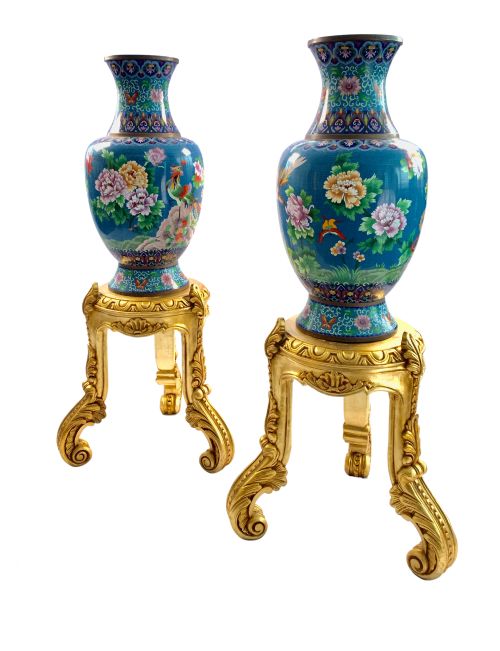

Gilt Brass Cloisonne Vase
A gilt brass cloisonne vase brings intense colour and intricate wirework into a room, offering a tangible link to Chinese export craftsmanship.
Gilt Brass Cloisonne Vase
A gilt brass cloisonne vase is a vessel formed from metal and filled with vibrant enamel cells, often adapted into table lamps or kept as decorative jars.
The pieces on this page span the nineteenth century, the Edwardian era, and the early decades of the twentieth century, alongside Chinese Republic and Qing Dynasty styles.
Buyers will encounter single vessels, large pairs, and converted lighting options that retain their original cloisonne enamel bodies.
Construction and materials
These items rely on a core of copper, brass, gilt metal, or gilt bronze, shaping the structural foundation of each vessel.
Craftsmen soldered thin metal wires onto the metal base to create raised partitions known as cloisons, which were then filled with coloured enamel paste before firing and polishing.
Materials recorded across the selection include copper, brass, gilt bronze, fabric, and silk alongside traditional enamel.
Assessing the work
The refinement of the wirework determines the crispness of the design, separating precise geometric patterns from softer, less controlled soldering.
The polish and evenness of the enamel surface indicate the skill applied during the final grinding and firing stages.
The Gilt Brass Cloisonne Vase Glossary
- Cloisonne
- A decorative metalwork technique where thin wires are soldered to a metal body to form cells for enamel paste. This method creates detailed compartmentalised designs across the surface of the vessel.
- Gilt
- Covered thinly with a layer of gold or gold-coloured metal. This finish enhances the decorative brilliance of the brass and bronze mounts.
- Enamel
- A glassy substance fused to metal through firing to provide permanent colour and a smooth finish. It supplies the vivid palette characteristic of these Chinese export pieces.
- Chinoiserie
- European artistic styles reflecting Chinese motifs and techniques. This aesthetic influenced the production and export of decorative objects to Western markets.
Gilt Brass Cloisonne Vase: Frequently Asked Questions
How do I clean a cloisonne vase?
Dust the surface gently with a soft dry cloth to prevent any buildup within the wire compartments.
Avoid using liquid cleaners or abrasive materials that might damage the delicate enamel and the gilt metal finish.
Were these pieces used as lamps originally?
Many examples were originally produced as decorative jars or vases before being converted into table lamps in later decades.
This adaptation preserves the antique cloisonne body while providing functional lighting for modern interiors.
How do I date a 19th-century piece?
Nineteenth-century examples are identified through the weight of the bronze or brass body and the specific composition of the enamel.
Comparing the wire gauge and stylistic motifs with established periods helps narrow down the decade of manufacture.
Where were these items made?
These decorative objects originated in China, often created for export markets during the Qing Dynasty and the Chinese Republic era.
Their intricate designs reflect traditional workshop practices that were later adapted for international buyers.