
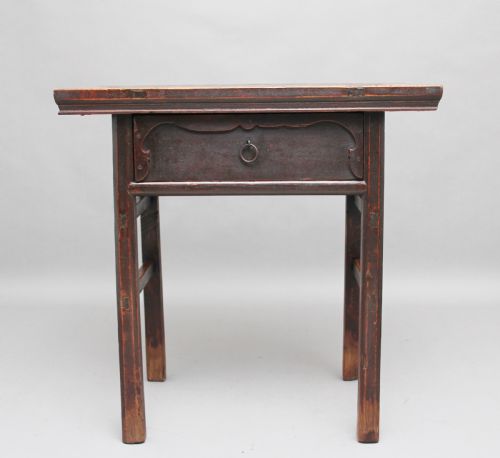


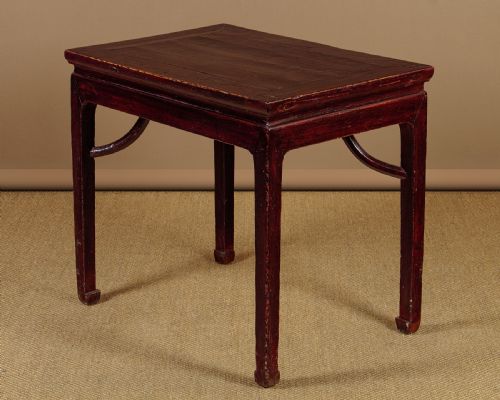


Chinese Elm Furniture
Chinese elm furniture brings provincial utility and clean joinery into the room, spanning console tables, chairs and cabinets.
Chinese Elm Furniture
Chinese elm furniture covers practical household forms like side tables, benches, armchairs and storage cabinets created across the nineteenth and early twentieth centuries. When searching for chinese elm furniture, buyers encounter rustic dressers, altar tables and seating in provincial styles.
The pieces on this page originate from periods including the Qing Dynasty and the Republic Period, alongside nineteenth century eras. Side tables and sideboards appear frequently, often displaying patinated timber surfaces.
Materials and Construction
Constructed primarily from elm wood and timber varieties sometimes noted as locust wood or blonde wood, these pieces utilise traditional joinery without relying on metal fasteners. Hardwood and iron elements provide structural support in larger items such as benches and storage cabinets.
Surfaces frequently show applied finishes like red lacquer or retain original lacquered treatments, while brass fittings appear on cabinet hardware. Artisans shaped these domestic forms using solid planks and carved details suited to provincial workshops.
Assessing Quality
Quality rests upon the depth of the timber's patina and the integrity of the original finish, whether clear lacquer, red lacquer or pickled surfaces. Pieces that retain their structural tightness and unaltered joinery stand apart from those with extensive timber replacement.
The balance of provincial carving and the proportion of plank tops also define the grade of tables and cabinets. Grain variation within the elm wood dictates the visual texture across larger surfaces like sideboards and altar tables.
The Chinese Elm Furniture Glossary
- Patina
- The surface sheen and colour developed through age and handling. This develops naturally over decades of use on elm timber.
- Yoke-Back Armchair
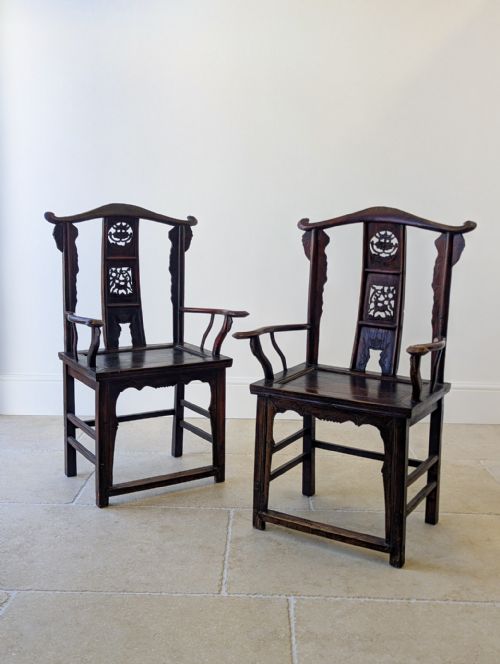
- A seating form featuring a curved crestrail resembling a traditional ox yoke. These chairs often date to the late nineteenth century.
- Altar Table
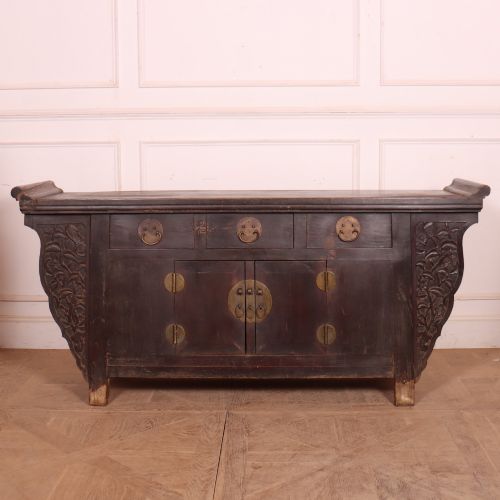
- A long, narrow table traditionally used for ceremonial purposes in Chinese homes. They feature high tabletops and restrained proportions.
- Noodle Cabinet
- A tall storage cabinet with removable shelf panels and slatted doors. These pieces served practical kitchen and pantry functions.
- Lacquer
- A durable natural resin finish applied to wooden surfaces. It appears in red tones or clear coats across provincial seating and storage.
Chinese Elm Furniture: Frequently Asked Questions
How do I identify Chinese elm furniture?
Chinese elm furniture is identified by its prominent open grain, fibrous texture, and use in provincial seating, tables, and cabinets dating from the nineteenth and early twentieth centuries.
The timber often shows a warm tone and takes patination well, frequently accompanied by traditional Chinese joinery methods that avoid modern hardware.
What rooms suit a Chinese elm side table?
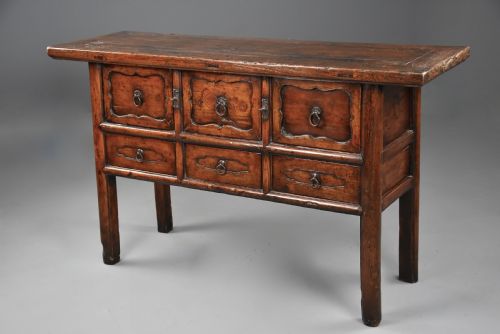
A Chinese elm side table fits well in living rooms, hallways, or bedrooms as a functional surface with neutral provincial character.
Its restrained lines allow it to sit comfortably alongside contemporary interiors as well as traditional period collections.
How should I care for lacquered elm surfaces?
Lacquered elm surfaces require dusting with a soft, dry cloth and protection from direct sunlight and excessive humidity.
Avoiding harsh chemical cleaners preserves the original finish and the aged patina of the timber.
Are Chinese elm cabinets practical for storage?
Chinese elm cabinets and storage pieces provide deep internal capacity with adjustable or removable shelf arrangements.
Their robust timber construction makes them suitable for everyday use in modern dining rooms or hallways.