





Horseshoe Back Chair
A horseshoe back chair offers a graceful, rounded armrest and backrest profile that draws the eye in any room.
Horseshoe Back Chair
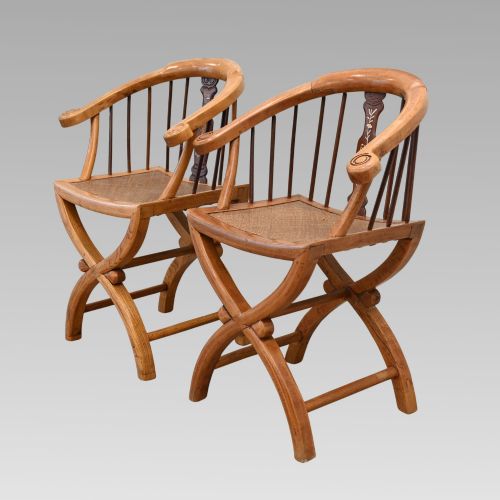
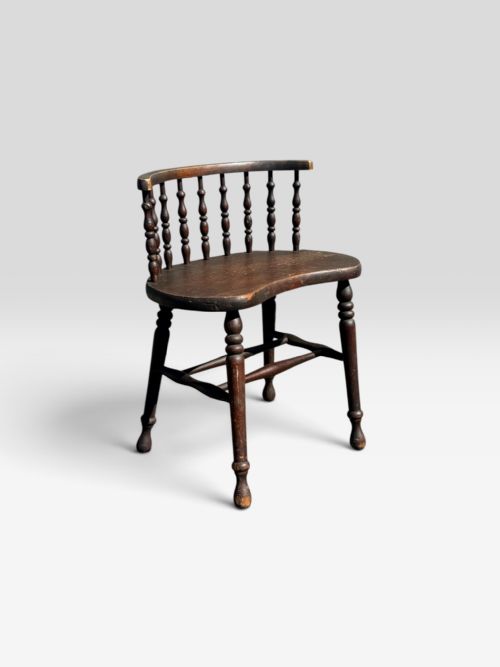
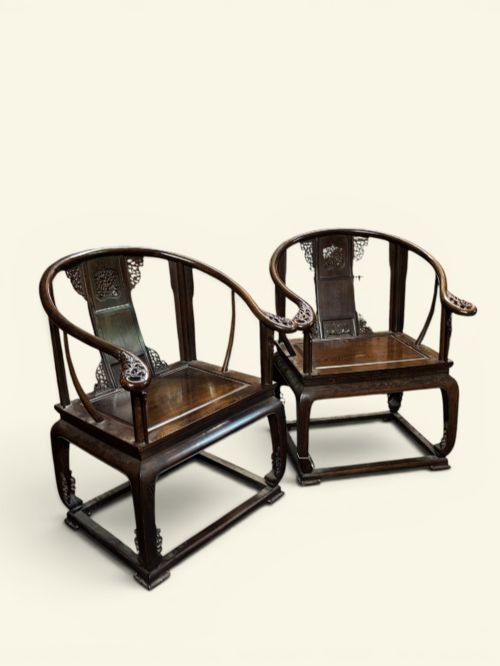
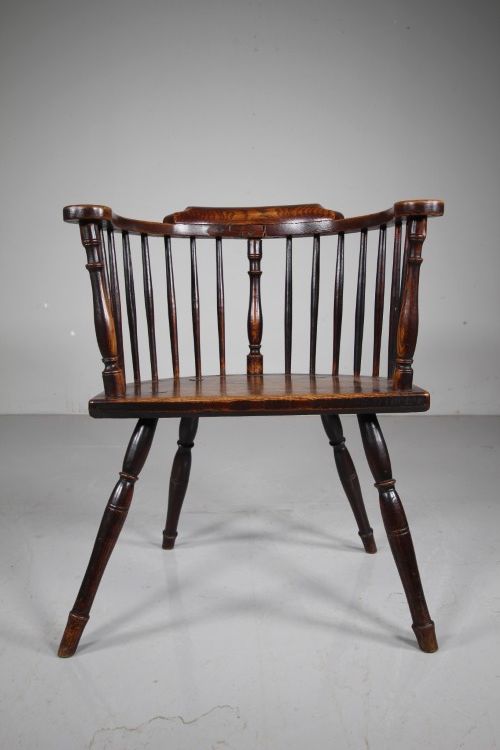
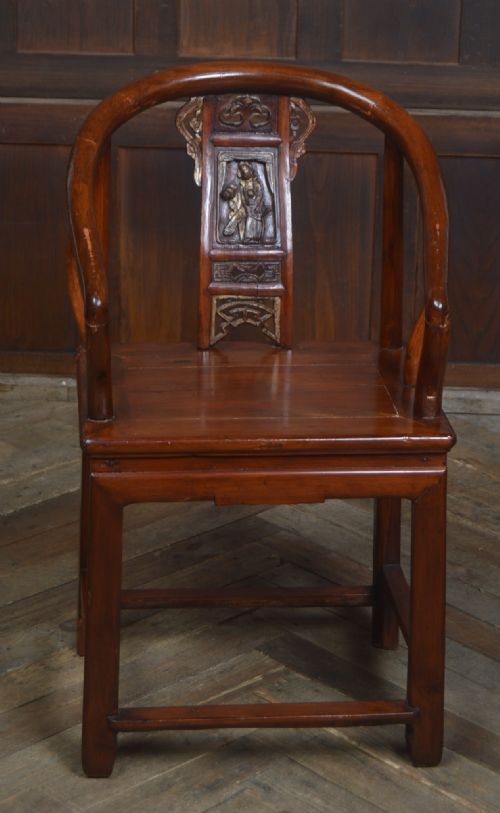
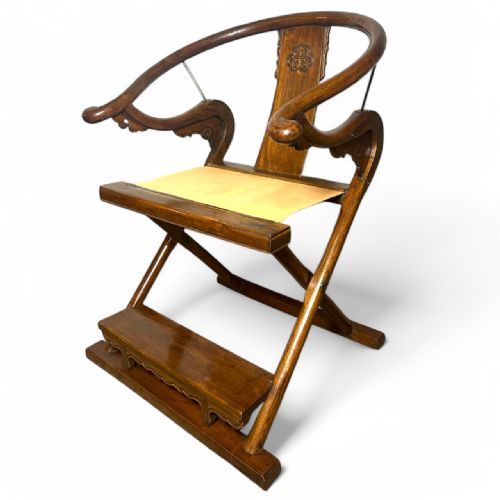
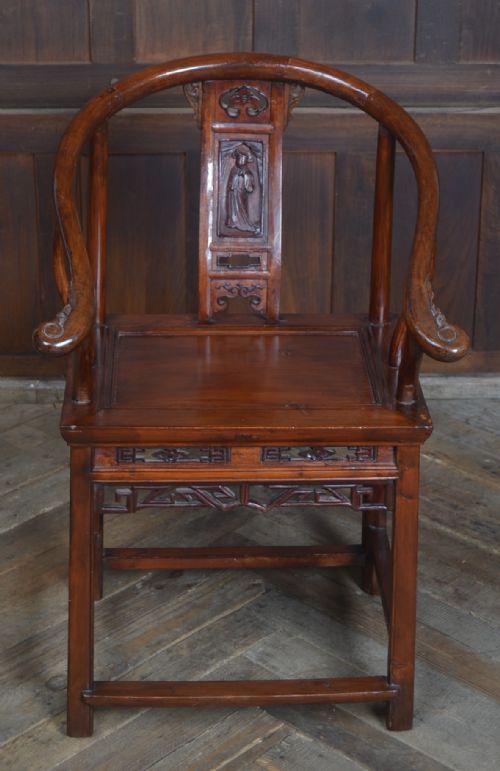
A horseshoe back chair is defined by its continuous, curving rail that forms both the back support and the low armrests. When exploring this selection, buyers encounter diverse forms ranging from traditional Chinese models to English provincial seating. These pieces serve primarily as armchairs, desk chairs, and accent chairs within a home.
The pieces span multiple eras, including the eighteenth century, nineteenth century, Edwardian period, and early twentieth century. Chinese examples frequently display distinctive Qing Dynasty or Ming style influences in hardwood, elm, and lacquer. Meanwhile, British variations emerge in walnut, oak, mahogany, and beech with leather or cane details.
Assessing quality and finish
The standard of a horseshoe back chair depends upon the selection of timber and the fluidity of the curved rail. Superior pieces exhibit harmonious proportions and expert execution of intricate details like brass inlay or painted lacquer. The natural grain of woods such as elm, walnut, and hardwood plays a significant role in the overall visual appeal.
Condition and originality dictate much of the character in older seating. Examples retaining their early surface finish, whether polished wood, lacquer, or patinated leather, demonstrate greater integrity. Subtle variations in carving depth and the tightness of the joinery separate standard workshop output from exceptional examples.
Horseshoe Back Chair Retail Price Guide 2026
Typical asking prices for horseshoe back chair among the pieces listed under this phrase on Sellingantiques today, from the lower quarter to the upper quarter. They describe what is for sale here now, not the wider market.
The selection includes pieces spanning the eighteenth century, nineteenth century, Edwardian era, and the nineteen-twenties.
The Horseshoe Back Chair Glossary
- Horseshoe back
- A seating design featuring a continuous, semi-circular rail that serves as both backrest and armrests. This profile derives from classical Chinese furniture forms.
- Elm
- A resilient, interlocking timber commonly utilised in provincial and traditional Chinese chair making. It provides excellent strength for curved components.
- Lacquer
- A durable resin finish applied to wooden surfaces in successive layers. It protects the material while offering a smooth, decorative sheen.
- Canework
- Woven rattan or cane material used for seat panels. It offers lightweight flexibility and textural contrast against solid wooden frames.
Horseshoe Back Chair: Frequently Asked Questions
What is a horseshoe back chair?
A horseshoe back chair is a seating design characterised by a curved, continuous rail forming the back and arms. This distinctive profile provides an enveloping shape for the sitter.
Such chairs appear in various cultural traditions, notably spanning traditional Chinese styles and English country interpretations across several centuries.
Where should I place this chair?
These chairs function well as desk chairs, accent seating, or standalone armchairs in living spaces and studies. Their sculptural silhouette makes them effective focal points in a room.
Pairing a Chinese hardwood version with minimalist decor or placing an elm country chair in a study highlights their distinct forms.
How do I care for wooden finishes?
Maintain wooden surfaces by dusting regularly with a soft cloth and avoiding placement near direct heat sources. Natural waxes help nourish unsealed woods over time.
For lacquered or polished finishes, gentle cleaning preserves the protective layer without dulling the sheen of the timber beneath.
How are different periods identified?
Differentiating periods involves examining the timber species, joinery techniques, and stylistic motifs present on the frame. For instance, Qing Dynasty and Ming style influences point towards specific Asian manufacturing traditions.
British examples display regional characteristics typical of Georgian country workshops, the Victorian era, or Edwardian production methods.