


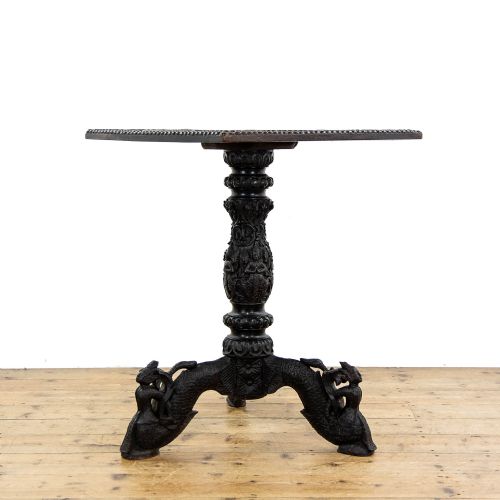


Chinese Dragon Plant Stand
These chinese dragon plant stand pieces combine intricate Far Eastern carving with practical display surfaces.
Chinese Dragon Plant Stand
When you search for a chinese dragon plant stand, you encounter a specialised form of display furniture originating from Far Eastern workshops during the nineteenth and early twentieth centuries. These works include carved side tables, torchiere stands, and jardiniere supports designed to elevate porcelain, bronze vessels, and botanical displays within a room.
The pieces appearing on this page span the Victorian era, the nineteenth century, and the early decades of the twentieth century, with styles ranging from traditional Qing Dynasty work to Chinese Export and Chinoiserie interpretations. Forms vary from compact occasional tables and nests of coffee tables to large pedestal stands and inset marble-topped tables.
You are most likely to meet heavy hardwood and rosewood examples featuring elaborate hand-carved dragon motifs. These range from low side tables to tall torchieres, often incorporating contrasting materials such as inset rouge marble tops or glazed ceramic elements.
How they were made
The construction of these items relies predominantly on dense timbers including rosewood, teak, and general carved hardwood, shaped by hand to create deep relief ornamentation. Craftsmen utilised traditional joinery methods to build stable frames capable of supporting heavy bronze and ceramic jardinieres without warping.
Surface treatment forms a central part of the manufacturing process, with artisans applying dark ebonised finishes, lacquer work, and gilding to accentuate the carved details. Inset surfaces frequently utilise polished rouge marble slabs fitted directly into the wooden framework to provide a durable display area for water and plants.
Many a Victorian parlour gained an unexpected botanical drama simply by trusting a snarling wooden dragon to hold a heavy potted fern.
What varies in quality
The depth and crispness of the hand-carved dragon motifs separate finer examples from standard production, as skilled carvers achieved greater anatomical detail and three-dimensional movement in the wood. Superior pieces exhibit precise joint work and well-selected timber grains that remain stable over decades of use.
The integration of secondary materials dictates the overall calibre of a stand, particularly the fitting of the inset marble tops and the quality of the bronze or ceramic components. Finer items maintain proportional balance between the heavy ornamentation of the legs and the structural integrity of the top surface.
The Chinese Dragon Plant Stand Glossary
- Torchiere
- A tall stand designed specifically to support a lamp, vase, or jardiniere at an elevated level. These pieces often feature slender shafts supported by heavier carved tripod bases.
- Jardiniere
- An ornamental pot or container intended for holding plants or floral arrangements. In these listings, they frequently sit upon dedicated stands or side tables.
- Qing Dynasty
- The final imperial dynasty of China, lasting from the mid-seventeenth century until the early twentieth century. Many items in these categories reflect the aesthetic developments of this period.
- Chinoiserie
- European interpretations of Chinese artistic traditions and motifs, popular across various decorative arts during the nineteenth century. This style appears alongside authentic export pieces.
- Ebonised
- Wood finished with a dark stain or pigment to imitate the appearance of ebony. This technique was common in Victorian furniture production to create high-contrast surfaces.
Chinese Dragon Plant Stand: Frequently Asked Questions
What was the original purpose of a plant stand?
These pieces served to elevate large ceramic pots, bronze vessels, and decorative plants above floor level to protect interior surfaces and display the items prominently within reception rooms.
By raising the vessels, the makers also ensured that elaborate floor-standing jardinieres could be admired up close as part of the interior decoration.
How do I identify a nineteenth-century piece?
Nineteenth-century examples typically display dense tropical hardwoods, traditional hand-carving techniques, and structural joinery consistent with Qing Dynasty and Victorian export workshops.
Weight, timber oxidation, and the specific integration of inset marble or bronze sections help distinguish these older pieces from twentieth-century reproductions.
Can these stands support heavy ceramic pots?
The sturdy hardwood and rosewood construction of these stands was specifically engineered to bear the substantial weight of large bronze and ceramic jardinieres filled with earth and plants.
However, checking the stability of the lower joinery and the fit of the top surface ensures the structure remains secure for heavy display items.
Where should I place a torchiere stand?
Torchiere stands function effectively in corners or empty wall spaces where their vertical height adds architectural interest to a room without obstructing walkways.
They provide an ideal platform for trailing plants, sculptural bronzes, or decorative lamps where light and shadow can interact with the carved woodwork.