






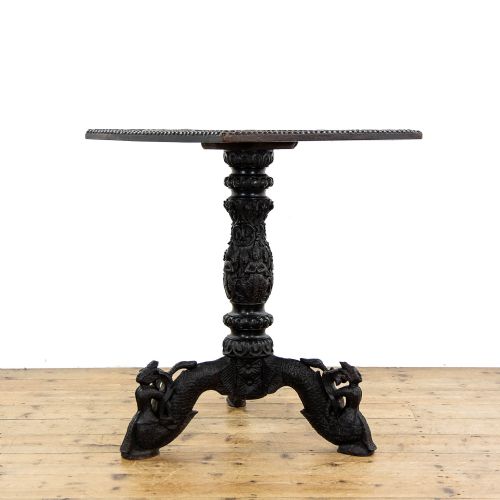


Asian Carved Wood Pedestal
An asian carved wood pedestal brings sculptural weight and rich grain into a room, serving as a sturdy stage for plants, urns and art.
Asian Carved Wood Pedestal
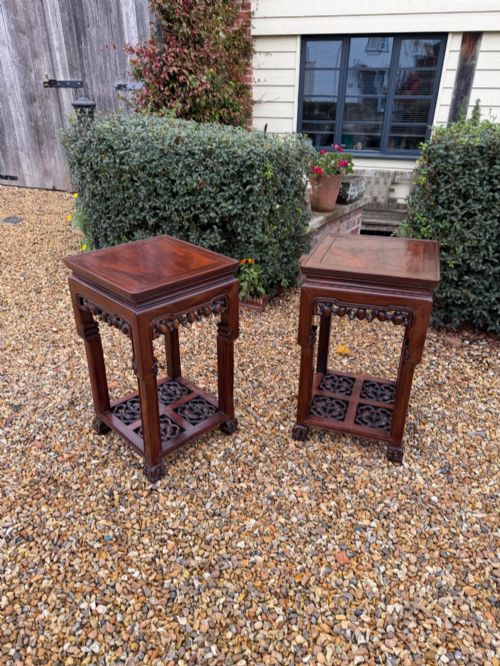
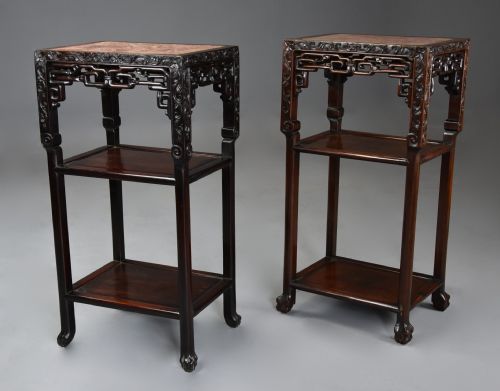
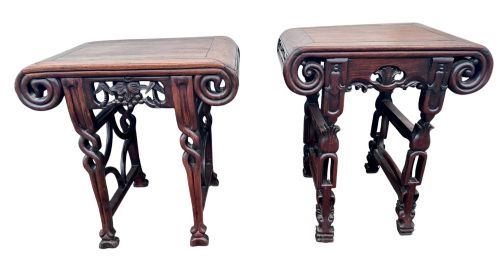
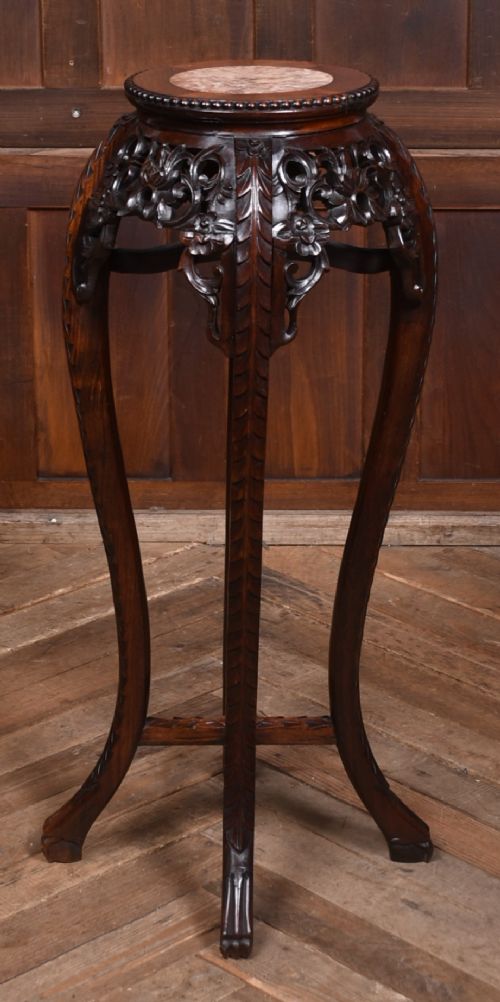
When you search for an asian carved wood pedestal, you enter a field dominated by nineteenth century Chinese plant stands, vase tables and jardiniere supports. These items range from compact occasional tables to tall torchères, often built to elevate decorative objects within traditional interiors.
Beyond standard tables, the selection includes rootwood stands, multi-tiered urn pedestals and sculptural forms like elephant seats or figures. These varied formats show how makers adapted carved timber for both practical display and ornamental presence.
Materials and Construction
Carpenters utilised heavy, durable timbers including rosewood, hongmu and rootwood, allowing for deep relief carving without compromising structural integrity. These dense woods hold crisp details in floral motifs and pierced scrollwork along the aprons and legs.
Many stands integrate contrasting materials, most notably smooth marble inserts set flush into the wooden tops to support heavy porcelain vases and damp plant pots. Other variations employ lacquer, polychrome paint or mother-of-pearl inlay to decorate the surfaces.
Asian Carved Wood Pedestal Retail Price Guide 2026
Typical asking prices for asian carved wood pedestal among the pieces listed under this phrase on Sellingantiques today, from the lower quarter to the upper quarter. They describe what is for sale here now, not the wider market.
Listings span the nineteenth and early twentieth centuries, featuring traditional Chinese hardwoods, marble inserts, and lacquered finishes across various plant stands and tables.
Assessing Quality
The distinction between ordinary and superior pieces lies in the crispness and depth of the wood carving. Fine examples display sharply undercut foliage, balanced symmetry in pierced aprons and tight joinery that remains stable without modern metal fasteners.
Material selection also dictates standing, with dense native hardwoods like hongmu and heavy rootwood commanding greater presence than softer painted or lacquered surfaces. The quality of the fitted marble insert, its grain pattern and how neatly it sits within the timber frame further separate standard tables from exceptional ones.
The Asian Carved Wood Pedestal Glossary
- Hongmu
- A dense, dark tropical hardwood traditionally used in fine Chinese furniture. It develops a rich natural patina over time.
- Torchère
- A tall standing pedestal designed specifically to elevate a lamp, vase or sculpture. These tall supports often feature slender legs and elaborate carved tops.
- Jardiniere stand
- A low table or pedestal built to hold a ceramic flower pot or plant container. They frequently feature marble tops to protect the wood from moisture.
- Qing Dynasty
- The last imperial dynasty of China, spanning from sixteen forty-four to nineteen twelve. Many pieces on this page draw upon the artistic conventions of this era.
- Rootwood
- Timber fashioned from the root systems of trees, prized for its gnarled, organic shapes and natural grain patterns. Makers turned these irregular forms into unique stands and tables.
Asian Carved Wood Pedestal: Frequently Asked Questions
What were these pedestals originally used for?
These pieces served as functional display furniture in traditional homes and halls. They held heavy porcelain vases, bronze sculptures, incense burners and large potted plants.
Elevating these decorative objects protected them from floor drafts and dust while placing them at a proper height for viewing. Taller torchères brought light sources closer to eye level, while smaller stands sat beside seating areas.
How do I care for a hardwood stand?
Maintain the timber by dusting regularly with a soft, dry cloth and avoiding silicone-based polishes. Keep the piece away from direct heat sources and strong sunlight to prevent wood splitting or fading.
For marble inserts, wipe clean with a damp cloth and dry immediately. Ensure that any heavy pots placed on the surface use waterproof saucers to protect the surrounding wood from water damage.
How do I date a nineteenth century stand?
Dating relies on examining the construction methods, timber density, and stylistic markers tied to the Qing Dynasty and Meiji periods. Nineteenth century examples typically show traditional joinery without modern metal screws and exhibit heavy, patinated hardwoods.
Tool marks left by hand chisels and the natural ageing of the wood grain provide further clues to age. Comparing the decorative motifs, such as specific floral carvings or export styles, helps narrow down the decade of manufacture.
Can these stands support heavy items?
Solid hardwood construction and thick timber frames give these pedestals substantial load-bearing capacity. Pieces fitted with marble tops were specifically designed to support heavy porcelain fishbowls, large vases and dense planters.
However, stability depends on the specific base design and leg spread of each individual table. Slimmer torchères or rootwood forms suit lighter display items, while robust hongmu stands easily handle heavy decorative objects.