






Chinese Carved Wooden Buddha
These Chinese carved wooden buddha sculptures bring centuries of ritual craftsmanship into the room, offering quiet presence and rich history to any interior.
Chinese Carved Wooden Buddha
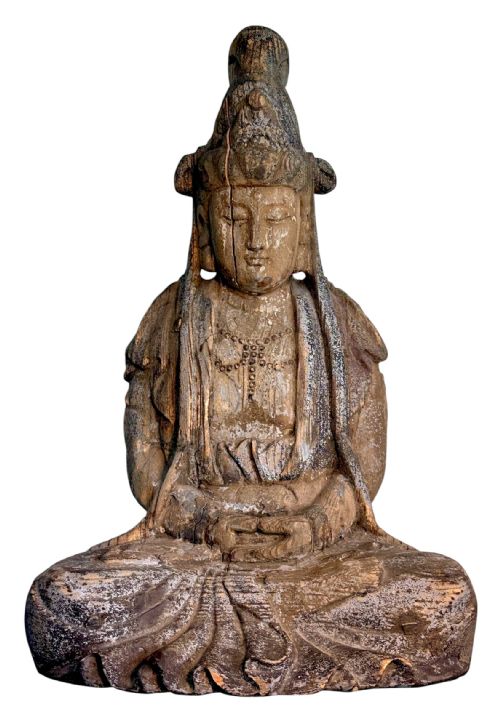
When searching for chinese carved wooden buddha, you encounter religious sculptures and figures originating from the Qing Dynasty, spanning the eighteenth and nineteenth centuries. These wooden forms include depictions of Budai, Guanyin, temple guardians, medicine figures, and various deities.
The pieces appearing on this page range from compact ritual carvings to monumental temple figures, often accompanied by original wooden stands. Surviving examples reflect both domestic devotional practices and larger temple contexts from periods such as the Victorian era.
How they were made
Artisans carved these sculptures directly from wood and dense hardwood, utilising high relief techniques to define drapery, facial expressions, and ornamentation. The underlying timber provided a stable foundation for intricate figurative work.
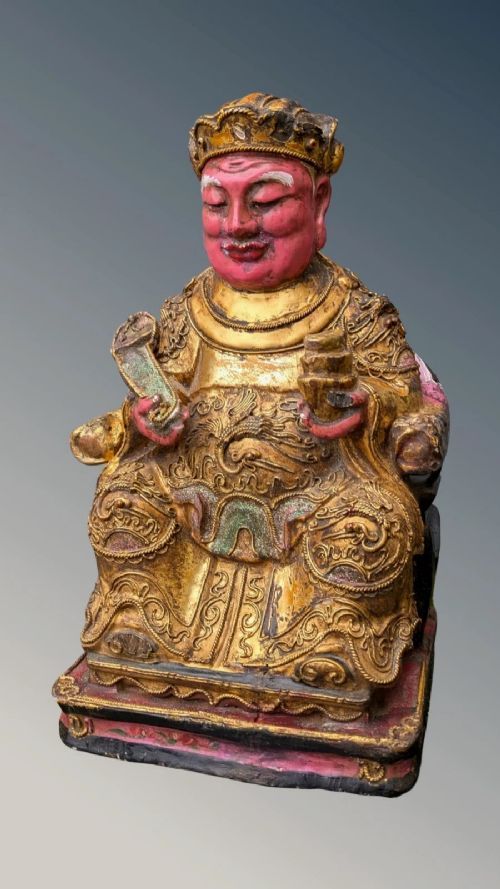
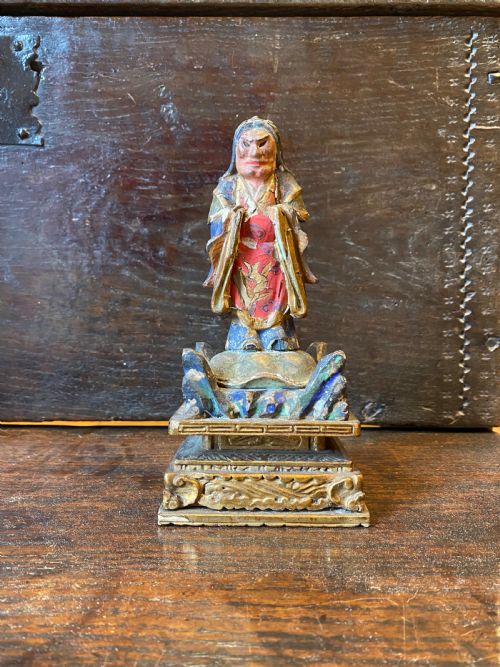
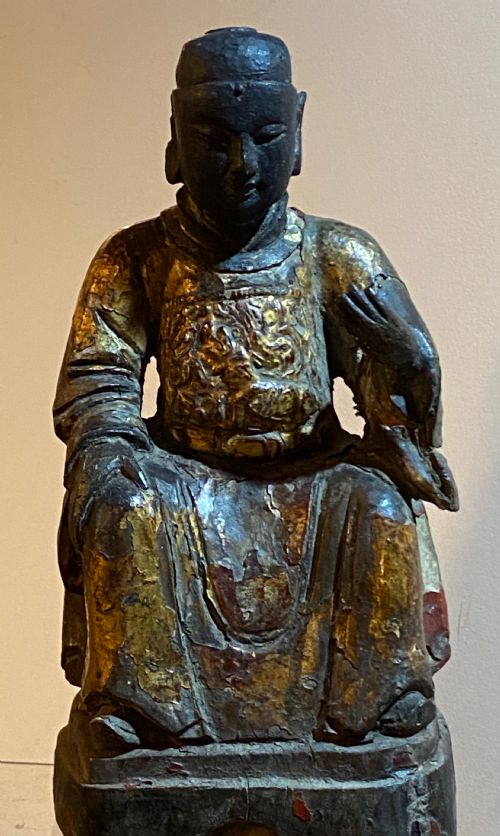
Many surfaces received layers of gesso before application of gold leaf, gilt, or polychrome pigment. These colourful and metallic finishes brought life and reverence to the deities, though centuries of time have often softened the original brightness.
Chinese Carved Wooden Buddha Retail Price Guide 2026
Typical asking prices for chinese carved wooden buddha among the pieces listed under this phrase on Sellingantiques today, from the lower quarter to the upper quarter. They describe what is for sale here now, not the wider market.
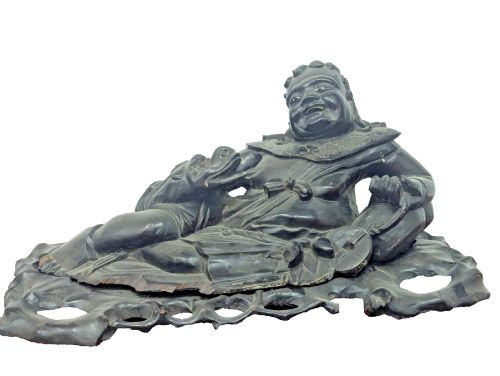
An amusingly corpulent reclining buddha brings a touch of lighthearted joy to the solemn world of antique temple guardians.
What varies in quality
The preservation of original surface decoration determines much of the distinction between examples. Pieces retaining coherent portions of early polychrome pigment or gold leaf offer a more complete historical survival than those stripped down to bare wood.
The Chinese Carved Wooden Buddha Glossary
- Budai
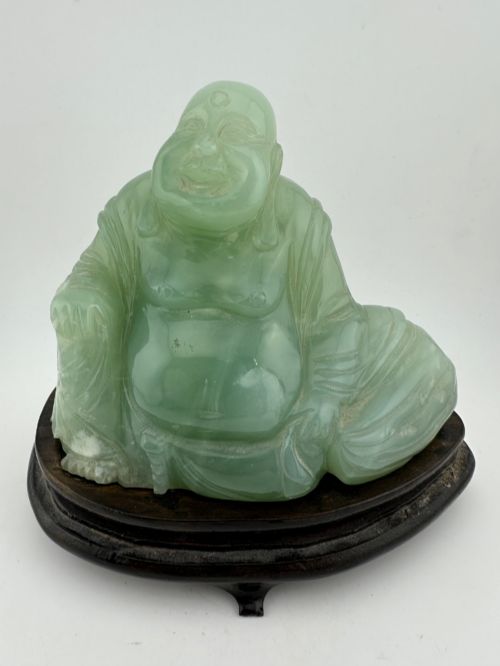
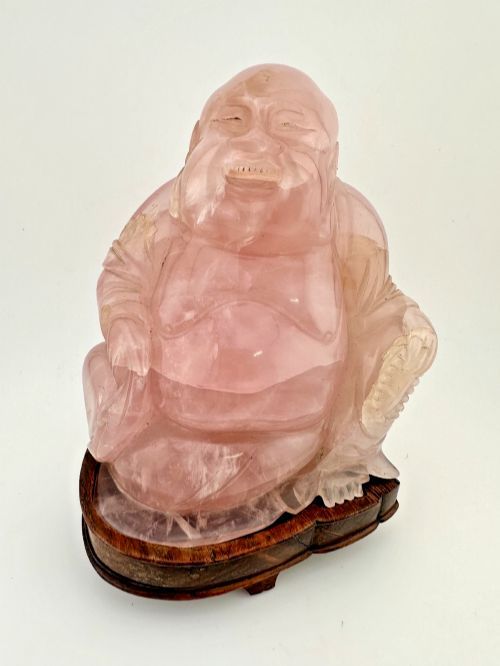
- A representation of the laughing buddha, traditionally depicted as a corpulent and joyful figure associated with contentment. This subject appears frequently in carved hardwood and stone forms.
- Guanyin
- The venerated bodhisattva of compassion, frequently rendered in carved wood holding symbolic attributes. These figures often display serene expressions and elaborate flowing robes.
- Polychrome
- Decoration utilising multiple colours painted directly onto the wooden surface or over a gesso ground. This technique added realistic detail to garments and flesh.
- Gesso
- A plaster-like preparation applied to wood to create a smooth base for gilding or painting. It helps adhere gold leaf and pigments to the carved substrate.
- Zhenwu
- A powerful warrior deity and temple guardian in Chinese religion. Sculptures depicting this figure often emphasise protective authority and martial posture.
Chinese Carved Wooden Buddha: Frequently Asked Questions
How old are these wooden buddha sculptures?
The pieces available predominantly date from the eighteenth and nineteenth centuries during the Qing Dynasty. Dating relies on stylistic traits, tool marks, and historical documentation associated with the workshop traditions of those periods.
While some specific statues carry dates around seventeen-fifty or nineteen hundred, many span the broader nineteenth century. Understanding the period helps contextualise the craftsmanship and ritual function of each individual figure.
How do I care for an antique wooden buddha?
Display these sculptures in stable environmental conditions away from direct sunlight and dramatic humidity fluctuations. Such precautions protect fragile historic wood and delicate polychrome surfaces from cracking or fading.
Dusting should be performed gently with a dry, soft brush rather than cleaning cloths or liquids. Preserving the remaining pigment and gold leaf requires minimising physical contact with the decorated areas.
What is the difference between a buddha and a deity?
A buddha represents an enlightened being who has achieved spiritual awakening, such as the laughing Budai figures. Other listed sculptures depict different figures entirely, including Guanyin or temple guardians like Zhenwu.
Recognising these identities involves observing specific hand gestures, posture, attire, and traditional iconographic attributes. Each category served distinct ritual purposes within temples or domestic shrines.