


Chinese Carved Opium Table
A chinese carved opium table brings low-level surface utility and traditional craftsmanship into a modern interior.
Chinese Carved Opium Table
A chinese carved opium table is a low-level surface, often referred to in listings as a kang table or coffee table. These pieces originate from domestic settings where furnishings were kept close to the floor.
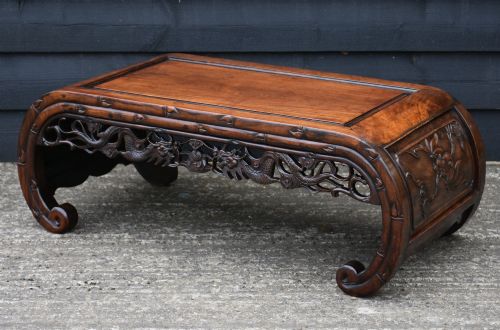
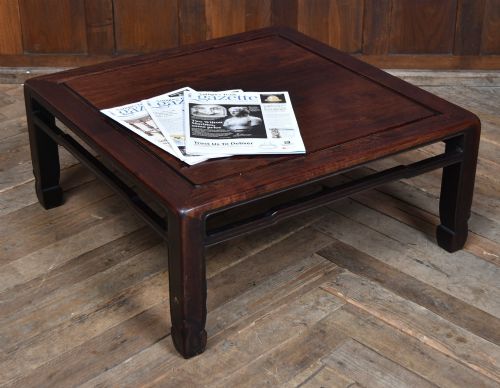
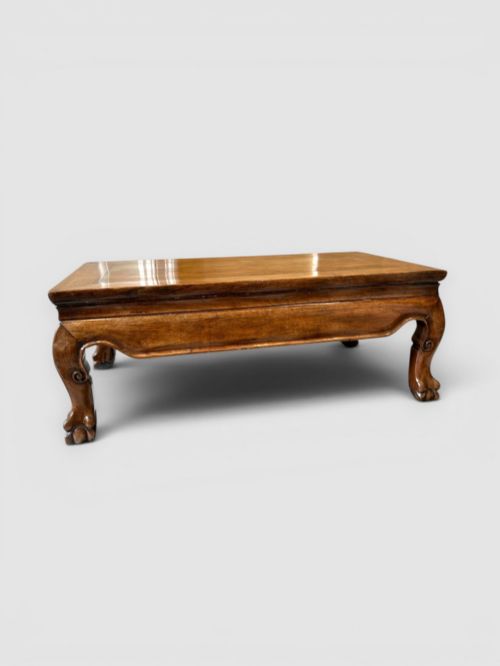
The version most commonly met on this page is a rectangular low table dating from the nineteenth century or the early twentieth century. Examples frequently display scroll ends and traditional low-profile proportions suited for modern seating arrangements.
Woods and surface construction
Construction relies heavily on dense timbers such as hardwood, rosewood, padouk, and elm. These materials provide the structural stability necessary for low tables subjected to daily use.
Surfaces are finished in various ways, ranging from natural grain presentation to red lacquer and ebonised hardwood. Joinery and carving work together to define the edges and legs of each piece.
Several pieces feature carved dragon details, ensuring your coffee cup rests under the watchful eye of a mythical beast.
Distinctions in material depth and detail
The refinement of the carving separates standard examples from exceptional pieces. Crisp detailing around dragon motifs and scroll ends indicates a higher standard of workshop execution.
The choice of timber and surface patina also dictates quality. Dense rosewood or padouk with a deep, undisturbed patina holds greater visual presence than simpler elm or heavily painted variants.
The Chinese Carved Opium Table Glossary
- Kang table
- A traditional low platform or table designed for sitting on a heated brick bed or floor. These function as low coffee tables in contemporary rooms.
- Scroll-end
- A form where the short sides of the table top curl upward into decorative terminal rolls. This design detail frequently appears on nineteenth-century pieces.
- Padouk
- A heavy, durable tropical hardwood prized for its reddish hue and density. It forms the primary structure of many better-quality low tables.
- Patina
- The surface sheen and colour developed through age, handling, and wear. A good patina shows depth across the timber.
- Ebonised
- Wood treated to take on a dark, black finish resembling ebony. This technique appears on specific low tables from the early twentieth century.
Chinese Carved Opium Table: Frequently Asked Questions
How were these tables used originally?
These low tables sat on raised platforms or beds where people rested, drank tea, or smoked. They functioned as accessible surfaces for everyday domestic items within the household.
Over time, their compact proportions made them suitable for sitting directly on floor mats or cushions during gatherings.
How do I style a low table at home?
Place the table in front of low seating or beside a sofa to contrast with standard furniture heights. The low profile keeps sightlines open across a room.
Keep objects placed on top minimal to allow the carved edges and timber grain to remain visible.
What is the difference between a kang table and an opium table?
The terms are largely interchangeable in the antiques trade, referring to the same low-profile furniture form. Both describe low tables associated with traditional Chinese domestic interiors.
Listings often use both words together to help buyers identify the specific scroll-end or low rectangular shape.
How do I identify a Qing Dynasty piece?
Look for dense hardwoods, traditional scroll-end designs, and hand-carved details such as dragons. These characteristics align with the construction methods of the nineteenth and early twentieth centuries.
Examine the underside and joints for signs of traditional peg construction and wear consistent with age.