


Chinese Bronze Planter
These heavy cast vessels bring a quiet, grounded presence to a room, and a chinese bronze planter offers a durable centrepiece for indoor planting.
Chinese Bronze Planter
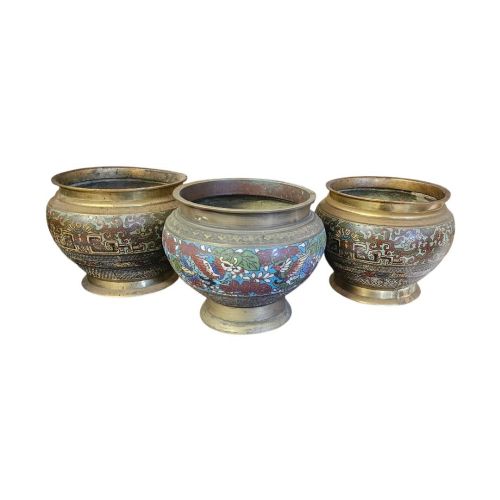
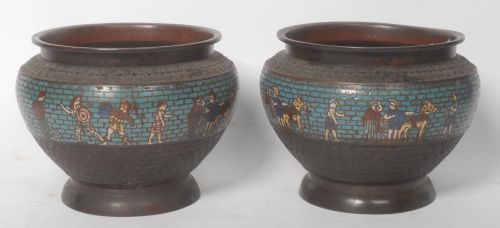
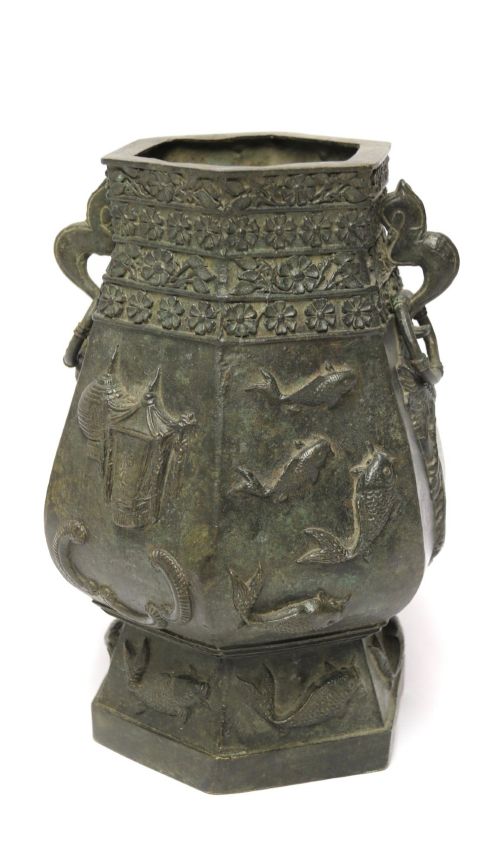
A chinese bronze planter encompasses heavy cast vessels, jardinières, cachepots, and decorative bowls designed to hold plants or stand as sculptural objects. The selections span the nineteenth century through the early twentieth century, taking forms from hexagonal vessels to classical cachepots and large sectional bowls.
Most examples originate from the Qing Dynasty, Late Qing, and Republic periods, alongside pieces made for the Chinese Export market or carrying Victorian Chinoiserie and Japanese Meiji influences. Buyers encounter everything from weighty bowls exceeding four kilograms to matched pairs and sets of three.
These items function equally well as traditional flower pots, display urns, and desk pots. Their deep patination and cast metal bodies reflect the utilitarian and decorative arts of their respective periods.
What varies in quality
Weight and metal thickness distinguish substantial vessels from lighter decorative items, with larger pieces scaling past four kilograms. Heavier casting provides greater structural integrity and stability for holding plants.
The precision and complexity of the enamel work dictate the visual finish. Crisp champlevé or cloisonné cells set flush with the bronze demonstrate superior workshop execution compared to softer or simpler surface treatments.
Periods represented on the site span from the Georgian era through Victorian times and into the early twentieth century.
The Chinese Bronze Planter Glossary
- Jardiniere
- An ornamental pot or stand for holding plants or flowers. These vessels often sit directly on tables or floors without attached saucers.
- Cachepot
- An ornamental flowerpot outer case designed to hide an ordinary unadorned plant pot. The term derives from the French for hidden pot.
- Champleve
- An enamelling technique where troughs or cells are carved or cast into the surface of the metal and filled with vitreous enamel. The surrounding metal walls remain visible as part of the design.
- Cloisonne
- A technique of decorating metalwork objects with coloured material held in place or separated by thin metal strips welded or soldered to the body.
- Qing Dynasty
- The last imperial dynasty of China, ruling from sixteen forty-four until nineteen twelve. Pieces from this era often display traditional motifs and formal casting techniques.
Chinese Bronze Planter: Frequently Asked Questions
How do I use a bronze planter safely indoors?
Place a plastic liner or internal pot inside the bronze vessel to catch drainage water and protect the metal interior from damp soil.
Ensure you empty any standing water regularly to preserve the patina and prevent moisture damage.
Can these planters stay outdoors in winter?
Most antique bronze vessels are intended for interior display and lack frost-resistance. Subfreezing temperatures can crack the metal or damage integrated enamel work.
Keep them inside during cold months to protect the cast body and decorative finishes.
How do I clean the bronze surface?
Dust the vessel gently with a soft, dry cloth to remove surface particles. Avoid using harsh chemical polishes that can strip the aged patina.
Consult a professional restorer if the piece requires deeper cleaning or conservation work.
How can I tell a nineteenth-century piece from a later one?
Examine the weight, casting marks, and style of the enamel decoration. Nineteenth-century examples often display heavier metal walls and hand-finished patination.
Twentieth-century pieces from the Republic period or nineteen-twenties show different manufacturing consistencies and stylistic influences.