
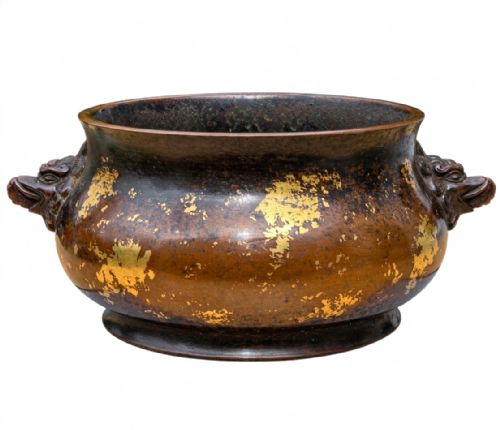


Bronze Censer Bowl
A bronze censer bowl brings ritual weight and tactile presence to a desk or display, channelling centuries of Asian and European craftsmanship.
Bronze Censer Bowl
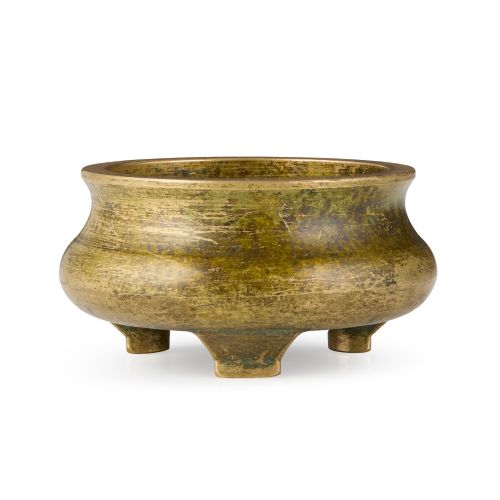
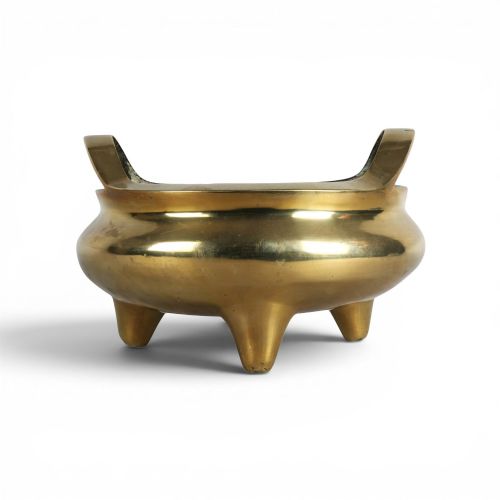
A bronze censer bowl is a vessel designed for burning incense, taking forms such as tripod vessels, ritual food bowls, and decorative desk pots. Buyers searching for a bronze censer bowl encounter pieces spanning the sixteenth century to the early twentieth century, originating from Chinese and Japanese workshops.
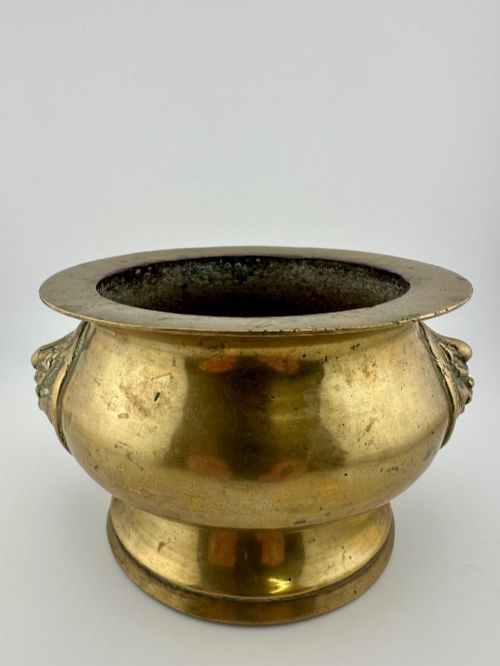
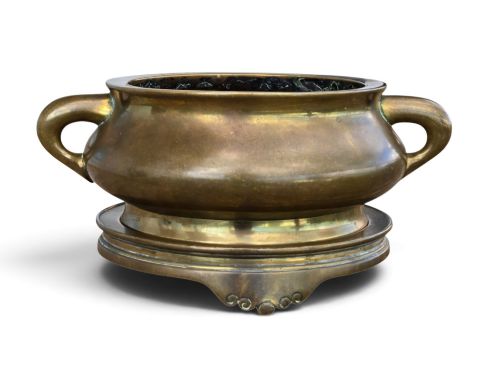
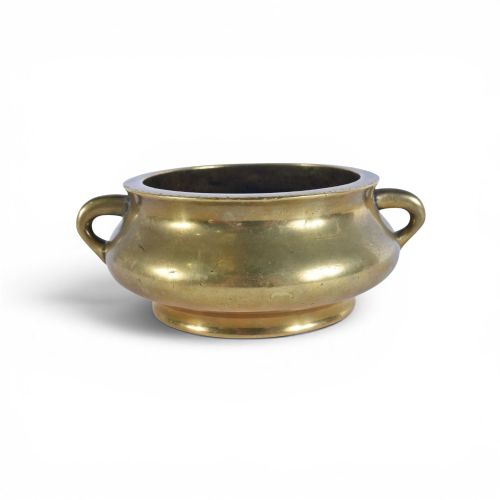
The pieces on this page lean heavily towards substantial Chinese scholar's vessels from the Ming and Qing dynasties, alongside Japanese Edo and Meiji period examples. Forms range from heavy ritual censers with mask handles to simpler decorative bowls and planters.
Scholar's pieces and archaistic tripod vessels dominate the selection, often bearing studio or reign marks on the base. These range from modest desk accessories to massive multi-kilogram ritual bronzes intended for altars and studies.
Materials and casting methods
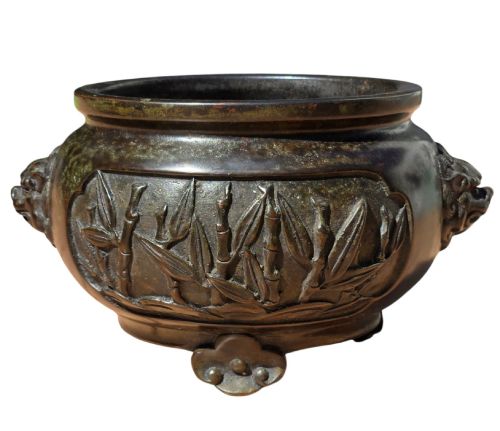
Makers utilised cast bronze, brass, and copper alloy, often pouring metal into intricate moulds to achieve substantial weight and wall thickness. Surfaces occasionally incorporate gold leaf or champleve enamel decoration to highlight relief panels and motifs.
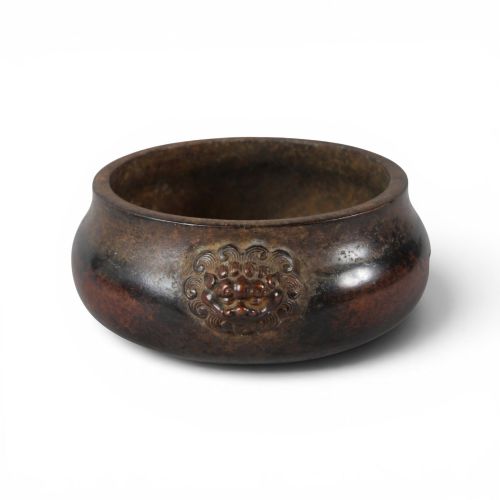
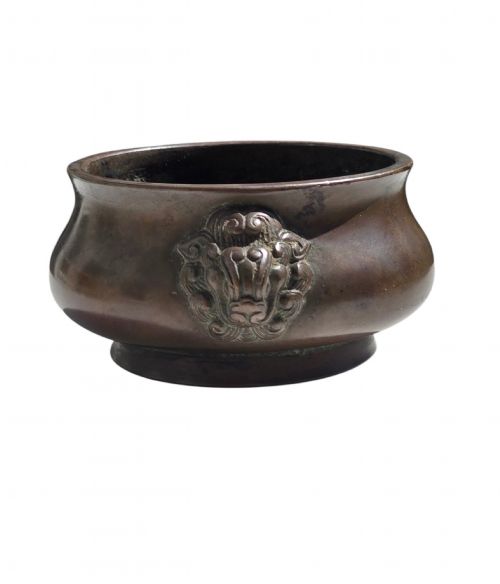
Master casters integrated decorative elements such as lion masks, taotie masks, and relief panels directly into the metalwork during production. Wood stands were frequently carved to match the exact profile of the heavy metal vessels they supported.
Listings feature materials including bronze, brass, copper alloy, gold leaf, enamel, and wood across periods from the sixteenth century to the early twentieth century.
Judging metalwork quality
The distinction between ordinary production and superior craftsmanship lies in the crispness of the casting and the density of the metal. Heavier vessels with bell-ring resonance and sharply defined relief work represent the peak of the maker's art.
Subtlety of surface finish and the integration of marks, such as Xuande seal marks or scholar studio inscriptions, separate standard decorative items from master-cast pieces. The harmonious balance between the vessel body, handles, and any matching wood stand dictates overall success.
The Bronze Censer Bowl Glossary
- Archaistic
- A style that consciously imitates the archaic forms, motifs, and patination of ancient ritual bronzes from earlier dynasties. This aesthetic was particularly favoured during the Qing period.
- Champleve
- An enamelling technique where troughs or cells are sunk into the bronze surface and filled with enamel paste before firing. The resulting coloured patterns sit flush with the metal partitions.
- Tripod
- A vessel supported by three distinct feet or legs, typical of ancient ritual bronzes adapted for later scholar's censers. This configuration provides stability on wooden desk surfaces.
- Gui
- An ancient Chinese ritual bronze vessel form characterised by a circular bowl, often with loop handles, mounted on a squared foot or ring base. Later scholars repurposed this shape for burning incense.
Bronze Censer Bowl: Frequently Asked Questions
What is a bronze censer bowl used for?
These vessels served primarily as ritual or meditative burners for aromatic incense in temples, scholar's studios, and domestic shrines. They held burning materials safely while diffusing fragrance through pierced covers or open rims.
Over time, many of these metal bowls transitioned into decorative desk pots, planters, or standalone display objects valued for their tactile weight and patination.
How do I date a bronze censer?
Dating relies on examining the casting style, alloy composition, surface patination, and any reign or studio marks stamped or engraved on the base. Ming and Qing pieces often display specific archaistic motifs or distinct mark formats associated with imperial periods.
Comparison with documented examples helps narrow down the era, though many traditional forms continued unchanged through subsequent centuries.
What are lion mask handles?
Lion mask handles are sculptural bronze ornaments cast directly onto the sides of the vessel, depicting stylized leonine faces with ring pulls in their mouths. They served a dual purpose as structural grips and symbolic protectors.
Found frequently on heavy scholar's censers, these masks add dramatic relief and visual weight to the profile of the bowl.
How should I clean a bronze bowl?
Bronze requires minimal intervention to preserve its historical patina and stable surface oxidation. Dusting with a dry, soft cloth is usually sufficient for regular maintenance.
Avoid abrasive cleaners, chemical polishes, or excessive moisture, which can strip the aged surface and diminish the character of the metal.