
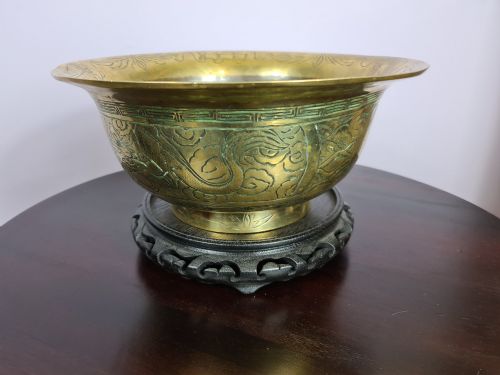


Oriental Brass Burner
These oriental brass burner pieces are cast metal vessels shaped for ritual incense, and collectors prize them for their rich patination and intricate decorative detailing.
Oriental Brass Burner
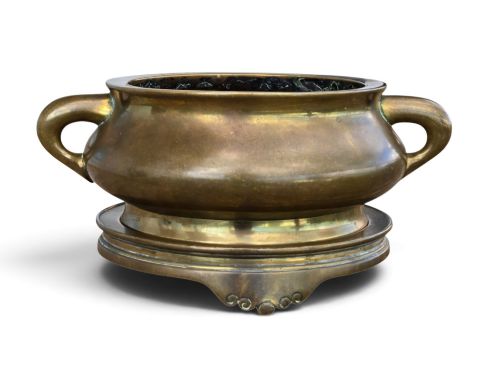
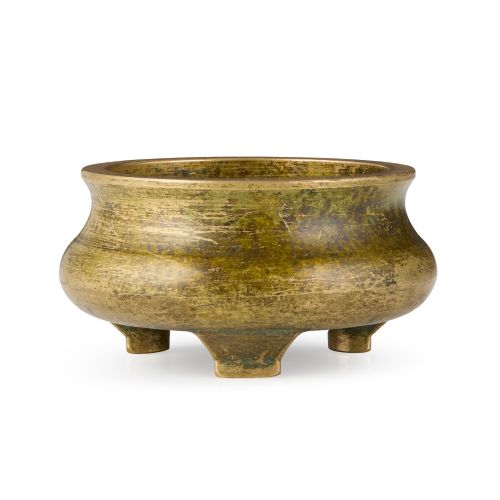
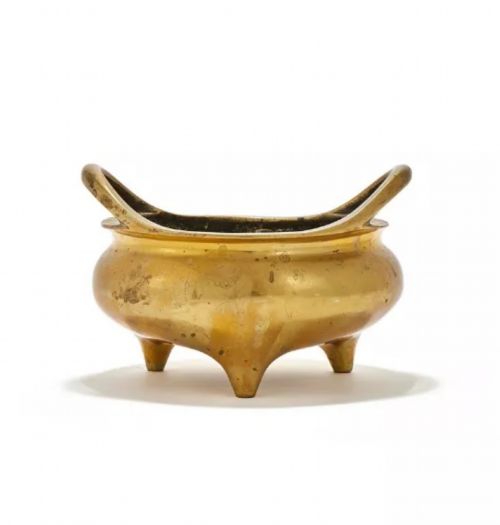
When you search for an oriental brass burner, you encounter cast metal vessels primarily originating from Chinese workshops across several centuries. The selection on this page consists predominantly of tripod censers, incense burners, and decorative jardinieres dating from the eighteenth century through to the early twentieth century.
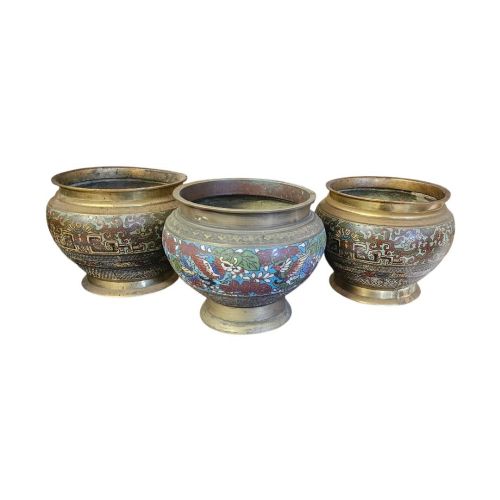
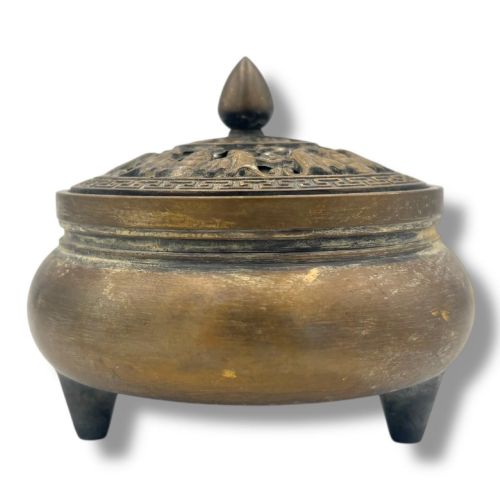
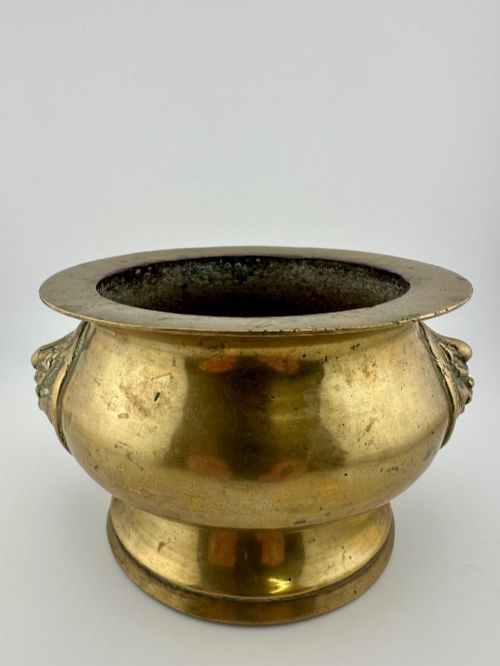
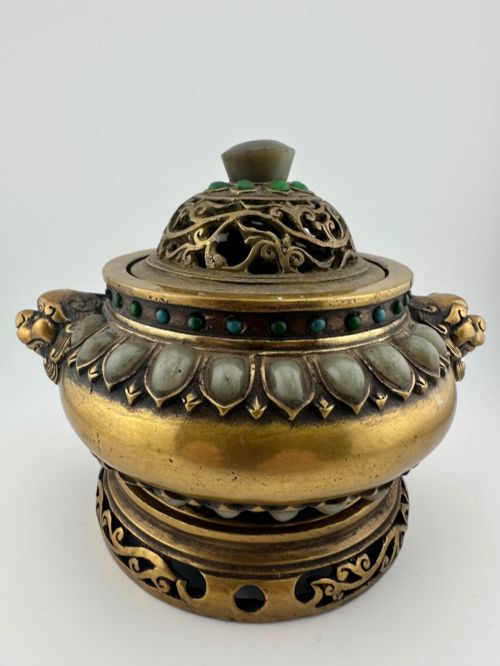
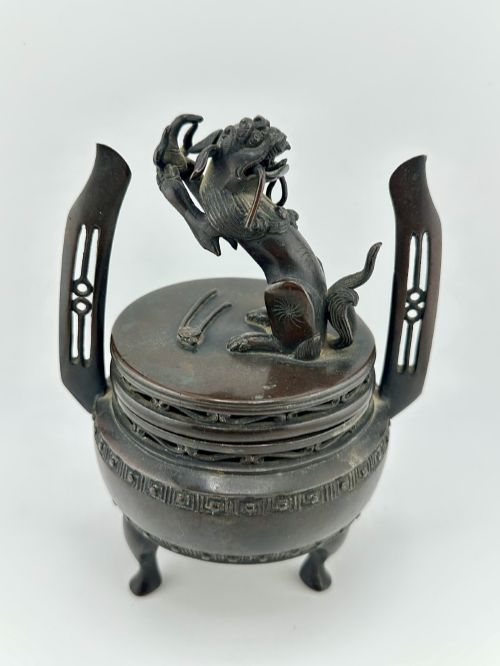
These forms range from heavy ritual vessels bearing archaic marks to smaller lidded pieces featuring traditional cast motifs like lion mask handles and qilin finials. You also find sets of jardinières and large bowls that served functional and decorative roles within scholar's studios and domestic interiors.
The aesthetic bridges the Qing Dynasty traditions and later Victorian interpretations, showing consistent use of bronze and brass alongside inset materials. Buyers frequently encounter pieces associated with specific reigns and studio marks, reflecting a long tradition of decorative metalwork.
How they were made
Makers utilised traditional metal casting techniques to form the heavy bodies of these censers and bowls, often employing bronze and brass as the primary structural materials. Molten metal was poured into moulds to create complex shapes such as tripod bases, bamboo-form bodies, and bombé profiles.
Surface ornamentation involved intricate hand-chiselling, piercing, and inlay work, integrating components like jade, hardstone, and champlevé enamel. Artisans applied cast details separately, including lion mask handles and qilin finials, before finishing the surfaces to achieve deep patination.
Listings include items spanning the 18th century, 19th century, Victorian era, and early 20th century up to 1930.
What varies in quality
The standard of a piece depends heavily on the weight of the metal and the crispness of the cast details, such as the relief work on floral lids and handles. Heavier vessels demonstrate superior material substance, whilst finer examples display sharply defined artisan marks and integrated hardstone or enamel inlays.
Age and provenance also dictate the standing of an item, with eighteenth-century pieces and those bearing specific studio or reign marks holding particular distinction. The complexity of the construction, from simple brass bowls to multi-part lidded censers with matching stands, establishes the upper tier of the range.
The Oriental Brass Burner Glossary
- Censer
- A vessel designed for burning incense during rituals or for scenting interior spaces. These typically feature pierced lids to allow scented smoke to escape.
- Tripod
- A vessel supported by three feet, commonly seen on Chinese bronze and brass censers from the Qing period onwards.
- Champlevé
- An enamelling technique where troughs are dug into the metal surface and filled with vitreous enamel before firing.
- Bombé
- A swollen, bulging profile characteristic of certain classical metal incense burners.
- Qilin
- A mythical hooved creature often cast as a decorative finial on censer covers.
Oriental Brass Burner: Frequently Asked Questions
What is an oriental brass burner?
These are cast metal vessels created for burning incense or serving as decorative bowls and jardinieres, originating largely from Chinese manufacturing traditions.
They encompass various forms including tripod censers, lidded vessels with animal finials, and heavy ritual bowls made from bronze and brass.
How were oriental brass burners used?
Their primary historical function was holding burning incense for ceremonial purposes, meditation, or scenting scholar's studios and rooms.
Over time, many served as ornamental objects, centrepieces, or jardinieres within domestic interiors, valued for their sculptural qualities.
How do I date an antique censer?
Dating relies on examining the casting style, materials, weight, and any inscribed reign or studio marks found on the base or body.
Pieces span from the eighteenth-century Qianlong period through to late Qing and early twentieth-century manufacturing, showing shifts in decorative techniques and patination.
What materials are used in these burners?
The primary materials recorded are bronze and brass, sometimes enhanced with decorative additions like cloisonné or champlevé enamel.
Selected pieces also incorporate jade, hardstone inlays, and wooden stands to complement the cast metal bodies.