

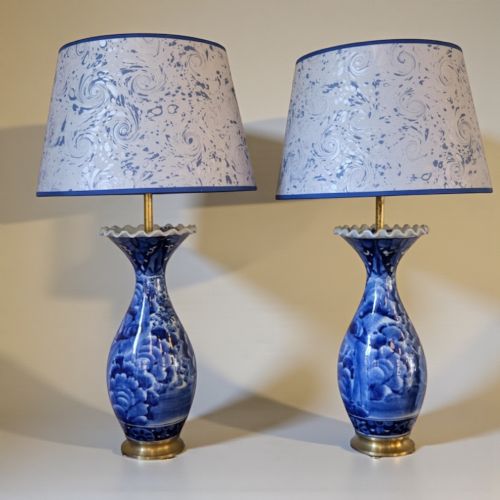



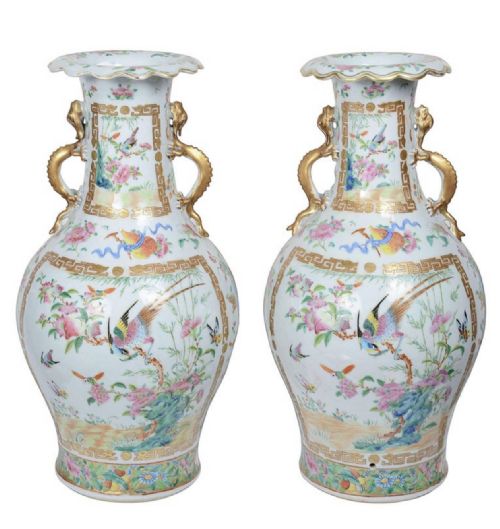


Chinese Baluster Vase Lamp
A chinese baluster vase lamp brings dramatic height and painted porcelain colour to a room, turning antique ceramics into functional lighting.
Chinese Baluster Vase Lamp
A chinese baluster vase lamp takes a traditional ceramic vessel with a sweeping curved body and adapts it for modern table lighting. These pieces span the nineteenth century and the early twentieth century, drawing on periods like the Qing Dynasty and Victorian eras.
Most examples originate from nineteenth-century production or early twentieth-century adaptations, utilising distinct palettes like powder blue, celadon, and rose medallion. The bodies retain their classic baluster silhouette, distinguished by a wide rounded lower portion tapering toward the neck.
How they were made
Potters shaped these bodies from porcelain and ceramic, applying intricate hand-painted enamels, gold leaf, and underglaze pigments before firing. Workshops then drilled the ceramic bases to accommodate electrical wiring, often pairing the porcelain with brass, gilt bronze, or ormolu mounts.
Metalwork components such as ormolu mounts and brass fittings were cast and chased to frame the ceramic body securely. Fabric shades complete the construction, sitting atop standard table lamp hardware fitted through the neck or lid of the original vase.
Chinese Baluster Vase Lamp Retail Price Guide 2026
Typical asking prices for chinese baluster vase lamp among the pieces listed under this phrase on Sellingantiques today, from the lower quarter to the upper quarter. They describe what is for sale here now, not the wider market.
The inventory records table lamps executed in Chinoiserie, Chinese Export, and Qing Dynasty styles, alongside Canton and Famille Verte decorations.
What varies in quality
The refinement of the hand-painted enamel work sets finer pieces apart, showing precise brushwork, layered pigments, and balanced composition across the ceramic panels. Superior examples feature crisp detailing in palettes like Famille Verte or rose medallion, whereas simpler pieces display heavier, more repetitive application.
The integration of the metal mounts defines another tier of craftsmanship, where chased ormolu and substantial brass fittings complement the ceramic body harmoniously. Poorly adapted specimens may exhibit intrusive drilling or uncoordinated hardware that detracts from the original vessel's proportions.
The Chinese Baluster Vase Lamp Glossary
- Baluster
- A vase shape characterised by a rounded lower body that tapers gently towards a narrow neck, resembling an architectural baluster. This form provides a stable base and generous surface area for detailed enamel painting.
- Ormolu
- Gilt bronze mounted onto decorative objects, created through an amalgam of mercury and gold applied to cast bronze. It adds bright metallic contrast to porcelain vessels.
- Famille Verte
- A traditional palette dominated by green enamel overglaze colours, developed during the Qing Dynasty. Artisans used this scheme to depict intricate figures, flowers, and natural scenes.
- Celadon
- A transparent jade-green glaze fired over porcelain, creating a subtle translucent finish. This ancient technique relies on iron oxide within the glaze reacting in the kiln.
- Rose Medallion
- A distinctive Canton porcelain style featuring segmented panels filled with painted figures, birds, and flowers in pink and contrasting enamel colours. It remains a vibrant signature of nineteenth-century export ware.
Chinese Baluster Vase Lamp: Frequently Asked Questions
Are these lamps converted from old vases?
Most antique porcelain lamps of this type were adapted from earlier vases, sometimes retaining their original nineteenth-century mounts and wiring configurations.
The conversion process involved careful drilling through the ceramic base or foot to thread electrical cord through the interior without compromising structural stability.
How do I choose the right shade?
Selecting a fabric shade depends on balancing the visual weight of the painted ceramic body and complementing the dominant enamel colours.
A simple neutral shade allows intricate patterns like Famille Rose or Canton scenes to remain the focal point of the room.
How do I date a porcelain vase lamp?
Dating relies on examining the painting style, glaze characteristics, and the nature of any associated brass or ormolu mounts.
Nineteenth-century examples typically display hand-mixed pigments and heavier potting, while early twentieth-century pieces often reflect transitional export manufacturing methods.
Where should I place a large vase lamp?
These tall ceramic lamps suit sturdy side tables, console surfaces, or pedestals where their height and painted decoration can be fully appreciated.
Placing them away from heavy foot traffic protects the protruding handles and delicate ormolu mounts from accidental knocks.