



Chessboard Side Table
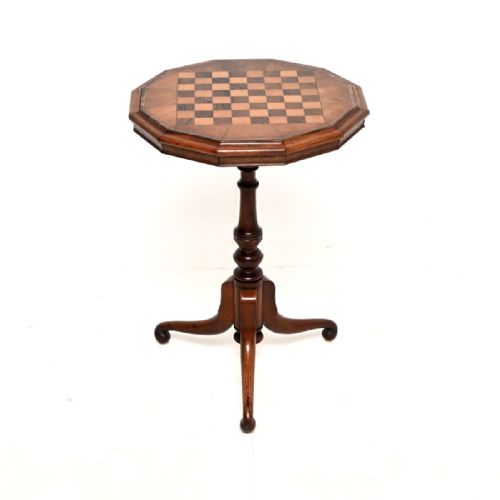
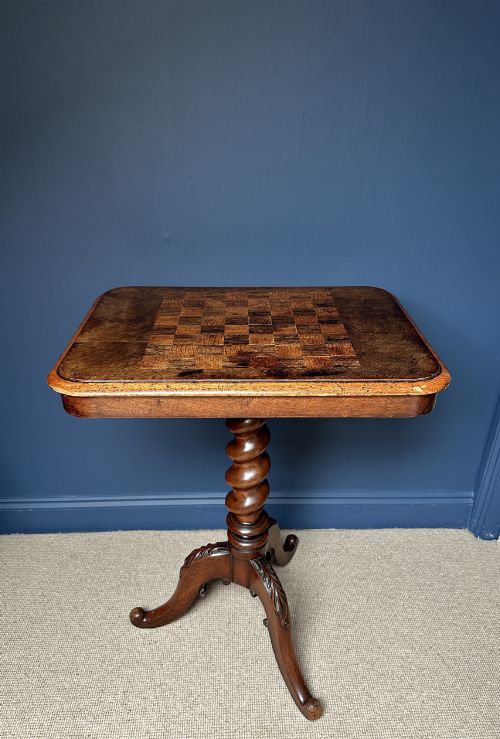
A chessboard side table brings a functional playing surface into a room with timeless woodworking and craftsmanship.
Chessboard Side Table
A chessboard side table combines a dual-purpose games top with the compact footprint of a occasional piece of furniture. When you search for a chessboard side table, you encounter items designed for parlour entertainment that double as regular display surfaces.
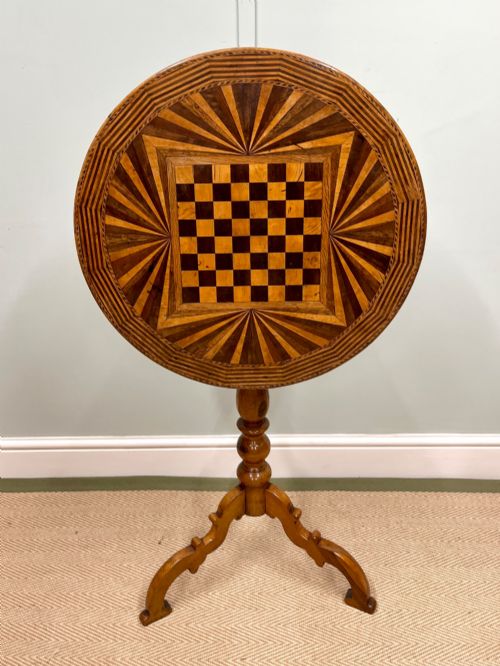
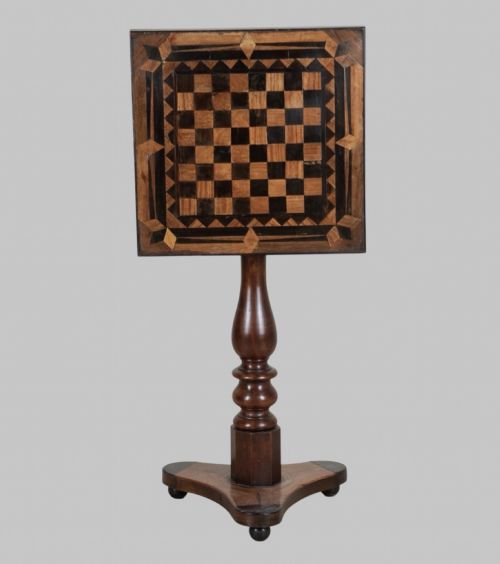
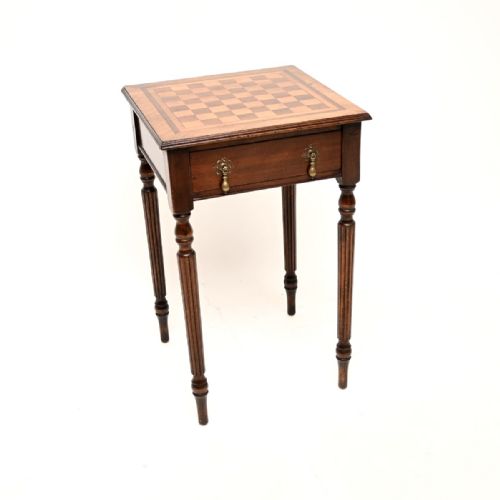
The pieces listed on this page span the Georgian, Regency, Victorian, and Edwardian eras, reaching into the early twentieth century. Walnut, rosewood, mahogany, and satinwood dominate the construction, often featuring boxwood inlay to map out the playing squares.
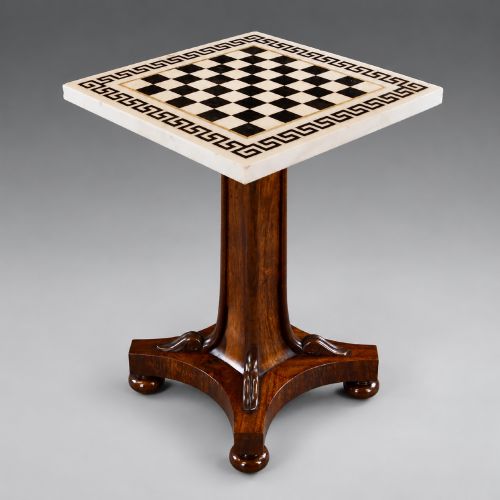
Formations range from strict British cabinet-making traditions to 19th-century Italian parquetry and Anglo-Indian marble work. Most examples function primarily as games tables with integrated boards built directly into the top surface.
How they were made
Cabinet makers utilised dense hardwoods such as walnut, rosewood, and mahogany as the primary structural body for these tables. These timbers provided the weight and stability required for frequent use in the drawing room.
Inlay techniques defined the playing surface, contrasting lighter boxwood with darker timbers to form the distinct grid of the chessboard. More elaborate versions incorporate marble tops or intricate parquetry patterns across the entire surface.
Chessboard Side Table Retail Price Guide 2026
Typical asking prices for chessboard side table among the pieces listed under this phrase on Sellingantiques today, from the lower quarter to the upper quarter. They describe what is for sale here now, not the wider market.
Current listings feature walnut, rosewood, mahogany, and marble as primary materials across 19th-century and Edwardian forms.
What varies in quality
The refinement of the timber selection dictates the underlying quality of the piece, with burr walnut and figured mahogany sitting at the higher end of the scale. Grain matching across the table top shows the care taken by the original maker.
Precision in the inlay work separates standard production from superior craftsmanship. Sharp, flush joints between the boxwood squares and the surrounding field indicate a steady hand and patient assembly.
The Chessboard Side Table Glossary
- Parquetry
- Geometric mosaic woodwork arranged in decorative patterns. It frequently forms the chessboard top on these tables.
- Boxwood
- A dense, pale yellow timber traditionally used for the lighter squares on inlaid chessboards. It provides a sharp contrast against darker woods like walnut.
- Scumbled
- A decorative paint finish applied to imitate the grain of more expensive timber. This technique appears on specific Regency examples.
- Satinwood
- A luminous, yellow-brown hardwood utilised during the Edwardian period for fine furniture veneers.
Chessboard Side Table: Frequently Asked Questions
What is a chessboard side table?
A chessboard side table is a piece of domestic furniture featuring an integrated playing grid on its upper surface. It serves as a functional table when not in use for matches.
These items were staples of 19th-century drawing rooms where guests gathered for leisure. They combine the utility of a small stand with the entertainment value of a traditional board game.
How do I date a games table?
Dating relies on identifying the prevailing timber choices, structural silhouettes, and decorative motifs characteristic of periods like the Regency or Victorian eras. Examining the joinery beneath the top also reveals construction methods.
Later pieces from the Edwardian period or the early twentieth century often display lighter woods and simpler turnings compared to heavy Georgian and Victorian examples.
Were these used for chess only?
Many of these tables accommodated multiple pastimes, functioning as general games tables alongside dedicated chess use. The inlaid top often served for draughts as well as tactical board games.
Card playing was also common, leading makers to design reversible or folding tops that concealed the board when required.
How do I care for antique wood?
Maintain antique timber surfaces by keeping them away from direct sunlight and steady heat sources which cause wood to dry and split. Regular dusting with a soft, dry cloth preserves the polish.
Avoid modern chemical sprays and instead use appropriate wax sparingly to nourish the grain of rosewood, walnut, or mahogany.