



Cherub Porcelain Centrepiece Bowl
These cherub porcelain centrepiece bowl examples combine figurative charm with elaborate tableside utility for the collector.
Cherub Porcelain Centrepiece Bowl
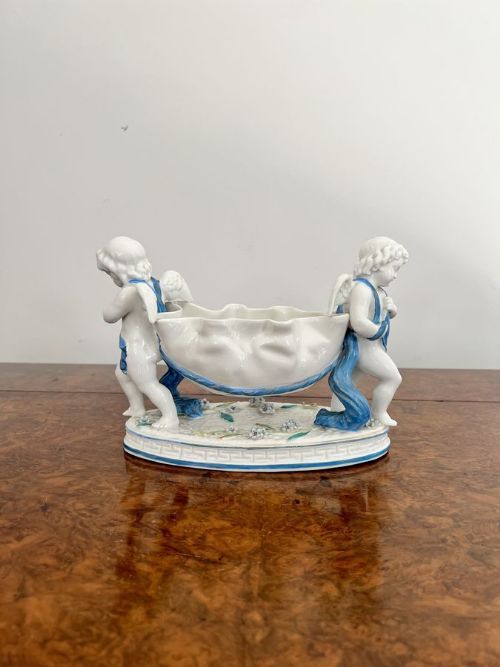
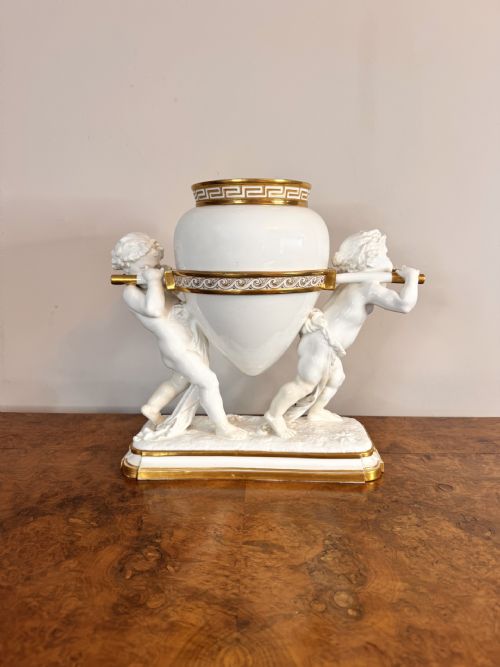
A cherub porcelain centrepiece bowl serves as an ornamental centre of attention on a dining table or sideboard, featuring sculpted figures supporting or accompanying a vessel. These objects draw the eye through sculptural modelling combined with practical basin forms designed for display.
The versions most commonly met on this page originate from the Victorian and Edwardian eras, spanning the late nineteenth and early twentieth centuries. German factories dominate the selection, alongside notable English contributions from Minton and continental ateliers working in the Rococo Revival style.
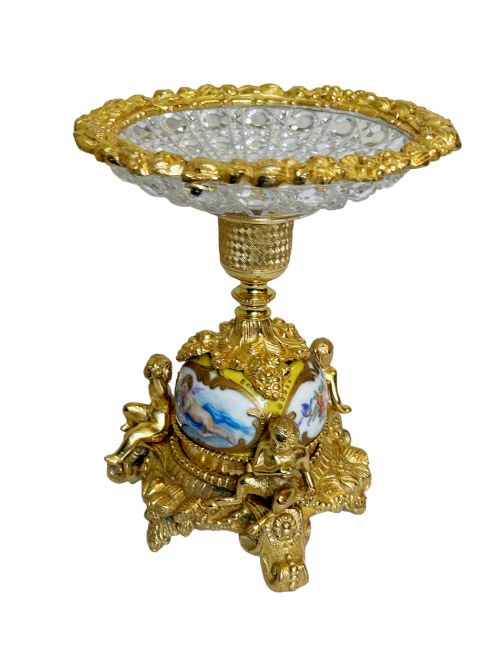
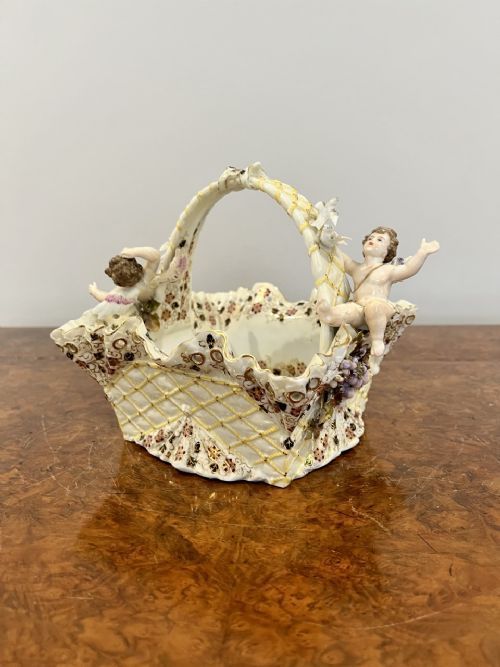
Makers utilised various vessel shapes, ranging from open baskets and sweetmeat dishes to comports and shell-supported basins. The figures themselves appear as putti or cherubs, often intertwined with applied roses and floral garlands.
Materials and Construction
Makers shaped these pieces from ceramic and glazed porcelain, frequently heightening the composition with enamel details and delicate gold leaf or gilt bronze mounts. The combination of lustrous white porcelain with painted highlights creates a rich surface texture characteristic of nineteenth-century ceramic art.
Cut crystal occasionally appears alongside porcelain and gilt bronze, adding transparency and refractive brilliance to the bowl portion of the centrepiece. Artisans applied intricate hand-modelled elements, such as individual ceramic roses and winged putti, directly onto the body before firing.
Cherub Porcelain Centrepiece Bowl Retail Price Guide 2026
Typical asking prices for cherub porcelain centrepiece bowl among the pieces listed under this phrase on Sellingantiques today, from the lower quarter to the upper quarter. They describe what is for sale here now, not the wider market.
Materials appearing across these entries include glazed porcelain, cut crystal, and gilt bronze combined with hand-painted enamels.
Assessing Quality and Execution
The distinction between standard and superior pieces rests upon the crispness of the modelling in the cherub figures and the delicacy of the applied floral work. Finer examples display meticulous hand-painting on the enamel and precise application of gold leaf, whereas lesser pieces show softer contours and simpler glaze treatments.
Scale and ambition dictate the standing of a centrepiece, with larger multi-figure groups requiring greater technical mastery during the kiln firing process. The integration of mixed media, such as gilt bronze mounts supporting cut crystal or fine porcelain, indicates higher production costs and greater ambition in the workshop.
Minton·Schierholz·Volkstedt·Dresden
The Cherub Porcelain Centrepiece Bowl Glossary
- Putti
- Plural of putto, representing plump, winged male infants derived from classical art and frequently seen in Renaissance and Revival sculpture. These figures lend a playful or romantic character to the centrepiece bowl.
- Comport
- A raised dish or bowl on a standard, historically used for serving fruit or sweetmeats at dessert. In ceramic design, they often feature elaborate figurative stems.
- Sweetmeat dish
- A small vessel designed for holding confectioneries, nuts, or small sweet delicacies during formal dining. They frequently incorporate cherub figures holding shell-shaped basins.
- Rococo Revival
- A nineteenth-century design movement drawing inspiration from the asymmetry, scrollwork, and naturalistic motifs of the French eighteenth century. This style governs the ornamental curves of many centrepieces.
- Gilt bronze
- Metalwork finished with a thin layer of gold or gold-coloured alloy to impart a rich metallic gleam. It provides structural support and decorative contrast to porcelain bowls.
Cherub Porcelain Centrepiece Bowl: Frequently Asked Questions
What were cherub centrepiece bowls used for?
These vessels served primarily as decorative ornaments for the dining table during the Victorian and Edwardian periods, often holding fruit or sweetmeats.
Hosts used them to anchor elaborate tablescapes, demonstrating taste and hospitality to dinner guests.
How do I date a porcelain centrepiece?
Dating relies on stylistic clues such as the presence of Rococo Revival scrollwork, the clothing styles of painted figures, and specific factory marks stamped or painted on the base.
Victorian and Edwardian examples often exhibit distinct manufacturing techniques and paste compositions typical of late nineteenth-century European kilns.
Where were most of these centrepieces made?
A significant proportion of these pieces originated in German porcelain factories, including renowned workshops in Saxony and Plaue.
English manufacturers such as Minton also produced notable examples for domestic and international markets.
How should I display a porcelain centrepiece?
Place the piece on a stable sideboard, dining table, or within a glass-fronted cabinet where adequate lighting highlights the fine modelling.
Keep them away from direct foot traffic or vibrations due to the delicate nature of the applied porcelain flowers and outstretched wings.