



Antique Porcelain Putti Bowl
These antique porcelain putti bowl pieces bring nineteenth-century figurative table centrepieces and sweetmeat dishes into the dining room.
Antique Porcelain Putti Bowl
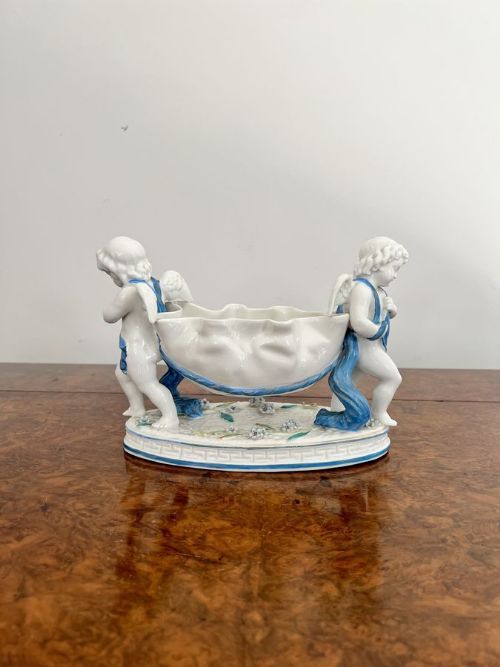
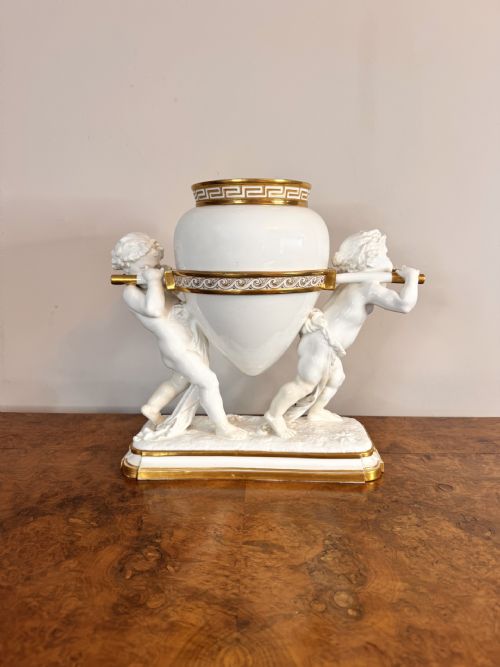
An antique porcelain putti bowl is typically encountered as a large Victorian or Edwardian centrepiece, compote, or sweetmeat dish featuring modelled cherubs and putti. These decorative objects dominate dining tables and sideboards, combining functional vessels with elaborate figurative sculpture.
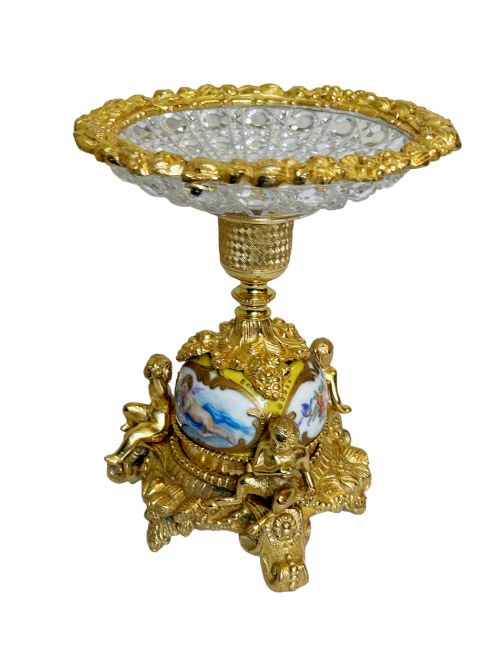
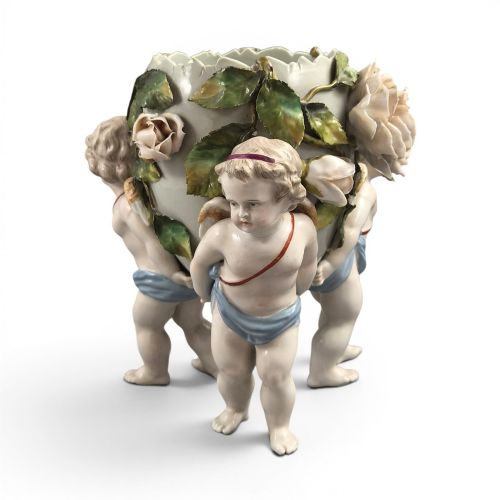
The selections range from German factory productions involving Sitzendorf, Plaue Schierholz, and Volkstedt to English works by Minton. Forms include shell-supported basins, musical figure groups, and egg vases adorned with applied roses and gilt bronze mounts.
How they were made
The construction relies on hard-paste porcelain and glazed ceramic bodies moulded into complex figurative and vessel components. Artisans applied delicate sculptural elements separately, including individual petals for applied roses and distinct limbs for the putti figures.
Surface decoration incorporates polychrome enamel painting, gold leaf detailing, and rich glaze applications. Certain compositions integrate cut crystal bowls supported by gilt bronze frameworks alongside the modelled porcelain figures.
Antique Porcelain Putti Bowl Retail Price Guide 2026
Typical asking prices for porcelain putti bowl among the pieces listed under this phrase on Sellingantiques today, from the lower quarter to the upper quarter. They describe what is for sale here now, not the wider market.
Listings span the Victorian and Edwardian eras, featuring German and English hard-paste porcelain alongside gilt bronze and cut crystal.
What varies in quality
The complexity of the overall composition drives distinction, separating standard sweetmeat figures from monumental centrepieces featuring multiple figures and combined metal or crystal elements.
Minton·Sitzendorf·Plaue Schierholz·Volkstedt
The Antique Porcelain Putti Bowl Glossary
- Putti
- Plumed or unwinged chubby male infants frequently depicted in classical and revival art. They form the central figurative elements on these bowls and centrepieces.
- Centrepiece
- A large decorative vessel placed in the middle of a dining table. These pieces often incorporate basins or compotes supported by figurative groups.
- Sweetmeat dish
- A small ornamental container designed for serving confectioneries or dried fruits. They appear frequently in nineteenth-century table settings.
- Hard-paste porcelain
- A durable ceramic material fired at high temperatures using kaolin and petuntse. It provides the strong, vitreous body seen in German and English productions.
- Gilt bronze
- Metal mounts covered with a thin layer of gold. They provide structural support and decorative accents in mixed-material compositions.
Antique Porcelain Putti Bowl: Frequently Asked Questions
What is an antique porcelain putti bowl used for?
These pieces served historically as dining table centrepieces, compotes, or sweetmeat dishes for displaying fruit and confectioneries during formal meals. Today, they function primarily as decorative focal points on sideboards and display tables.
Their substantial presence and elaborate figurative modelling make them distinct standalone decorative objects within a room.
How do I identify German porcelain from this era?
German pieces from factories like Sitzendorf, Plaue Schierholz, and Volkstedt often feature characteristic underglaze blue factory marks on the base. They frequently employ hard-paste porcelain with applied floral elements and detailed putti figures.
Stylistic cues draw heavily on Rococo Revival and Victorian Neoclassical traditions typical of late nineteenth- and early twentieth-century continental production.
Are these centrepieces fragile?
The complex modelling, particularly the applied roses and projecting limbs of the putti, creates delicate structural points that require careful handling. Dusting must be done gently with a soft brush to avoid damaging protruding details.
Placement should be secure and away from high-traffic areas to prevent accidental knocks to the decorative elements.
What styles are common in these bowls?
The dominant aesthetic draws upon French Rococo Revival and Victorian Neoclassical styles, characterised by asymmetrical scrolling, shell motifs, and naturalistic floral appliqués. These designs reflect a nineteenth-century enthusiasm for ornate, theatrical tablewares.
Combinations with cut crystal and gilt bronze further illustrate the decorative eclecticism of the period.