

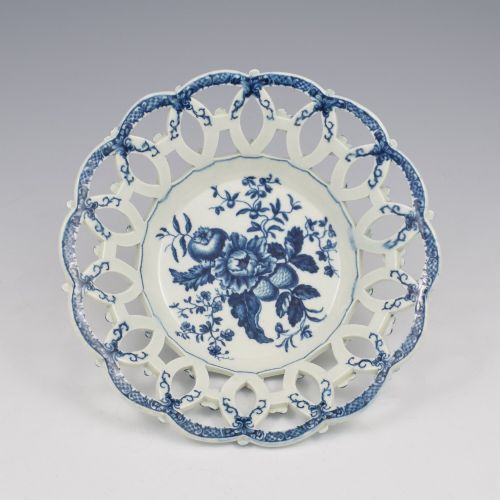


Blue White Porcelain Centrepiece
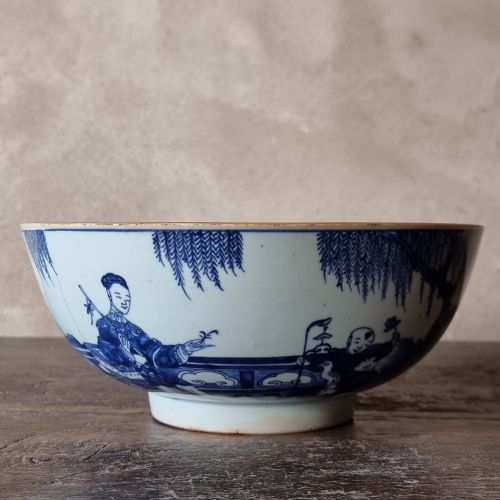
A blue white porcelain centrepiece anchors a room with cobalt underglaze depth, ranging from heavy Victorian fruit bowls to Chinese export punch bowls.
Blue White Porcelain Centrepiece
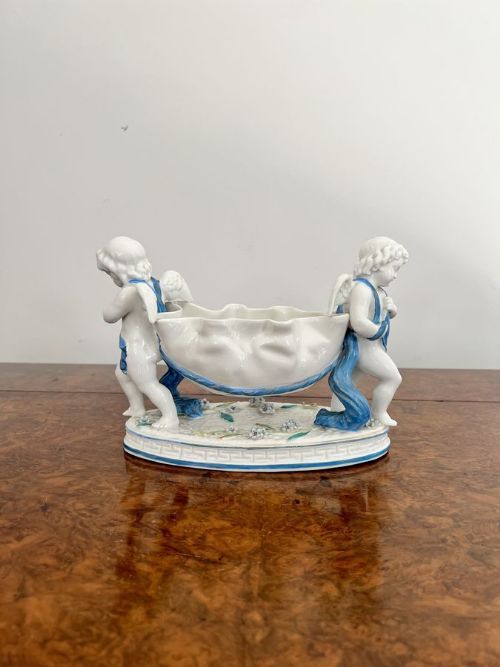
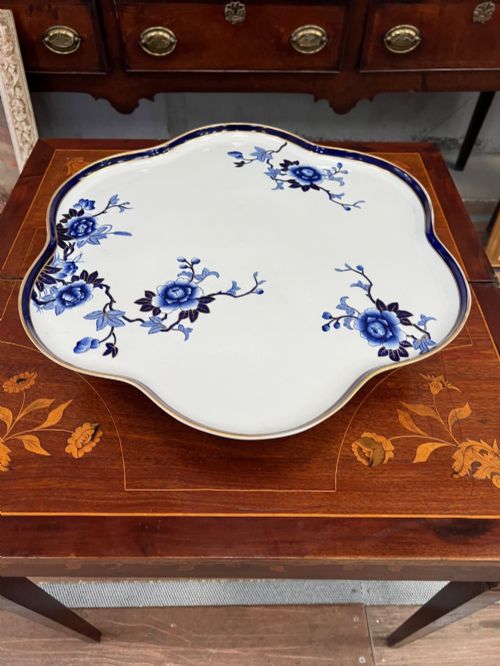
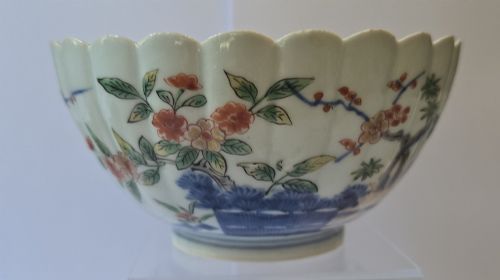
A blue white porcelain centrepiece takes several forms across the inventory, appearing most frequently as decorative bowls, fruit bowls, punch bowls, and jardinieres. These vessels serve as focal points on dining tables or sideboards, drawing the eye with their scale and painted decoration.
Buyers encounter examples spanning the 18th century to the Edwardian period, with Victorian and Qing Dynasty pieces strongly represented. Forms range from simple circular vessels to elaborate baskets and stands, showcasing both domestic British production and international export wares.
Materials and construction
Makers utilised hard-paste and soft-paste porcelain as the primary body, applying cobalt underglaze or cobalt blue glaze before firing. This mineral pigment produces the characteristic deep blue decoration under a clear transparent glaze.
Many pieces incorporate secondary techniques such as enamel additions, gilding, and gilt accents over the fired glaze. These metallic and coloured touches highlight moulded details and painted borders on continental and English vessels.
Blue White Porcelain Centrepiece Retail Price Guide 2026
Typical asking prices for blue white porcelain centrepiece among the pieces listed under this phrase on Sellingantiques today, from the lower quarter to the upper quarter. They describe what is for sale here now, not the wider market.
An American eagle takes pride of place on a 20th-century punch bowl, ready to preside over the festivities.
Assessing quality and execution
Quality rests in the crispness of the cobalt painting and the control of the kiln temperature during the underglaze firing. Superior pieces display deep tonal variation in the blue without unwanted blurring or pooling into the surrounding white ground.
The finesse of the porcelain body and any applied gilt work distinguish finer examples from standard production. Finely potted walls and precise moulding elevate pieces such as baskets and punch bowls above simpler utilitarian forms.
Doulton Burslem·Samson·Sevres
The Blue White Porcelain Centrepiece Glossary
- Cobalt underglaze
- A metallic pigment applied to the unfired porcelain body before glazing and firing at high temperatures. This technique ensures the blue decoration remains permanent under the glossy surface.
- Chinese export
- Porcelain manufactured in China specifically for European and American markets during earlier centuries. These items often blend Eastern vessel forms with Western heraldic or decorative motifs.
- Jardiniere
- An ornamental pot or bowl designed to hold live plants or floral arrangements. They typically feature robust proportions to support soil and moisture.
- Soft-paste porcelain
- A ceramic composition containing glass frit and white clay, fired at lower temperatures than true hard-paste porcelain. It produces a warm, slightly softer glaze surface favoured by early European factories.
Blue White Porcelain Centrepiece: Frequently Asked Questions
How are blue white porcelain centrepieces used?
These vessels function primarily as table centrepieces, holding fruit, floral arrangements, or standing alone as decorative objects. Their generous proportions make them natural focal points for large dining tables or entrance hall sideboards.
Historically, punch bowls and fruit bowls served active roles during formal dining and entertaining. Today, collectors utilise them to display seasonal decoration or to anchor a room's interior scheme.
How do I identify an 18th century piece?
Early pieces often display hand-painted cobalt underglaze decoration on softer or characteristic export porcelain bodies. Examining the base, potting weight, and pigment behaviour under the glaze helps determine the manufacturing era.
Stylistic markers such as Chinese Export Imari designs or early Worcester pine cone motifs provide clues to age. Comparing the footrim and glaze pooling with known period examples confirms authenticity.
Can I use antique bowls for serving food?
Using antique porcelain for dining depends on the glaze stability, material composition, and presence of any repaired cracks. Many 18th and 19th-century pieces function best as decorative display items rather than daily tableware.
Harsh detergents and modern dishwashers can damage delicate enamel and gilt highlights on older surfaces. Hand washing in lukewarm water preserves the integrity of the glaze.