

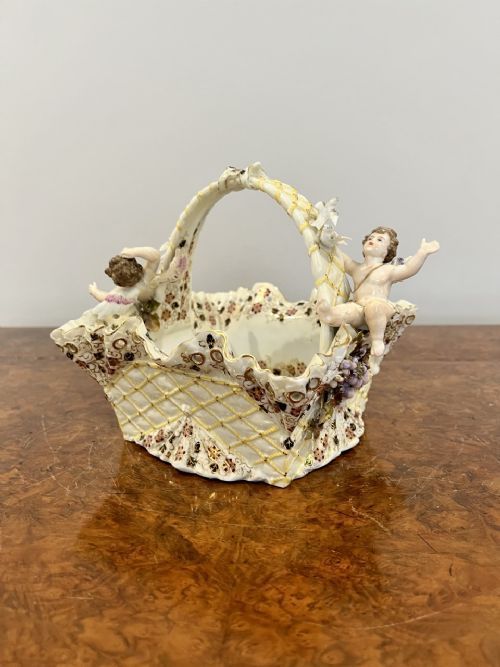


Dresden Style Porcelain Centrepiece
These dresden style porcelain centrepieces bring grand German floral modelling, figural putti and rich gilding straight to the dining table.
Dresden Style Porcelain Centrepiece
When you search for a dresden style porcelain centrepiece, you encounter elaborate tiered bowls, figural baskets and sculptural candelabra designed to dominate a dining table or sideboard. These pieces originate largely from German factories and workshops spanning the late nineteenth and early twentieth centuries, capturing a distinct theatricality.
The most common versions on this page embody the Rococo Revival style, heavily decorated with applied porcelain roses, shell motifs and playful putti or cherubs. You will frequently find large comports, musical figures and pierced decorative baskets attributed to notable makers such as Schierholz and Sitzendorf.
Dated examples typically cluster around the Victorian and Edwardian eras, running from eighteen eighty through to nineteen twenty. They serve primarily as decorative focal points rather than functional tableware, relying on delicate modelling and vibrant enamel palettes to catch the eye.
Materials and construction
Makers shaped these centrepieces from fine ceramic and porcelain, building complex figural groups and openwork baskets by hand. Artisans applied individual porcelain petals and leaves, such as the characteristic applied roses, piece by piece before firing.
Surface decoration relies heavily on hand painting using coloured enamel alongside gold leaf and gilding to highlight raised scrolls and sculptural contours. Candelabra and multi-tiered centerpieces often combine moulded structural bases with intricate hand-modelled cherubs, putti and shell forms.
Dresden Style Porcelain Centrepiece Retail Price Guide 2026
Typical asking prices for dresden style porcelain centrepiece among the pieces listed under this phrase on Sellingantiques today, from the lower quarter to the upper quarter. They describe what is for sale here now, not the wider market.
Musician putti populate several of these centrepieces, caught mid-performance on miniature porcelain instruments amongst cascades of applied roses.
Judging quality and craftsmanship
Intricacy of openwork and the preservation of original gilding and enamel paintwork dictate the standing of a piece. The most accomplished items maintain structural integrity across complex branching candelabra arms and heavily populated figural baskets without crude restoration.
C.G. Schierholz and Sohn·Sitzendorf
The Dresden Style Porcelain Centrepiece Glossary
- Comport
- A large elevated dish or bowl used as a centrepiece on a dining table or sideboard. It typically stands on a formal pedestal or footed base.
- Putti
- Depictions of plump, naked male toddlers, often winged, used as decorative figures in art. They appear frequently clambering over porcelain baskets and candelabra stems.
- Gilding
- The application of gold leaf or gold powder to porcelain surfaces. It accents raised mouldings, rims and figural details to create a rich contrast with white ceramic.
Dresden Style Porcelain Centrepiece: Frequently Asked Questions
What were porcelain centrepieces used for?
These large centrepieces served as decorative focal points for dining tables and sideboards during formal meals in the Victorian and Edwardian periods. They demonstrated the host's taste and wealth through elaborate sculptural design rather than practical dining use.
While some functioned as comports for fruit or sweetmeats, many were purely ornamental displays featuring figural groups, cherubs and candelabra arms.
How do I date an antique porcelain centrepiece?
Dating relies on stylistic markers such as the heavy ornamentation of the Rococo Revival period and the manufacturing traits seen in late nineteenth and early twentieth-century German porcelain. Examining the base, the style of hand painting and factory marks provides a tighter chronological window.
Most pieces on this page cluster between eighteen eighty and nineteen twenty, aligning with Victorian, Edwardian and early twentieth-century production eras.
Are these centrepieces fragile to live with?
The intricate hand-modelled flowers and delicate putti limbs require careful placement away from high-traffic areas and direct knocks. Routine maintenance involves gentle dusting with a soft brush rather than immersion in water.
Placing the piece on a stable, vibration-free surface ensures these detailed porcelain structures remain secure over time.