
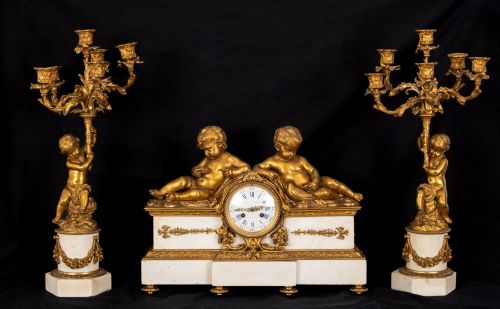
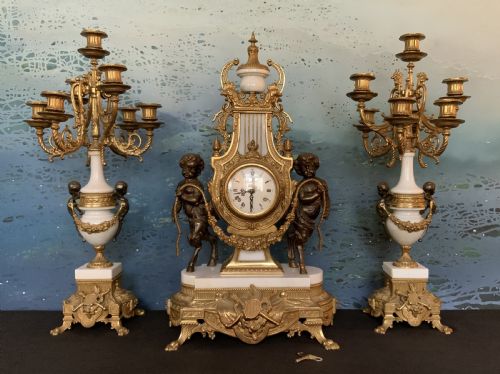


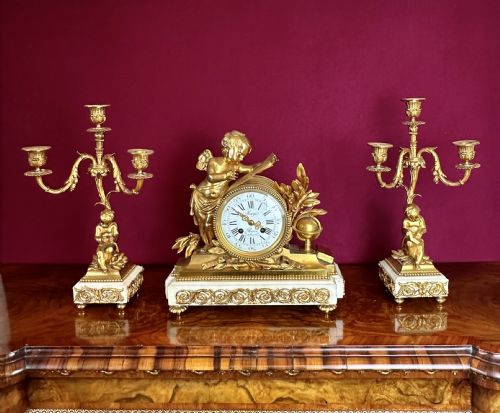


Cherub Candelabra Clock Set
These cherub candelabra clock set pieces combine figurative bronze casting with matching lighting for a grand mantel display.
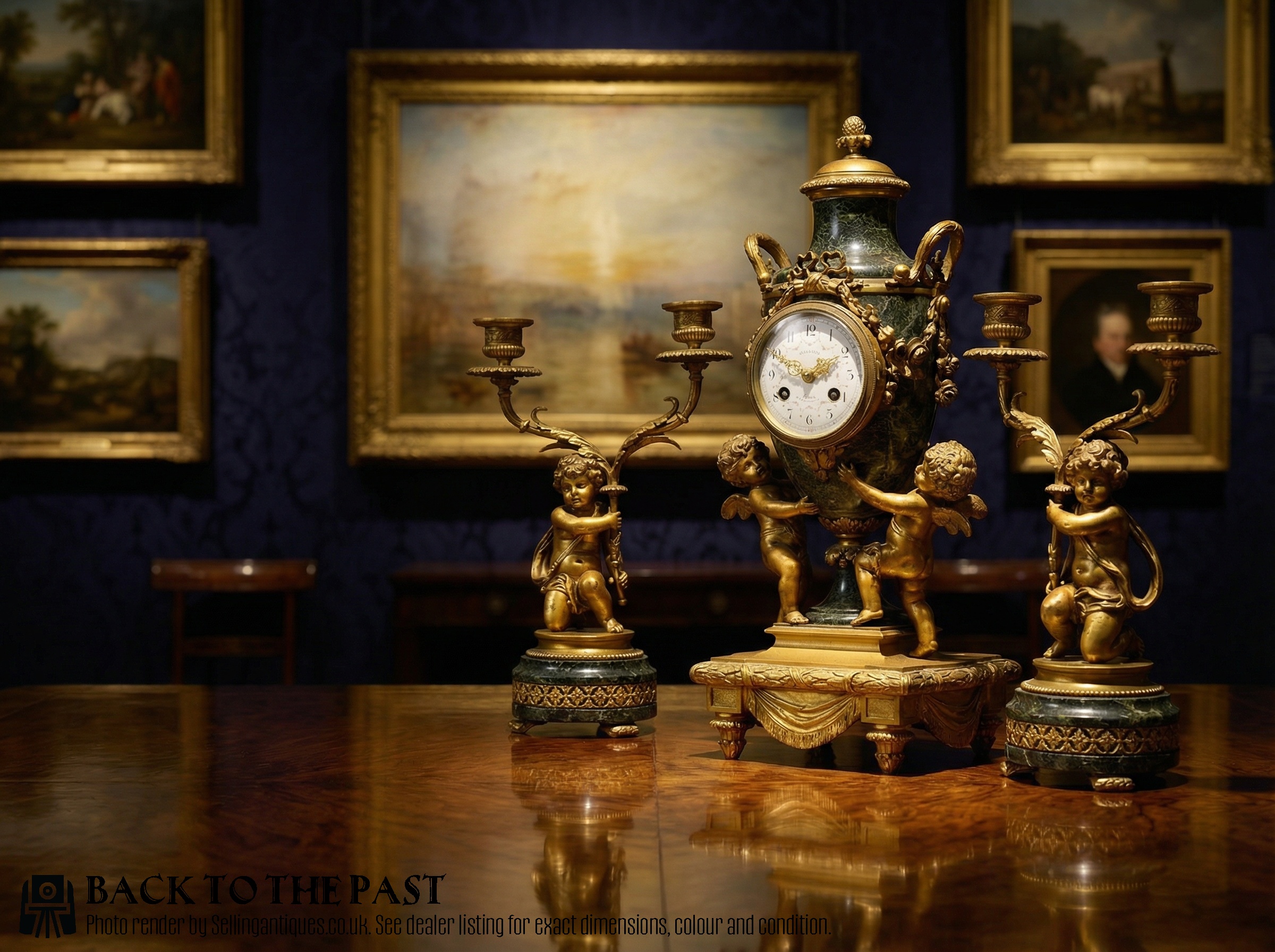
Cherub Candelabra Clock Set
A cherub candelabra clock set brings together a central mantel timepiece flanked by matching side pieces designed for candles. You will most frequently meet nineteenth-century French examples featuring figural bronze work alongside flanking garniture candle holders.
The configurations span multi-piece garniture arrangements where winged figures support candle arms or adorn the clock base. These groupings reflect Neoclassical, Louis XVI, and Rococo revival tastes spanning the Victorian era and the late nineteenth century.
Makers integrated sculptural cherubs directly into the bronze, marble, and ormolu housings of the clock movements. The matching candelabra repeat the motifs of the central timepiece to create a unified decorative scheme for the room.
Materials and construction
Foundries shaped these works using cast bronze and gilt metal, often fire-gilding the metal to create a durable golden finish known as ormolu. Artisans combined these metallic elements with white and red marble bases that provided substantial weight and a contrasting surface texture.
Clockmakers fitted eight-day mechanical movements featuring visible pendulums or enamel dials behind glazed bezels. Subsidiary candelabra arms were cast and chased separately before being mounted securely to matching marble or bronze plinths.
Listings for this phrase feature nineteenth-century French and Italian pieces utilising gilt bronze, marble, and enamel materials.
Quality distinctions
The choice and density of the marble plinths, along with the weight of the ormolu mounts, separate standard production from superior workshop output. Complete sets retaining their original matching candelabra components show greater stylistic harmony.
H Luppens Paris·Meissen
The Cherub Candelabra Clock Set Glossary
- Garniture
- A set of matching decorative objects designed to be displayed together on a mantelpiece, typically consisting of a central clock and two flanking candelabra or vases.
- Ormolu
- Finely ground high-carat gold mercury-gilded to a bronze object, producing a characteristic bright and durable golden surface.
- Neoclassical
- A style drawing inspiration from the classical art and culture of ancient Greece and Rome, evident in symmetrical architectural clock cases.
- Louis XVI Style
- A design movement characterised by straight lines, classical motifs, urns, and restrained classical ornamentation.
- Rococo Revival
- A nineteenth-century artistic revival featuring asymmetrical scrollwork, naturalistic floral elements, and flowing organic forms.
Cherub Candelabra Clock Set: Frequently Asked Questions
How do I wind the clock?
Most nineteenth-century mechanical movements require a specific winding key inserted into the dial arbors to tension the mainsprings every eight days.
Take care not to over-wind the springs, and consult a professional horologist if the striking train or pendulum needs regulation.
Where should I place the set?
These heavy garnitures need a deep, stable surface such as a mantelpiece, sideboard, or large console table capable of supporting significant marble and bronze weight.
Keep the set away from direct heat sources and strong sunlight to protect the marble, enamel dials, and fire-gilt finishes.
How do I date these pieces?
Examine the style of the cast bronze mounts, the construction of the clock movement backplate, and the materials used for the dial.
Nineteenth-century pieces often display foundry stamps, serial numbers, or specific pendulum suspension types characteristic of French manufacturing periods.
Can I use real candles in the candelabra?
The side pieces are designed to hold traditional wax candles, though dripped wax can damage the delicate ormolu and marble surfaces below.
Use drip protectors or unlit candles if you prefer to preserve the antique finish without the risk of heat or wax marks.