

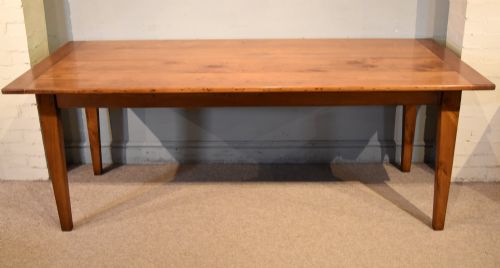
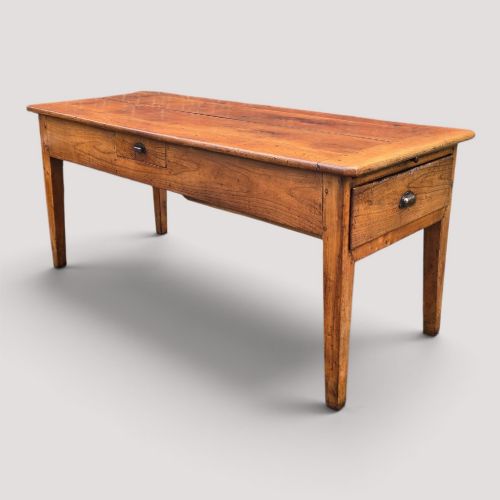
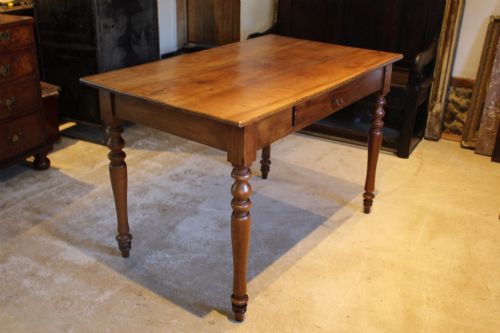
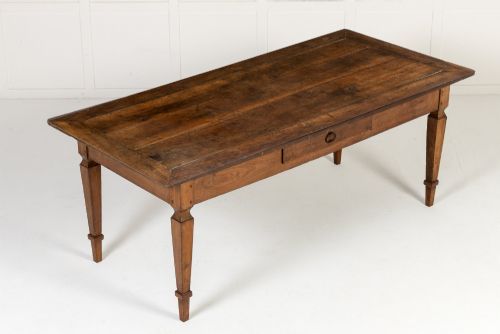
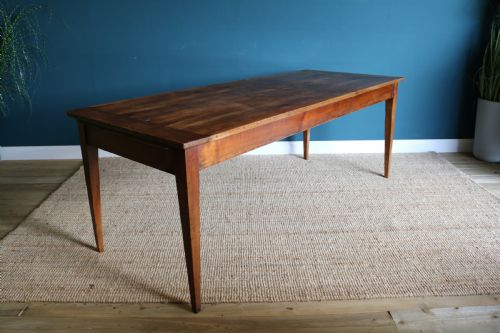


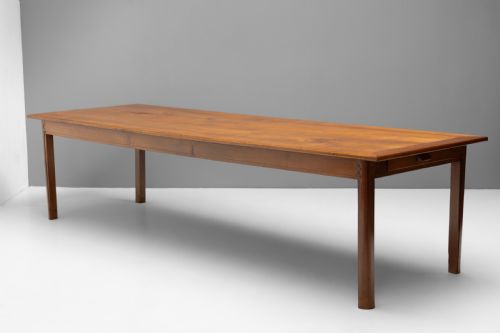

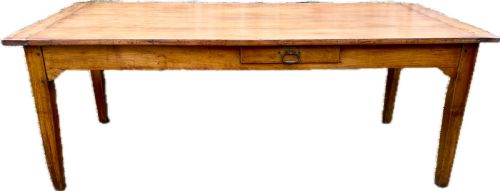


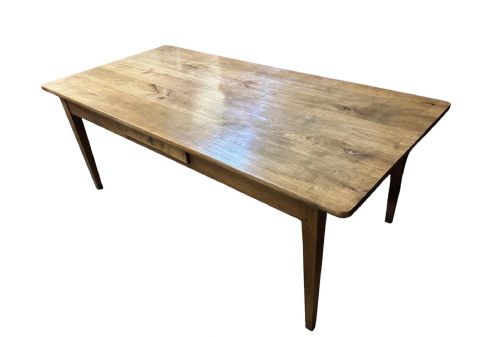

Cherry Wood Refectory Table
A cherry wood refectory table brings warmth and honest grain to a room, offering a sturdy surface built for daily gathering.
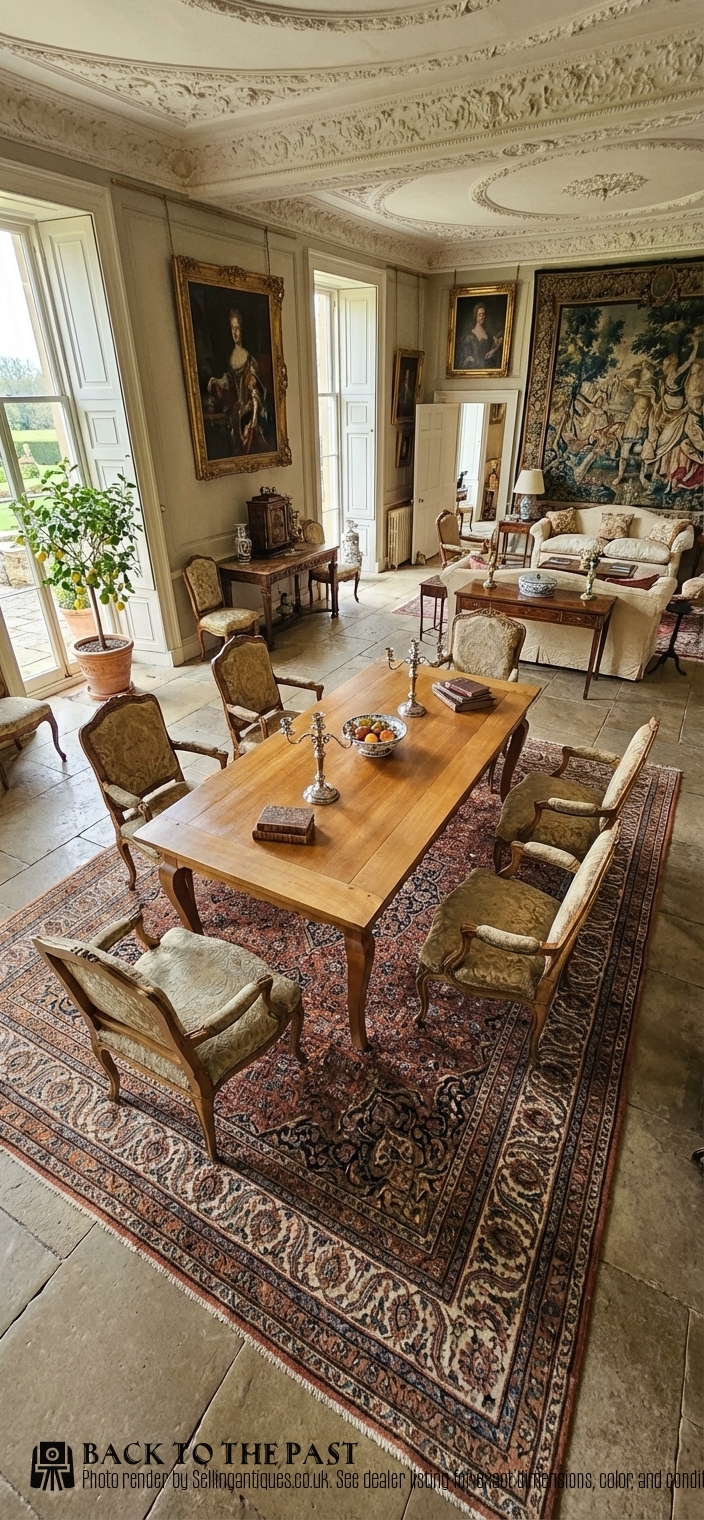
Cherry Wood Refectory Table
When searching for a cherry wood refectory table, buyers encounter long, narrow dining surfaces historically used in communal settings and provincial homes. The evidence shows these pieces largely originating from French workshops, embodying French Provincial and French Country styles designed for kitchens and dining rooms. Examples span from the late eighteenth century through the Edwardian period, with nineteenth-century dates appearing most frequently.
The pieces on this page lean heavily towards farmhouse tables, often incorporating functional elements such as single drawers, twin breadboards at the ends, or double extending mechanisms. Planks vary in count, from smaller single-board tops up to wider multi-plank configurations reaching impressive lengths. The primary material shifts between cherry wood, cherrywood, cherry, and fruitwood, sometimes accented with metal or brass fittings.
Construction and Materials
Makers utilised solid timber harvested locally, primarily selecting cherry wood and fruitwood for its rich tone and dependable density. Planks were joined side by side to create generous tabletops, supported by substantial legs that occasionally take cabriolet forms on specific French provincial examples. Metal and brass occasionally appear in functional elements like hinges, drawer pulls, or extension mechanisms.
Joinery relied on traditional carpentry methods suitable for heavy daily use in farmhouses and kitchens. Sliding breadboard ends were fitted to the shorter sides of the tabletops to manage seasonal wood movement and keep the boards flat over decades of use.
Cherry Wood Refectory Table Retail Price Guide 2026
Typical asking prices for cherry wood refectory table among the pieces listed under this phrase on Sellingantiques today, from the lower quarter to the upper quarter. They describe what is for sale here now, not the wider market.
Listings feature cherry wood, fruitwood, and timber dining tables spanning the eighteenth century through the Edwardian era.
Assessing Quality and Character
Quality in these tables rests primarily on the depth of the timber's patina and the integrity of the original construction. Faded cherry surfaces that have mellowed evenly under decades of light carry more visual interest than heavily restored or stripped timber.
Proportion and utility also separate examples, particularly where integrated drawers, sliding breadboards, or extending mechanisms operate smoothly alongside sound structural frames.
The Cherry Wood Refectory Table Glossary
- Refectory table
- A long dining table traditionally built for communal dining halls and large farmhouses. These tables provide generous seating capacity along their length.
- Breadboard
- A board attached across the ends of a tabletop at a right angle to the main planks. This technique conceals end-grain and helps stabilise the timber against warping.
- Fruitwood
- A general term for timber gathered from fruit-bearing trees such as cherry, pear, or apple. It is prized by cabinet makers for its fine grain and warm colour.
- French Provincial
- A style originating from rural regions of France, combining rustic practicality with simple decorative curves like cabriolet legs. It reflects regional craftsmanship rather than formal court tastes.
- Plank top
- A tabletop constructed from several long boards joined edge to edge. The number of planks can influence the overall width and visual texture of the surface.
Cherry Wood Refectory Table: Frequently Asked Questions
What rooms suit a cherry wood refectory table?
These long dining tables sit comfortably in spacious kitchens, open-plan dining rooms, or large living spaces where family and guests gather. Their narrow proportions make them practical for rooms that need walking clearance alongside seating.
Because the timber develops a warm, faded patina over time, the tables anchor both rustic interiors and more neutral modern settings without overwhelming the floor plan.
How do I care for a cherry wood top?
Daily maintenance requires simply wiping the surface with a damp cloth and drying it immediately to protect the historic finish. Avoiding excessive heat and direct sunlight prevents the cherry timber from drying out or fading unevenly.
Applying a traditional wax polish occasionally helps nourish the fruitwood grain and maintains the soft sheen characteristic of older provincial furniture.
What is a breadboard end?
A breadboard end is a transverse piece of timber fixed to the short ends of a multi-plank tabletop. It acts to hide the exposed end-grain and provides structural stability.
This construction method allows the main planks to expand and contract naturally with changes in household humidity without splitting the surface.
How do I distinguish eighteenth-century pieces?
Earlier examples from the eighteenth century typically display hand-planed surfaces, pegged joinery, and timber that has mellowed deeply over generations of use. Tool marks left by the original maker remain visible upon close inspection of the underside and framing.
In contrast, later nineteenth-century and Edwardian pieces may show more standardised machine sawing and different framing techniques underneath the tabletop.