



Chased Silver Platter
A chased silver platter brings heavy metalwork and intricate surface decoration to the table, offering a centrepiece for serving or display.
Chased Silver Platter
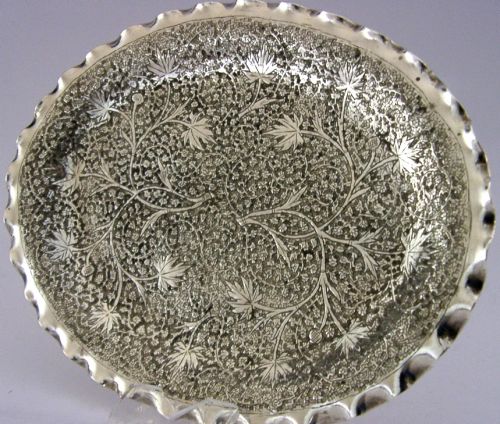
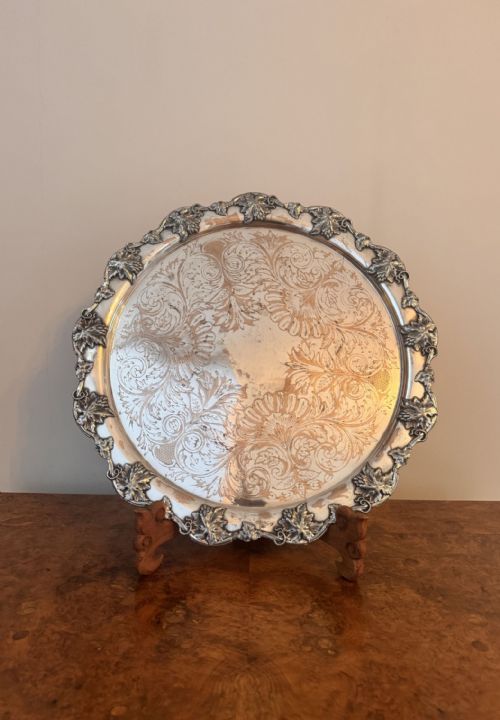
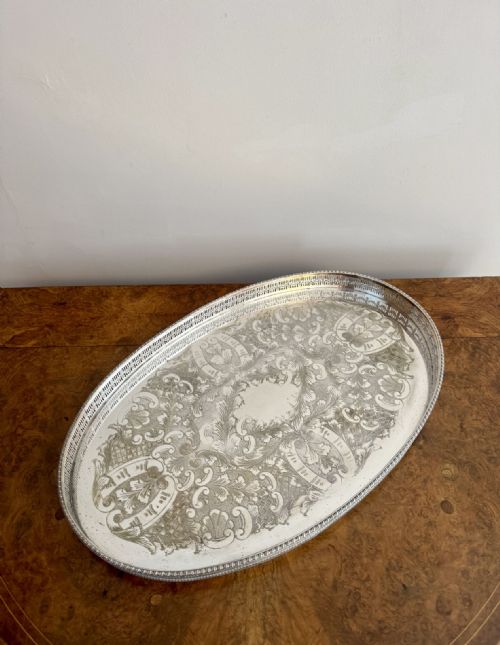
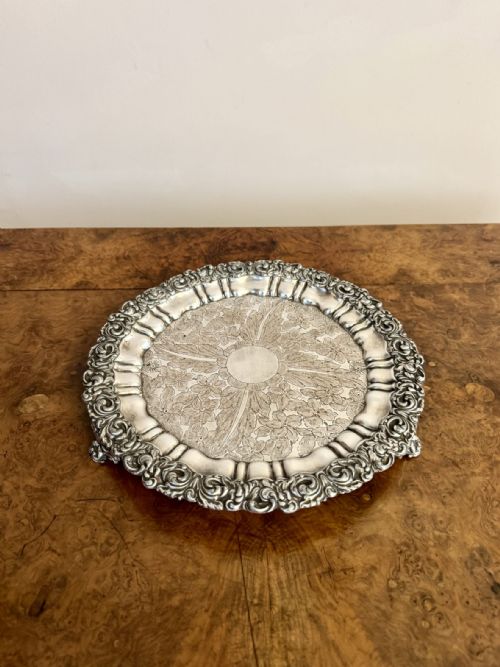
A chased silver platter encompasses circular trays, salvers, chargers, and serving dishes created across the Georgian, Victorian, Edwardian, and interwar periods. These pieces combine utility with decorative display, serving food or functioning as standalone decorative items.
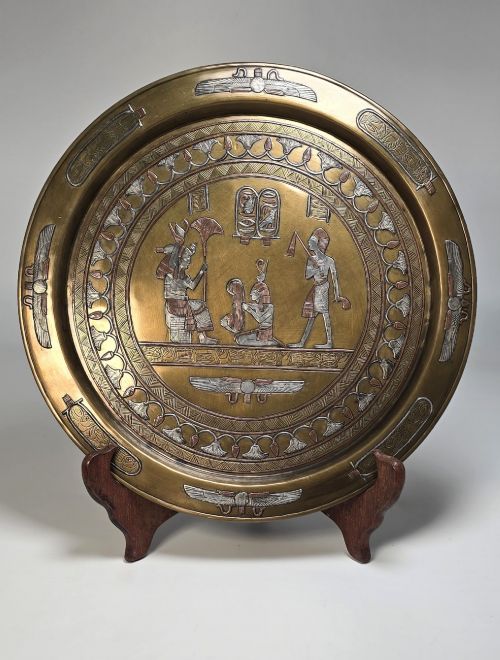
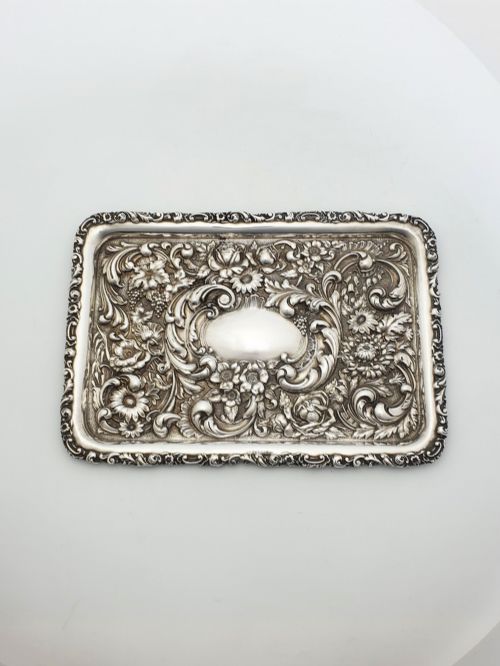
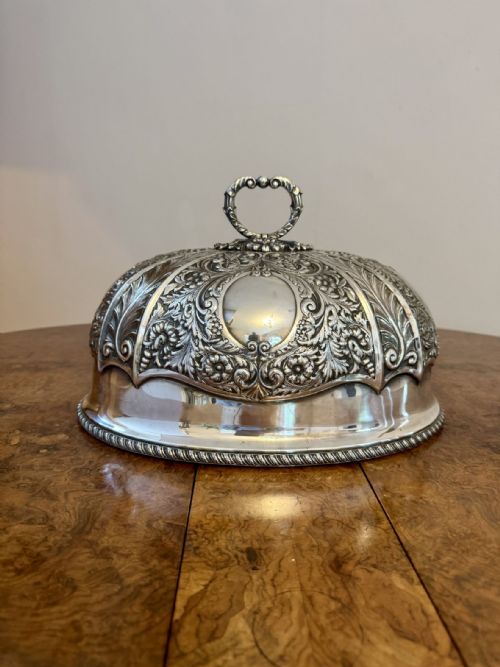
The selection ranges from British sterling silver and silver plate to Anglo-Indian, Kashmiri, and Egyptian Revival pieces. Buyers most frequently encounter Edwardian silver plated trays and nineteenth-century examples featuring embossed scrolls and repoussé floral motifs.
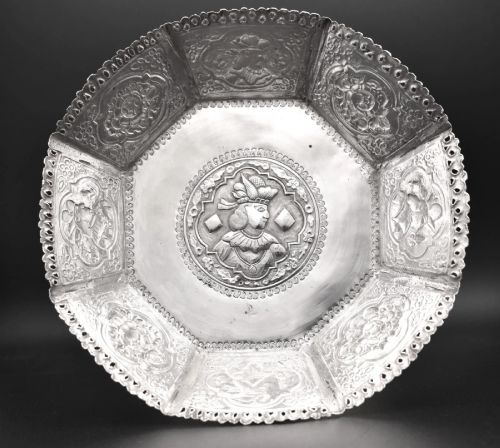
Forms vary from heavy solid silver dishes to copper trays with silver inlay and extensive pierced work. Makers utilised diverse stylistic influences, including Rococo floral designs and Indo-Persian patterns, across round, oval, and footed formats.
Materials and Technique
Silversmiths worked in sterling silver, solid silver, and base metals coated with silver plate or electroplate (EPNS), alongside copper and brass. The choice of metal dictated the weight and durability of the tray, with solid silver and heavy silver plate enduring through generations.
Decoration relied on chasing, repoussé, and engraving techniques to push and carve patterns into the metal surface. Artisans hammered designs from the reverse or front to create raised scrolls, floral motifs, and detailed pictorial scenes.
Materials range from sterling silver and silver plate to copper, brass, and EPNS.
Assessing Quality and Execution
Quality rests in the crispness of the chased or embossed detail and the thickness of the metal. Superior pieces maintain deep, sharp relief in their scrolls and floral patterns without wearing flat from decades of polishing.
The choice of material and structural integrity separate standard production from finer work. Solid sterling silver and substantial silver plate with intact plating and rigid borders demonstrate superior craftsmanship compared to thin base metal alternatives.
S.C. Younge & Co.
The Chased Silver Platter Glossary
- Chasing
- The technique of ornamenting metal by indenting the front surface with a hammer and punches. This pushes the metal inward to form low-relief patterns.
- Repoussé
- A method of shaping metal from the reverse side by hammering, pushing the design outward into high relief. It is frequently combined with chasing to refine the details.
- Salver
- A tray, typically made of silver or other metals, used for serving food and drinks or presenting items. They often stand on small feet.
- Charger
- A large decorative plate or tray used under other dishes or displayed on its own. These pieces prioritise ornamental surface work over daily utility.
- EPNS
- Electroplated Nickel Silver, a common base metal alloy coated with a thin layer of pure silver. It provided an affordable alternative to solid silver during the nineteenth and twentieth centuries.
Chased Silver Platter: Frequently Asked Questions
How do I clean an antique silver platter?
Use a gentle silver cloth or specialised cream designed for silver plate or sterling silver. Avoid harsh dips that strip the dark oxidation from recessed chased details.
Apply minimal pressure around engraved lines and raised repoussé motifs to preserve the original surface texture and finish.
Can I use these platters for serving food?
Solid silver and silver plated platters function well for serving dry foods, cheeses, or breads. Acidic foods should not sit on antique silver for extended periods to prevent tarnishing.
Items with copper bases or intricate inlay work are best reserved for display rather than active dining use.
How do I date a silver tray?
British pieces often bear hallmarks indicating the assay office, standard of metal, and date letter. Georgian and Victorian examples display distinct hallmarking systems that narrow down the year of manufacture.
Stylistic clues such as Edwardian Rococo revival motifs or interwar geometric simplicity also help establish the period.
What is the difference between a salver and a tray?
Salvers generally refer to footed serving trays traditionally used for drinks or calling cards. They possess a formal appearance and a raised rim.
Platters and serving trays cover a broader category of flat vessels used for presentation, food service, or decorative display.