
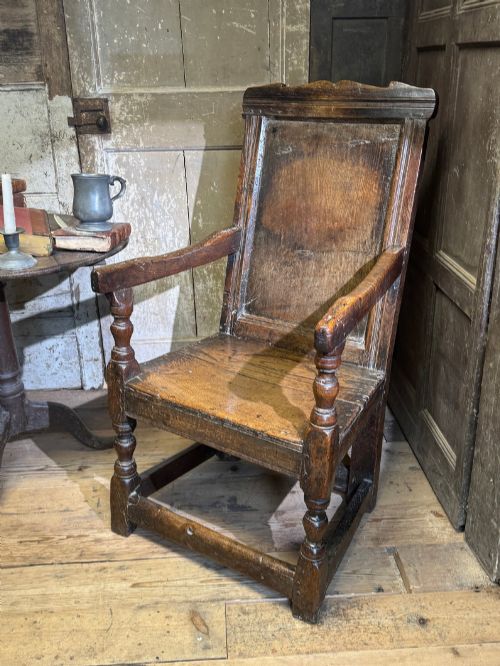

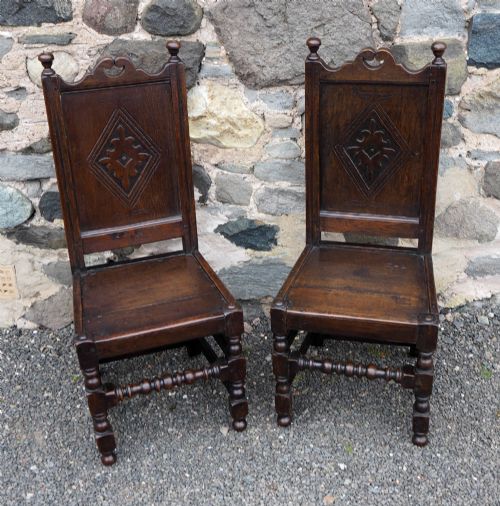

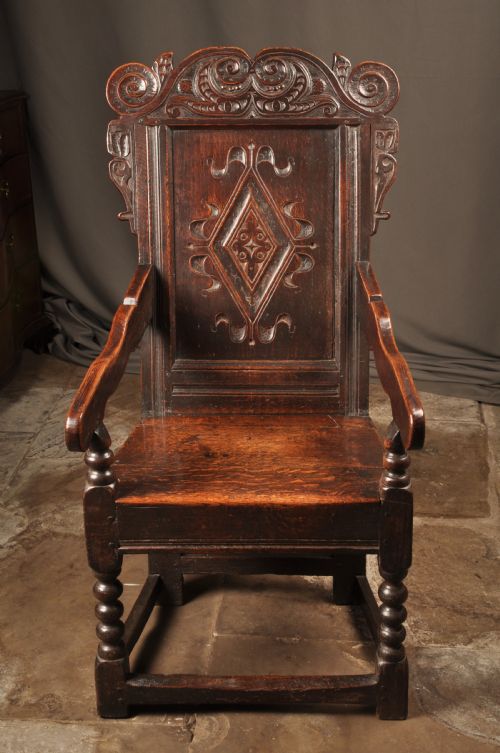


Charles II Wainscot Chair
A charles ii wainscot chair brings solid seventeenth-century timber and joinery into a room, offering robust seating with deep historical roots.
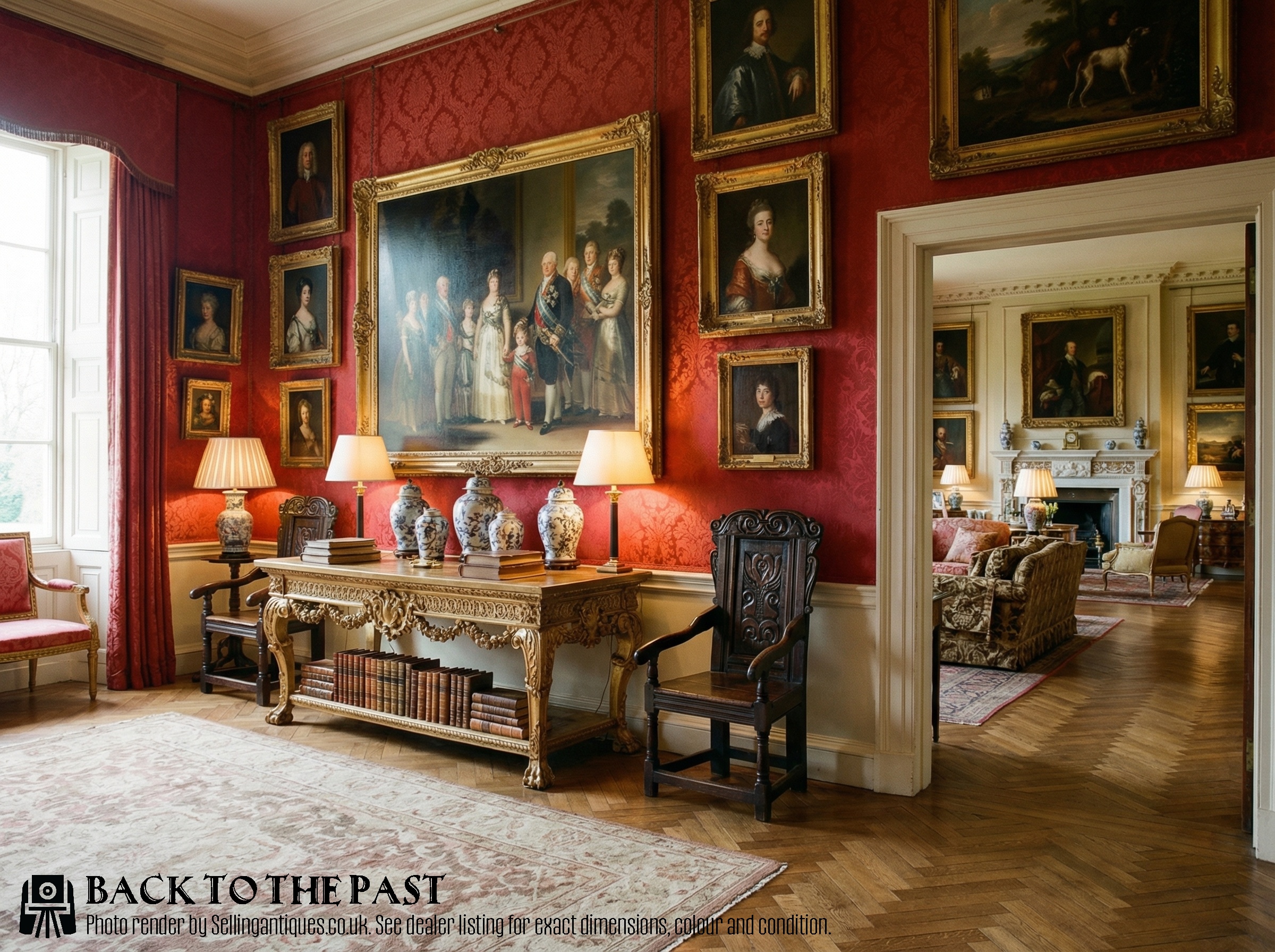
Charles II Wainscot Chair
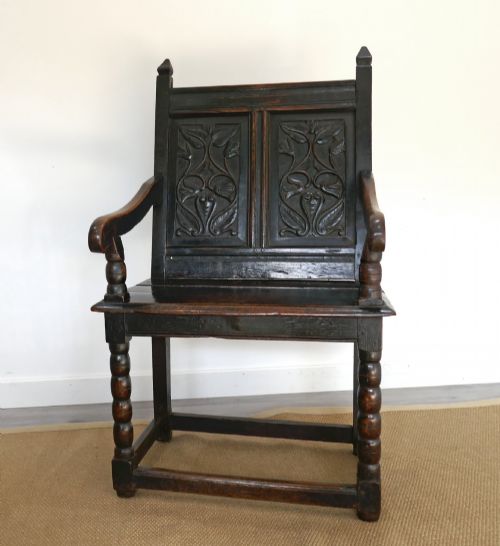
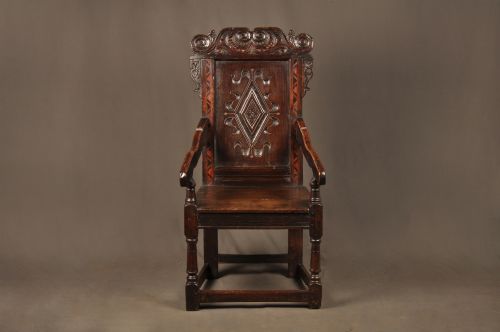
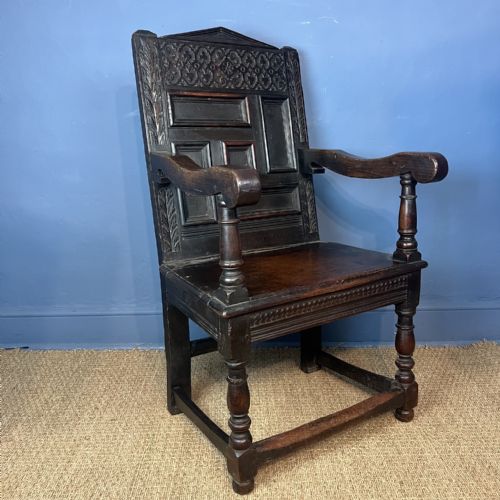
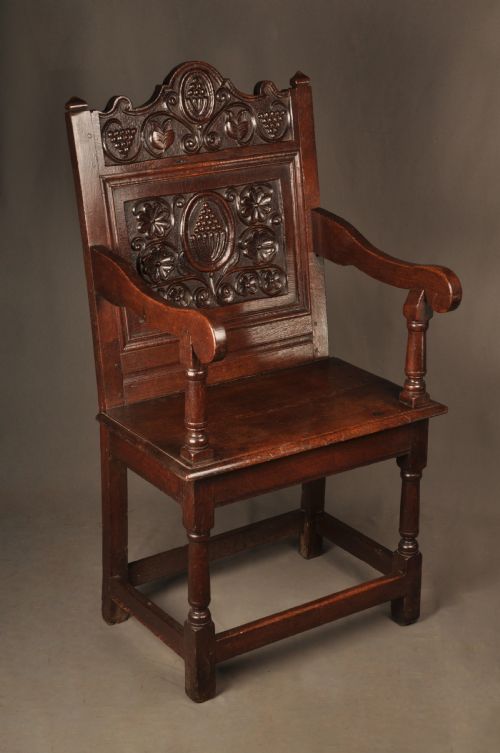
A charles ii wainscot chair is a heavy wooden seat built primarily in the seventeenth century, often featuring panelled backs and solid construction. These chairs appear in regional variations including Lancashire, Cheshire, Yorkshire, and Welsh styles.
Most examples function as armchairs or master's armchairs, alongside side chairs and backstools. The form relies on sturdy timber posts and rails rather than upholstered padding.
Materials and construction
Construction relies heavily on oak, occasionally incorporating yew-wood panels and textile elements. Joiners utilised traditional mortise and tenon joints secured with wooden pegs to build the rigid frames.
Carving adorns many panels and crest rails, executed by hand with gouges and chisels. Surfaces display the natural grain of the wood alongside accumulated polish and age.
Some master's armchairs are built so broad they accommodate seventeenth-century coats of armour without a single creak.
Assessing quality and character
Quality rests on the depth of hand-carving and the crispness of regional design details, such as those found in Yorkshire or the West Country. Untouched timber surfaces retain a better surface quality than heavily restored examples.
Proportion and scale distinguish a master's armchair or robust wainscot form from simpler side chairs. Original joinery integrity and regional provenance elevate the stature of a piece.
The Charles II Wainscot Chair Glossary
- Wainscot chair
- A wooden armchair characterised by a panelled back, solid wooden seat, and turned legs. This form predates fully upholstered seating.
- Backstool
- An early chair without arms, essentially a wainscot or panelled chair reduced to a single seat and back. These appear frequently in seventeenth-century English inventories.
- Mortise and tenon
- A traditional joint where a projecting tenon fits tightly into a matching mortise hole. This method provides the structural rigidity in seventeenth-century oak furniture.
- Crest rail
- The top horizontal member of a chair back, often shaped or carved with motifs. In regional pieces, this rail shows distinct local carving traditions.
- Provenance
- The documented history of origin and regional attribution for an antique. Knowing a piece hails from Lancashire or North Wales helps date the construction.
Charles II Wainscot Chair: Frequently Asked Questions
What is a wainscot chair?
A wainscot chair is a sturdy wooden seat from the seventeenth century featuring a panelled back and solid timber construction. These chairs served important domestic roles before upholstered furniture became common.
They are built using frame and panel joinery rather than bending or gluing methods. The name links back to wainscot oak boards imported for panelling walls.
How do I identify a regional style?
Regional styles appear in the specific carving motifs on the back panels and crest rails. Yorkshire and Lancashire pieces often show distinct linear or floral patterns compared to Welsh examples.
Examining the underlying timber and construction traits helps confirm whether a chair originates from the West Country or North Wales.
Are these chairs comfortable to sit in?
These pieces provide firm, upright seating due to their solid oak construction and lack of padding. Cushions are often added to soften the wooden seat for modern use.
Their rigid geometry encourages an upright posture, matching the domestic habits of the seventeenth century.
What wood was used?
Oak forms the primary material for nearly all these chairs, providing durability and strength. Occasional examples incorporate yew-wood for specific panels or decorative contrast.
The timber was locally sourced and quarter-sawn in many instances, displaying distinctive medullary rays across the surface.
How old are these chairs?
The pieces date predominantly from the seventeenth century, specifically spanning the mid to late sixteen-hundreds under Charles II and surrounding periods. Regional workshops continued traditional vernacular methods across this era.
Dates are estimated through stylistic comparisons of the carved decoration, joinery techniques, and wear patterns on the oak.