


Period Oak Open Armchair
A period oak open armchair offers sturdy timber framing and historic joinery, making it a robust seating choice for traditional interiors.
Period Oak Open Armchair
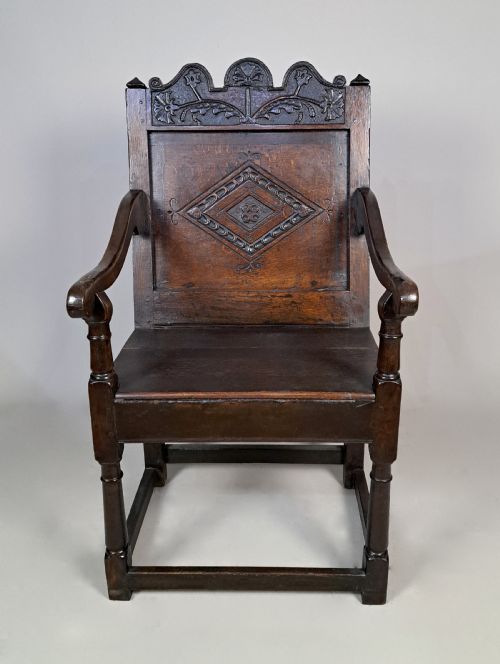
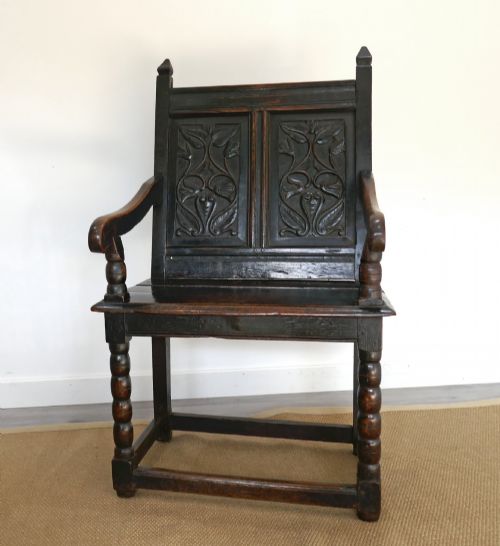
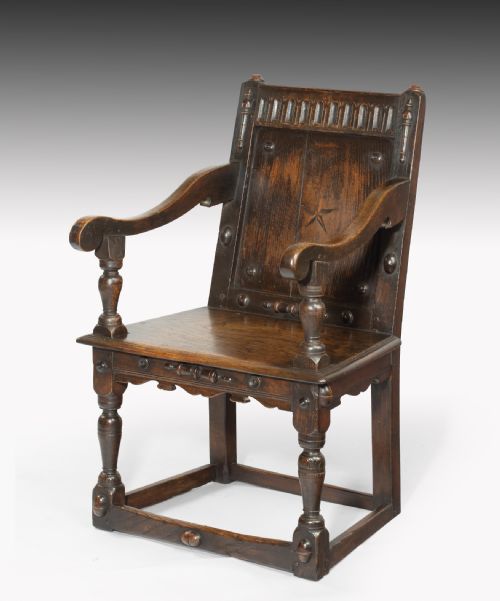
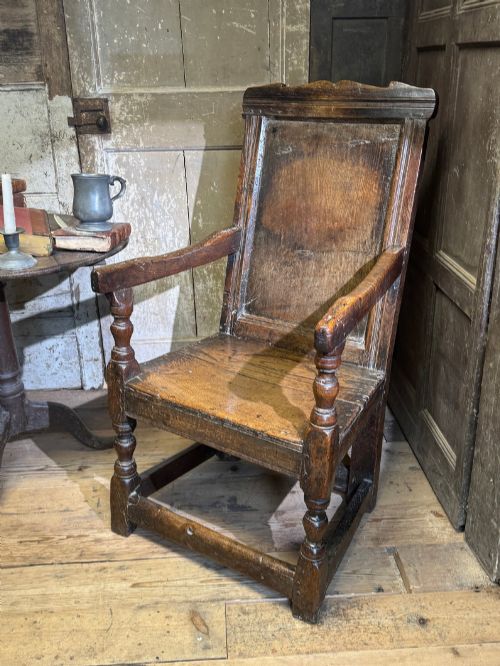
A period oak open armchair is primarily represented here by sturdy seventeenth century wainscot chairs and eighteenth century country examples. These seating pieces showcase solid timber construction with panelled backs and open arms designed for domestic use.
Regional variations span English and Welsh workshops, featuring styles from Jacobean interpretations to Georgian country designs. Solid oak forms dominate the selection, complemented by occasional walnut timber and padded upholstery elements.
Materials and construction
Makers utilised solid oak timber combined with traditional joinery techniques to build these chairs. Frameworks often incorporate panelled backs, shaped armrests, and stretchers for structural stability.
Upholstery fabrics, velvet, and tapestry textiles appear on specific examples, adding softer seating surfaces to rigid timber frames.
Quality and craftsmanship
The degree of original surface patination and timber warmth distinguishes finer examples from simpler provincial items. Surface colour and the integrity of early carved details reveal the skill of the original workshop.
Proportion and structural survival matter greatly in early seating. Chairs retaining their original timber components and uncompromised panel construction command greater attention from collectors.
The Period Oak Open Armchair Glossary
- Wainscot chair
- A heavy wooden armchair of sixteenth and seventeenth century origin, typically constructed from solid oak with panelled backs.
- Stretcher
- A horizontal timber connecting the legs of a chair to provide structural rigidity.
- Jacobean
- A style relating to the reign of James I, characterised by sturdy proportions and geometric carved ornamentation.
- Fauteuil
- An open-armed upholstered armchair originating in France, appearing in later stylistic variations.
Period Oak Open Armchair: Frequently Asked Questions
How do I date a wainscot chair?
Dating relies on examining the construction methods, joint types, and surface wear visible on the timber. Early examples feature pegged mortise and tenon joints alongside characteristic seventeenth century panel styling.
Changes in proportion and decorative carving styles help differentiate seventeenth century pieces from later eighteenth century country interpretations.
Are these chairs comfortable for daily use?
These chairs are constructed with rigid timber backs and solid wooden seats designed for formal posture rather than modern lounging. Adding a loose cushion can improve comfort during everyday seating.
The sturdy oak frames remain entirely stable for regular placement in traditional living spaces or studies.
Where were these armchairs made?
The pieces originate from various English regions and Welsh workshops, reflecting local cabinet-making traditions. Regional pieces often display distinct carving patterns or structural proportions unique to their area of origin.
Documentation in the listings points to specific regional origins such as Lancashire, Cheshire, and West Country workshops.
How do I care for antique oak furniture?
Maintain the timber by keeping the chair away from direct heat sources and sudden humidity changes to prevent wood splitting. Regular dusting with a dry cloth preserves the natural surface sheen.
Avoid applying modern silicone polishes, as traditional wax treatments protect the historic surface patination best.